Liver Research Center, Linkou Chang Gung Memorial Hospital, Taoyuan 333, Taiwan.
Department of Neurology, Linkou Chang Gung Memorial Hospital, Taoyuan 333, Taiwan.
Int J Mol Sci. 2022 Jan 31;23(3):1659. doi: 10.3390/ijms23031659.
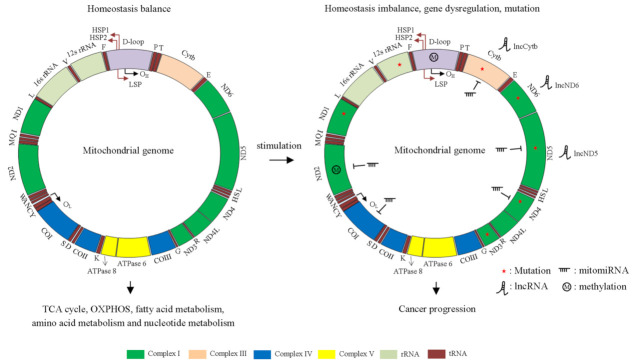
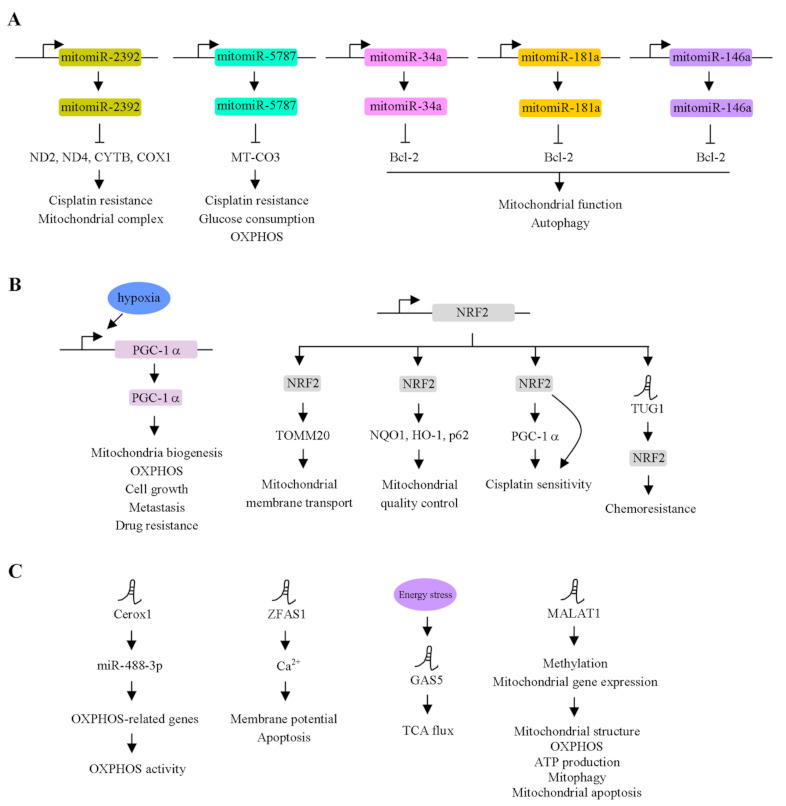
Mitochondrial DNA (mtDNA) has been identified as a significant genetic biomarker in disease, cancer and evolution. Mitochondria function as modulators for regulating cellular metabolism. In the clinic, mtDNA variations (mutations/single nucleotide polymorphisms) and dysregulation of mitochondria-encoded genes are associated with survival outcomes among cancer patients. On the other hand, nuclear-encoded genes have been found to regulate mitochondria-encoded gene expression, in turn regulating mitochondrial homeostasis. These observations suggest that the crosstalk between the nuclear genome and mitochondrial genome is important for cellular function. Therefore, this review summarizes the significant mechanisms and functional roles of mtDNA variations (DNA level) and mtDNA-encoded genes (RNA and protein levels) in cancers and discusses new mechanisms of crosstalk between mtDNA and the nuclear genome.
线粒体 DNA(mtDNA)已被确定为疾病、癌症和进化中的重要遗传生物标志物。线粒体作为调节细胞代谢的调节剂发挥作用。在临床上,mtDNA 变异(突变/单核苷酸多态性)和线粒体编码基因的失调与癌症患者的生存结果有关。另一方面,已经发现核编码基因调节线粒体编码基因的表达,进而调节线粒体的动态平衡。这些观察结果表明,核基因组和线粒体基因组之间的串扰对于细胞功能很重要。因此,本综述总结了 mtDNA 变异(DNA 水平)和 mtDNA 编码基因(RNA 和蛋白质水平)在癌症中的重要机制和功能作用,并讨论了 mtDNA 与核基因组之间串扰的新机制。