Liu Chang, Jin Ying, Fan Zhimin
Department of Breast Surgery, The First Hospital of Jilin University, Changchun, China.
Front Oncol. 2021 Sep 3;11:698023. doi: 10.3389/fonc.2021.698023. eCollection 2021.
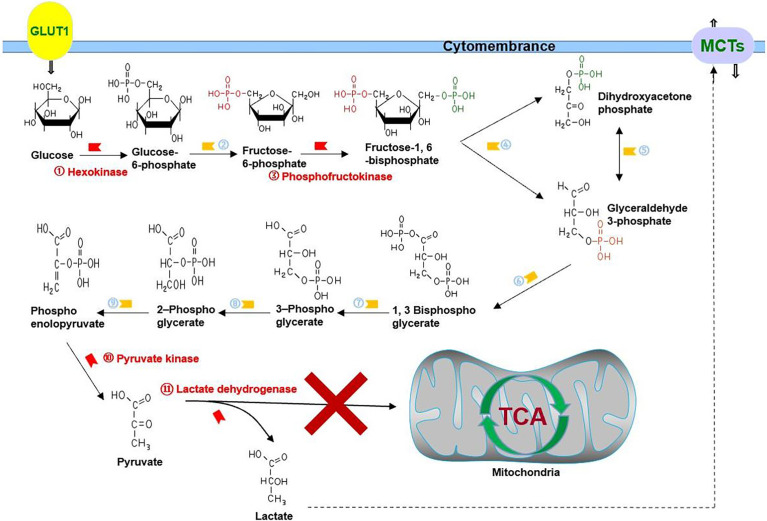
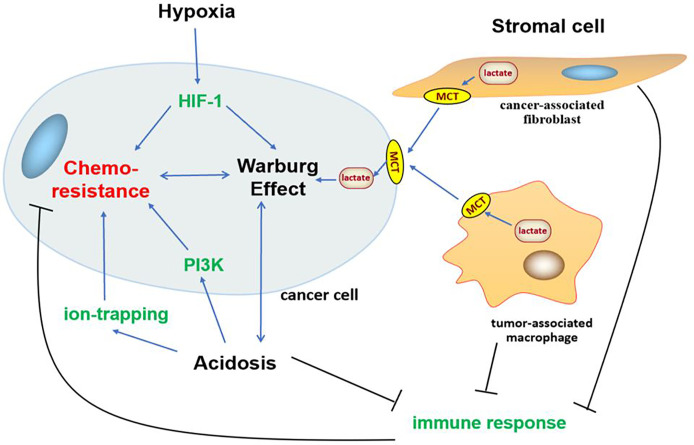
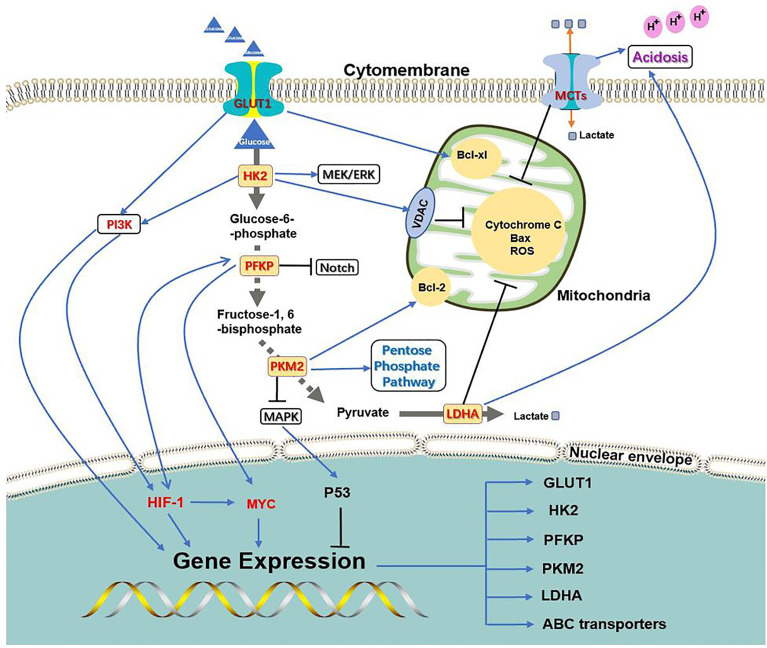
Although chemotherapy can improve the overall survival and prognosis of cancer patients, chemoresistance remains an obstacle due to the diversity, heterogeneity, and adaptability to environmental alters in clinic. To determine more possibilities for cancer therapy, recent studies have begun to explore changes in the metabolism, especially glycolysis. The Warburg effect is a hallmark of cancer that refers to the preference of cancer cells to metabolize glucose anaerobically rather than aerobically, even under normoxia, which contributes to chemoresistance. However, the association between glycolysis and chemoresistance and molecular mechanisms of glycolysis-induced chemoresistance remains unclear. This review describes the mechanism of glycolysis-induced chemoresistance from the aspects of glycolysis process, signaling pathways, tumor microenvironment, and their interactions. The understanding of how glycolysis induces chemoresistance may provide new molecular targets and concepts for cancer therapy.
尽管化疗可以提高癌症患者的总生存率和预后,但由于临床上肿瘤的多样性、异质性以及对环境改变的适应性,化疗耐药仍然是一个障碍。为了确定癌症治疗的更多可能性,最近的研究开始探索代谢变化,尤其是糖酵解。瓦伯格效应是癌症的一个标志,指的是即使在常氧条件下,癌细胞也倾向于无氧代谢葡萄糖而非有氧代谢,这会导致化疗耐药。然而,糖酵解与化疗耐药之间的关联以及糖酵解诱导化疗耐药的分子机制仍不清楚。本综述从糖酵解过程、信号通路、肿瘤微环境及其相互作用等方面描述了糖酵解诱导化疗耐药的机制。对糖酵解如何诱导化疗耐药的理解可能为癌症治疗提供新的分子靶点和理念。