Wang Yizhuo, Carter Bing Z, Li Ziyi, Huang Xuelin
Department of Biostatistics, The University of Texas MD Anderson Cancer Center, Houston, Texas, USA.
Section of Molecular Hematology and Therapy, Department of Leukemia, The University of Texas MD Anderson Cancer Center, Houston, Texas, USA.
JAMIA Open. 2022 Feb 8;5(1):ooab107. doi: 10.1093/jamiaopen/ooab107. eCollection 2022 Apr.
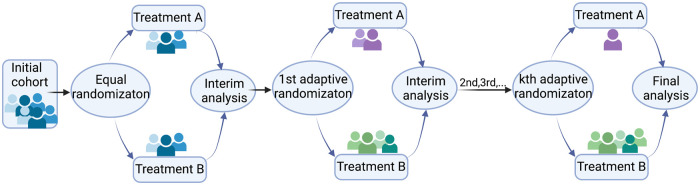
A key component for precision medicine is a good prediction algorithm for patients' response to treatments. We aim to implement machine learning (ML) algorithms into the response-adaptive randomization (RAR) design and improve the treatment outcomes.
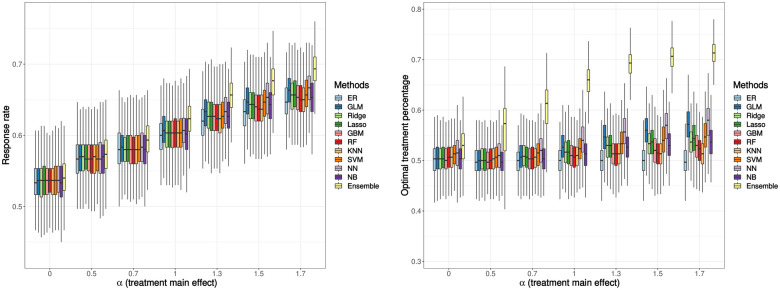
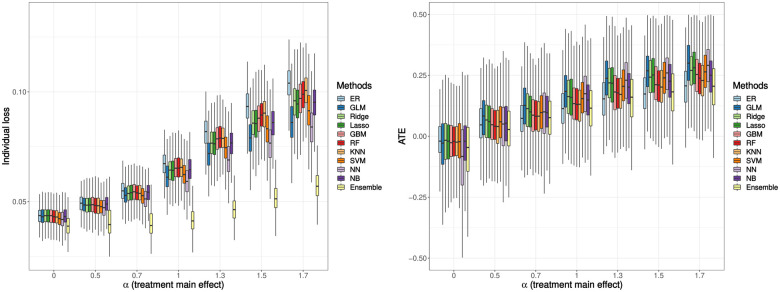
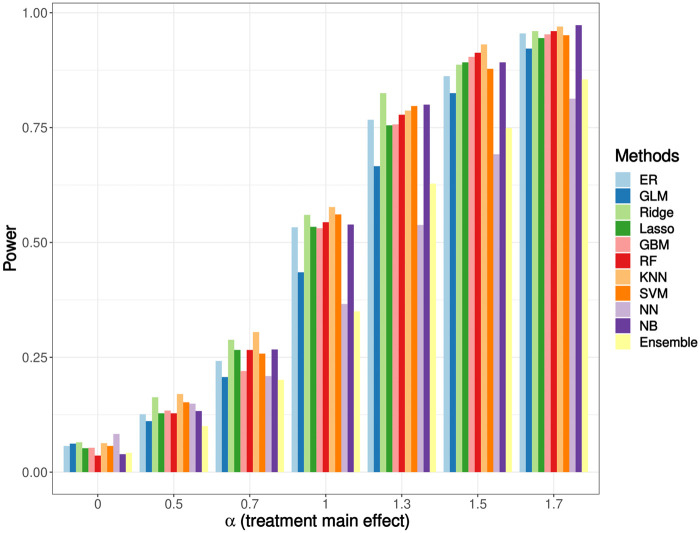
We incorporated 9 ML algorithms to model the relationship of patient responses and biomarkers in clinical trial design. Such a model predicted the response rate of each treatment for each new patient and provide guidance for treatment assignment. Realizing that no single method may fit all trials well, we also built an ensemble of these 9 methods. We evaluated their performance through quantifying the benefits for trial participants, such as the overall response rate and the percentage of patients who receive their optimal treatments.
Simulation studies showed that the adoption of ML methods resulted in more personalized optimal treatment assignments and higher overall response rates among trial participants. Compared with each individual ML method, the ensemble approach achieved the highest response rate and assigned the largest percentage of patients to their optimal treatments. For the real-world study, we successfully showed the potential improvements if the proposed design had been implemented in the study.
In summary, the ML-based RAR design is a promising approach for assigning more patients to their personalized effective treatments, which makes the clinical trial more ethical and appealing. These features are especially desirable for late-stage cancer patients who have failed all the Food and Drug Administration (FDA)-approved treatment options and only can get new treatments through clinical trials.
精准医学的一个关键组成部分是一种用于预测患者对治疗反应的良好算法。我们旨在将机器学习(ML)算法应用于反应适应性随机化(RAR)设计中,并改善治疗结果。
我们纳入了9种ML算法,以在临床试验设计中对患者反应与生物标志物之间的关系进行建模。这样的模型预测了每位新患者对每种治疗的反应率,并为治疗分配提供指导。鉴于没有单一方法可能适用于所有试验,我们还构建了这9种方法的集成模型。我们通过量化对试验参与者的益处来评估它们的性能,例如总体反应率以及接受最佳治疗的患者百分比。
模拟研究表明,采用ML方法可导致更个性化的最佳治疗分配,并使试验参与者的总体反应率更高。与每种单独的ML方法相比,集成方法实现了最高的反应率,并将最大比例的患者分配到了最佳治疗方案。对于实际研究,我们成功展示了如果在该研究中实施所提出的设计可能带来的潜在改善。
总之,基于ML的RAR设计是一种很有前景的方法,可将更多患者分配到个性化的有效治疗中,这使得临床试验更具伦理道德且更具吸引力。这些特性对于那些已用尽所有美国食品药品监督管理局(FDA)批准的治疗方案且只能通过临床试验获得新治疗的晚期癌症患者尤为可取。