CAS Key Laboratory of RNA Biology, Institute of Biophysics, Chinese Academy of Sciences, Beijing 100101, China.
University of Chinese Academy of Sciences, Beijing 100049, China.
Nucleic Acids Res. 2022 Mar 21;50(5):2836-2853. doi: 10.1093/nar/gkac099.
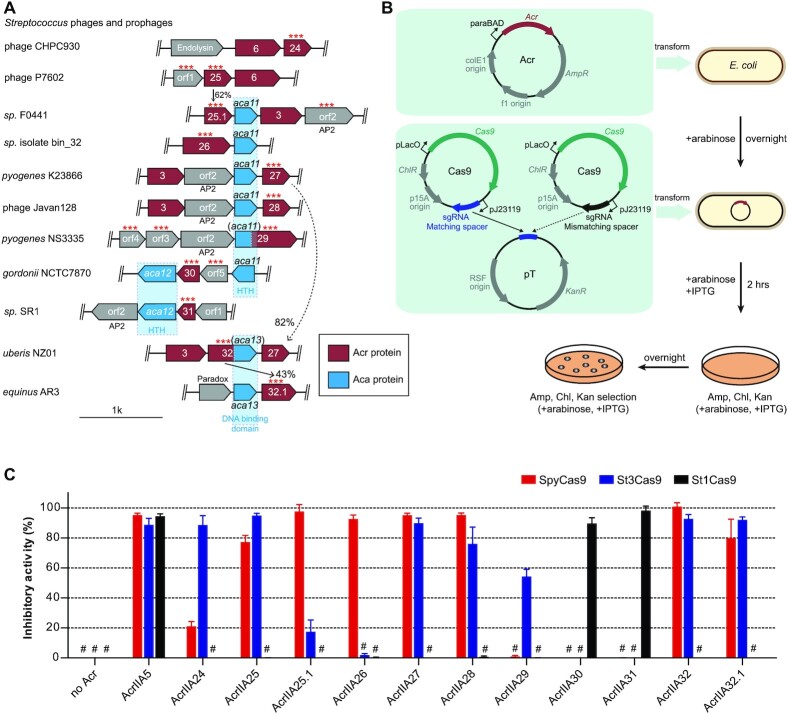
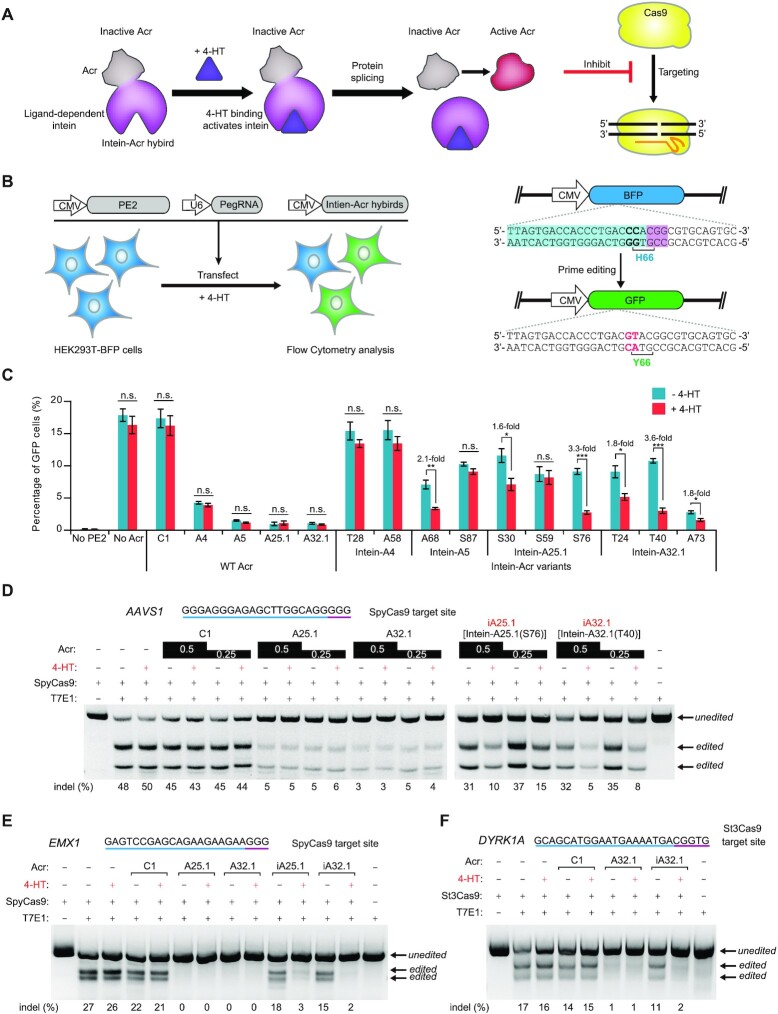
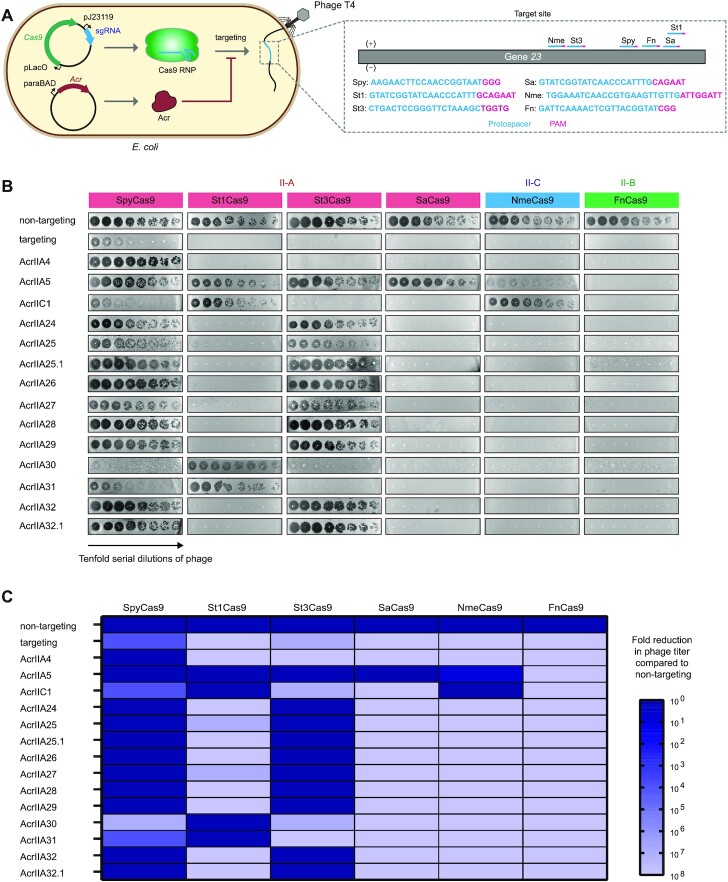
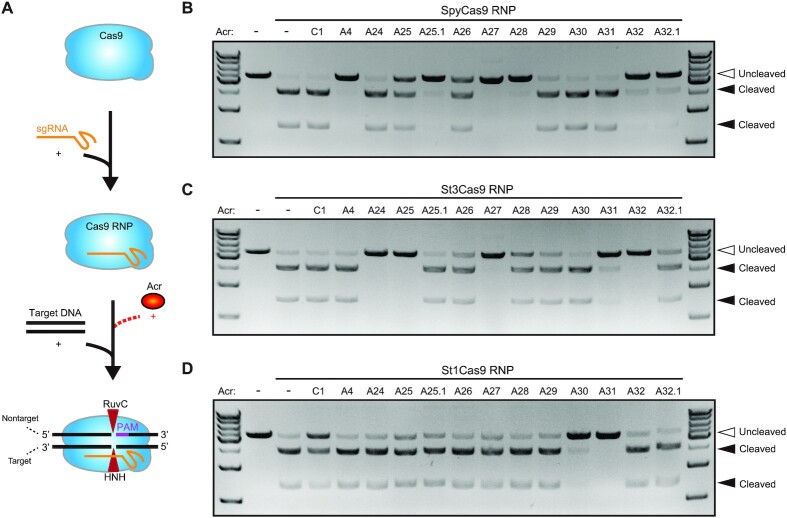
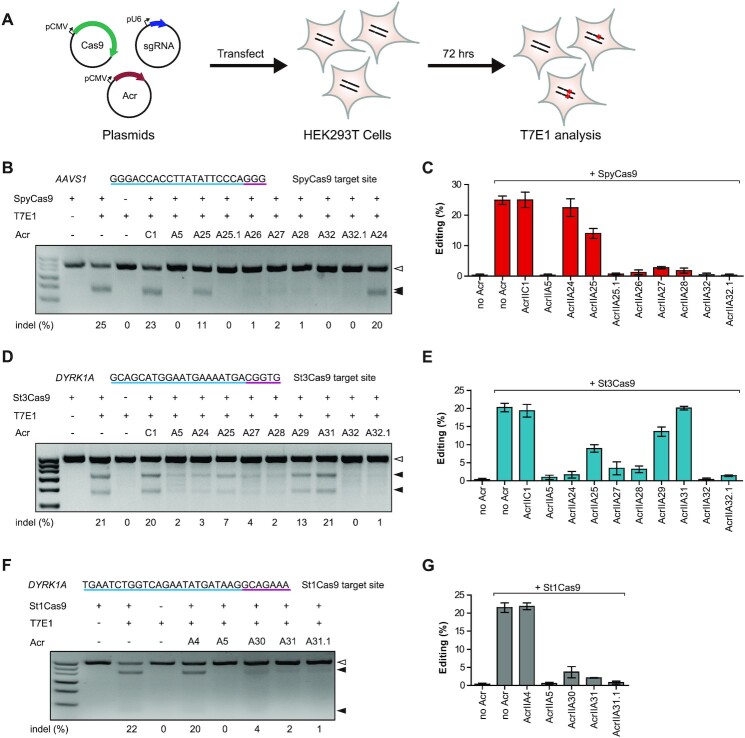
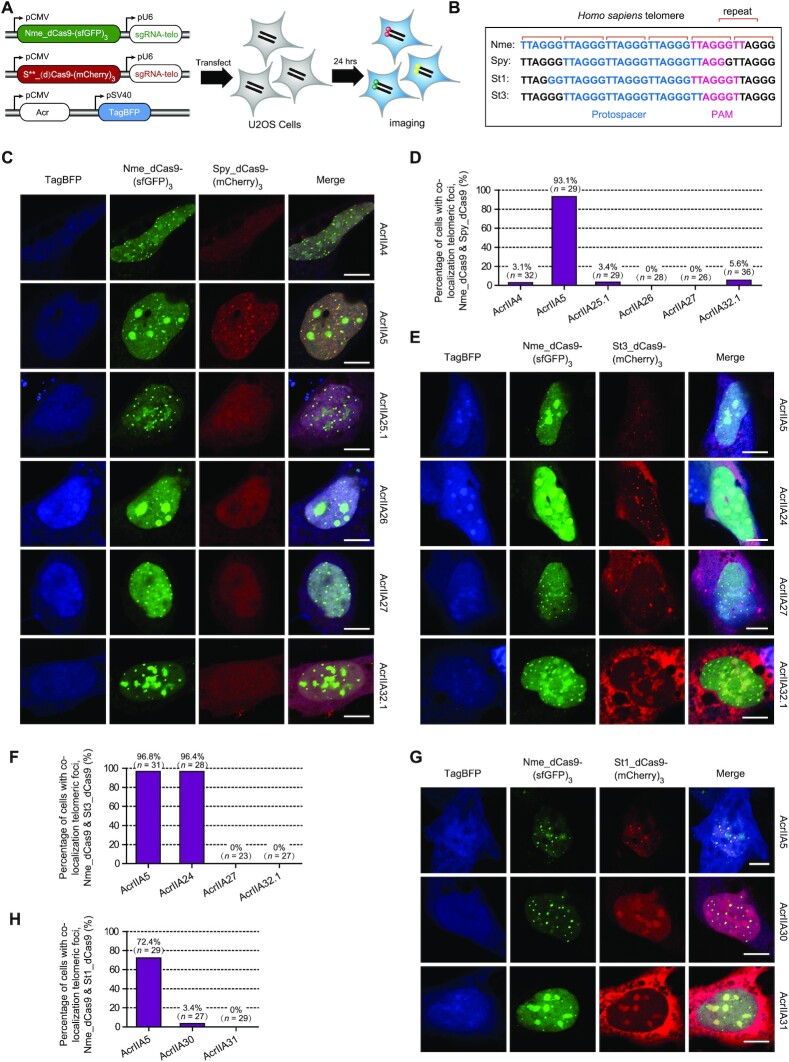
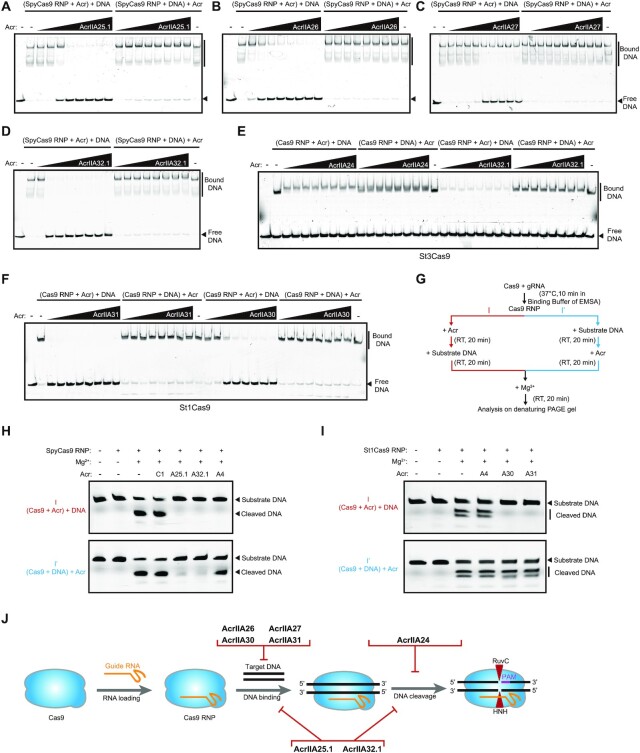
Anti-CRISPR (Acr) proteins are encoded by many mobile genetic elements (MGEs) such as phages and plasmids to combat CRISPR-Cas adaptive immune systems employed by prokaryotes, which provide powerful tools for CRISPR-Cas-based applications. Here, we discovered nine distinct type II-A anti-CRISPR (AcrIIA24-32) families from Streptococcus MGEs and found that most Acrs can potently inhibit type II-A Cas9 orthologs from Streptococcus (SpyCas9, St1Cas9 or St3Cas9) in bacterial and human cells. Among these Acrs, AcrIIA26, AcrIIA27, AcrIIA30 and AcrIIA31 are able to block Cas9 binding to DNA, while AcrIIA24 abrogates DNA cleavage by Cas9. Notably, AcrIIA25.1 and AcrIIA32.1 can inhibit both DNA binding and DNA cleavage activities of SpyCas9, exhibiting unique anti-CRISPR characteristics. Importantly, we developed several chemically inducible anti-CRISPR variants based on AcrIIA25.1 and AcrIIA32.1 by comprising hybrids of Acr protein and the 4-hydroxytamoxifen-responsive intein, which enabled post-translational control of CRISPR-Cas9-mediated genome editing in human cells. Taken together, our work expands the diversity of type II-A anti-CRISPR families and the toolbox of Acr proteins for the chemically inducible control of Cas9-based applications.
抗 CRISPR (Acr) 蛋白由许多移动遗传元件 (MGEs) 编码,如噬菌体和质粒,以对抗原核生物中使用的 CRISPR-Cas 适应性免疫系统,这为基于 CRISPR-Cas 的应用提供了强大的工具。在这里,我们从链球菌 MGEs 中发现了九个不同的 II-A 型抗 CRISPR (AcrIIA24-32) 家族,发现大多数 Acrs 可以在细菌和人类细胞中强烈抑制链球菌的 II-A Cas9 同源物 (SpyCas9、St1Cas9 或 St3Cas9)。在这些 Acrs 中,AcrIIA26、AcrIIA27、AcrIIA30 和 AcrIIA31 能够阻止 Cas9 与 DNA 的结合,而 AcrIIA24 则使 Cas9 无法切割 DNA。值得注意的是,AcrIIA25.1 和 AcrIIA32.1 可以抑制 SpyCas9 的 DNA 结合和 DNA 切割活性,表现出独特的抗 CRISPR 特征。重要的是,我们基于 AcrIIA25.1 和 AcrIIA32.1 开发了几种化学诱导型抗 CRISPR 变体,这些变体由 Acr 蛋白和 4-羟基他莫昔芬反应性内含肽的杂合体组成,这使得 Cas9 介导的基因组编辑在人类细胞中的翻译后调控成为可能。总之,我们的工作扩展了 II-A 型抗 CRISPR 家族的多样性和 Acr 蛋白的工具包,用于 Cas9 为基础的应用的化学诱导控制。