Norwegian Institute of Public Health, PB 222 Skøyen, 0213 Oslo, Norway.
Department of Microbiology and Infection Control, University Hospital of North Norway, 9019 Tromsø, Norway; UiT The Arctic University of Norway, 9019 Tromsø, Norway.
Int J Infect Dis. 2022 May;118:10-20. doi: 10.1016/j.ijid.2022.02.025. Epub 2022 Feb 18.
To improve understanding of SARS-CoV-2-transmission and prevention measures on cruise ships, we investigated a Norwegian cruise ship outbreak from July to August 2020 using a multidisciplinary approach after a rapid outbreak response launched by local and national health authorities.
We conducted a cross-sectional study among crew members using epidemiologic data and results from SARS-CoV-2 polymerase chain reaction (PCR) of nasopharynx-oropharynx samples, antibody analyses of blood samples, and whole-genome sequencing.
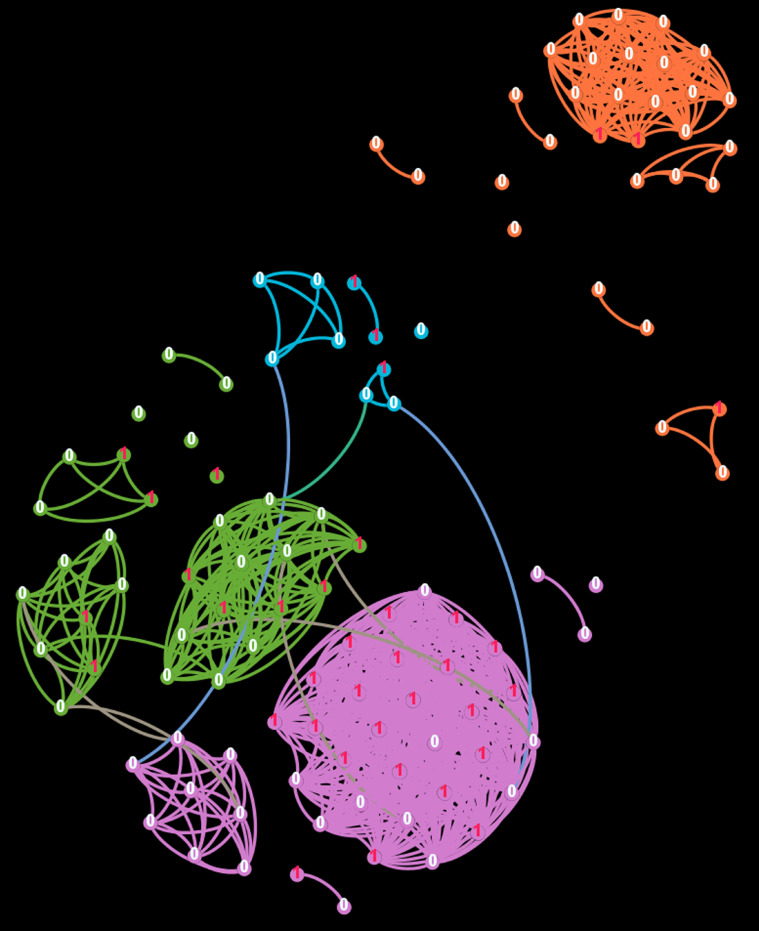
We included 114 multinational crew members (71% participation), median age 36 years, and 69% male. The attack rate was 33%; 32 of 37 outbreak cases were seropositive 5-10 days after PCR. One PCR-negative participant was seropositive, suggesting a previous infection. Network-analysis showed clusters based on common exposures, including embarkation date, nationality, sharing a cabin with an infected cabin-mate (adjusted odds ratio [AOR] 3.27; 95% confidence interval [CI] 0.97-11.07, p = 0.057), and specific workplaces (mechanical operations: 9.17 [1.82-45.78], catering: 6.11 [1.83-20.38]). Breaches in testing, quarantine, and isolation practices before/during expeditions were reported. Whole-genome sequencing revealed lineage B.1.36, previously identified in Asia. Despite extensive sequencing, the continued transmission of B.1.36 in Norway was not detected.
Our findings confirm the high risk of SARS-CoV-2-transmission on cruise ships related to workplace and cabin type and show that continued community transmission after the outbreak could be stopped by implementing immediate infection control measures at the final destination.
为了提高对 SARS-CoV-2 在游轮上传播和预防措施的理解,我们采用多学科方法调查了 2020 年 7 月至 8 月在挪威一艘游轮上发生的疫情。该疫情是在当地和国家卫生当局迅速做出疫情响应后发生的。
我们对船员进行了横断面研究,使用了流行病学数据和 SARS-CoV-2 聚合酶链反应(PCR)鼻咽和口咽样本、血液抗体分析和全基因组测序的结果。
我们纳入了 114 名多国籍船员(参与率 71%),中位年龄 36 岁,69%为男性。发病率为 33%;37 例暴发病例中有 32 例在 PCR 后 5-10 天呈血清阳性。1 名 PCR 阴性的参与者呈血清阳性,提示之前感染过。网络分析显示,集群是基于共同暴露的,包括登船日期、国籍、与感染的同舱室友同住(调整后的优势比[OR] 3.27;95%置信区间[CI] 0.97-11.07,p=0.057)和特定的工作场所(机械操作:9.17 [1.82-45.78],餐饮:6.11 [1.83-20.38])。报告了在探险前/期间检测、检疫和隔离措施的漏洞。全基因组测序显示,该病毒属于先前在亚洲发现的谱系 B.1.36。尽管进行了广泛的测序,但在挪威仍未检测到 B.1.36 的持续传播。
我们的研究结果证实了 SARS-CoV-2 在游轮上传播的高风险,与工作场所和舱型有关,并表明在最终目的地立即实施感染控制措施可以阻止疫情后的社区传播。