Laboratory of Viral Diseases, National Institute of Allergy and Infectious Diseases, National Institutes of Health, Bethesda, Maryland, USA.
mBio. 2022 Feb 22;13(1):e0010222. doi: 10.1128/mbio.00102-22.
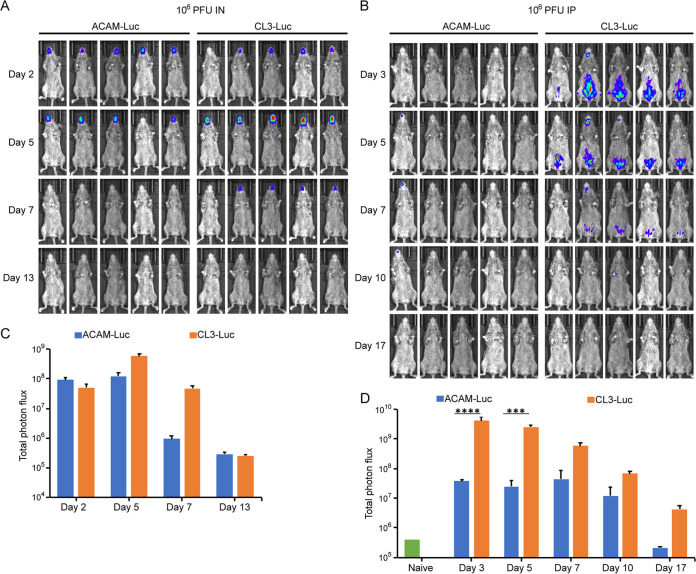
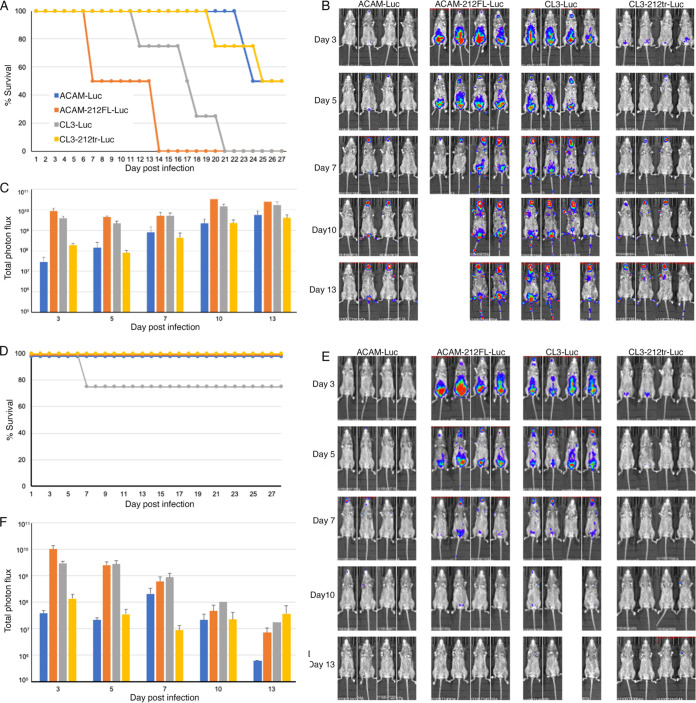
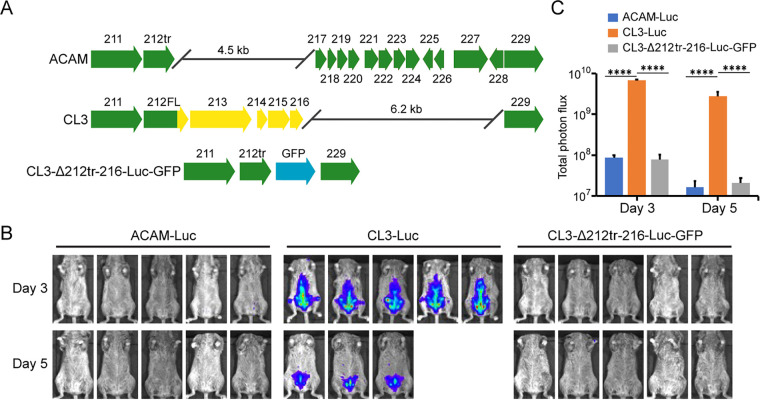
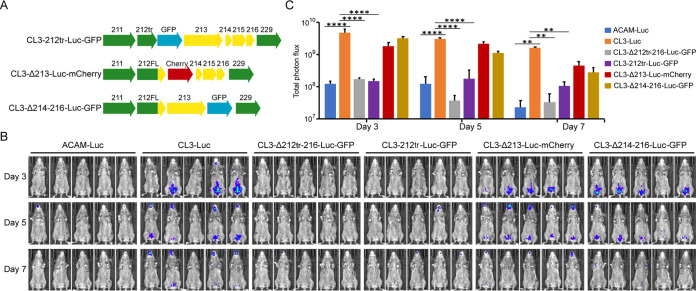
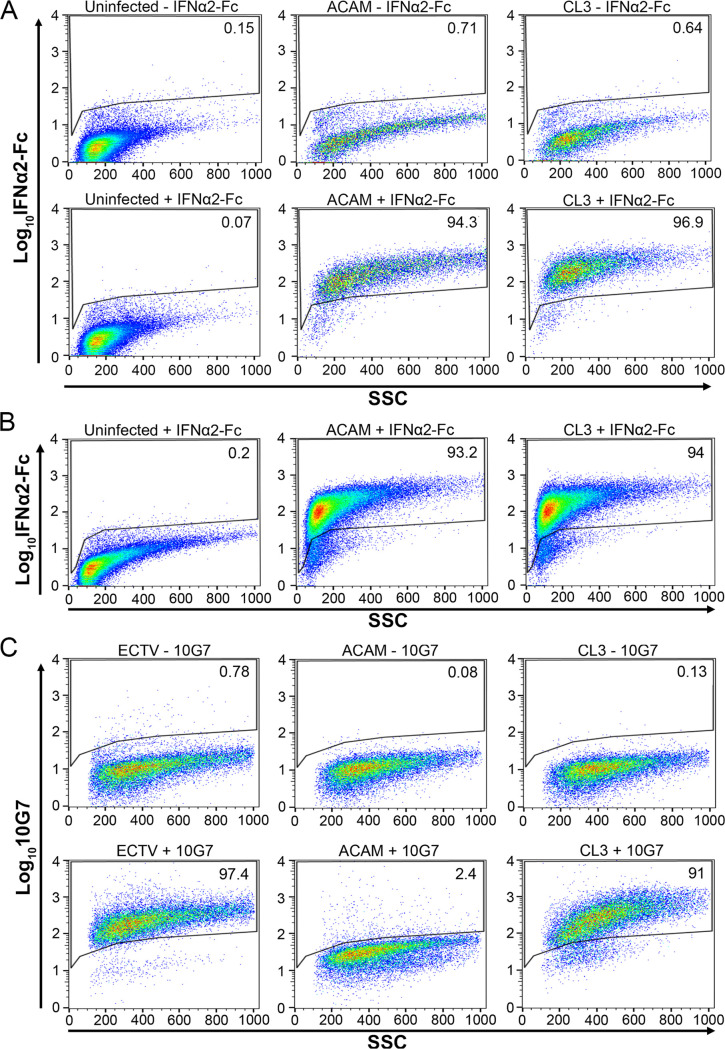
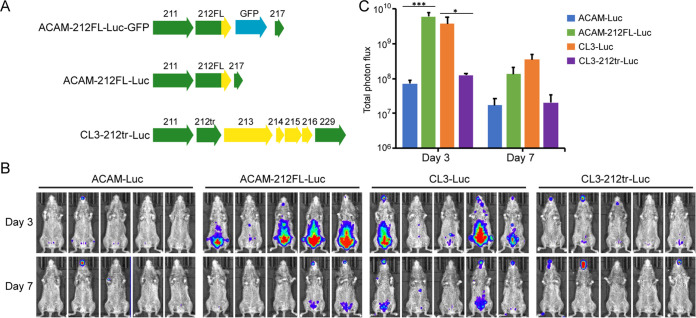
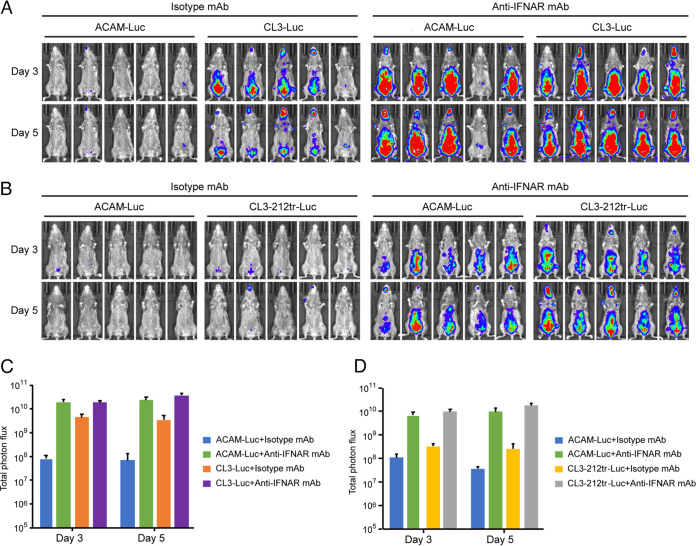
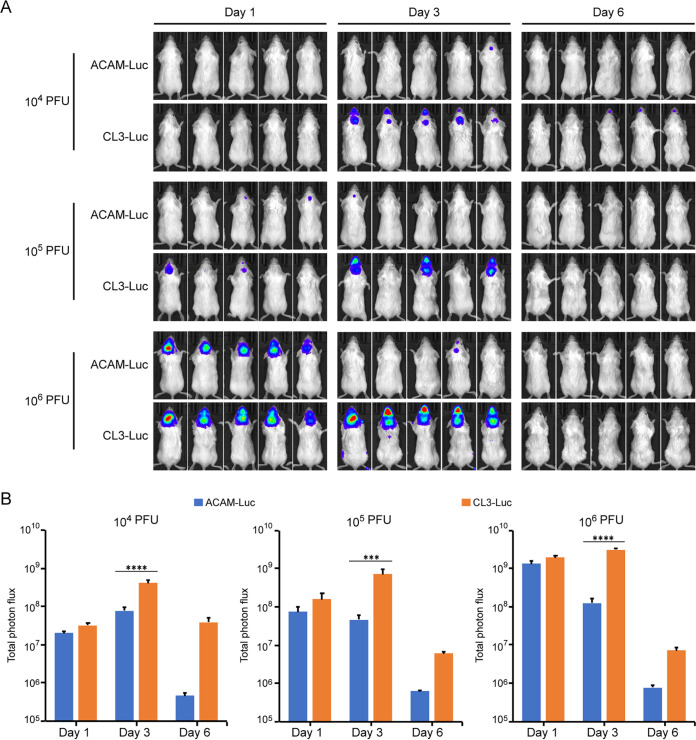
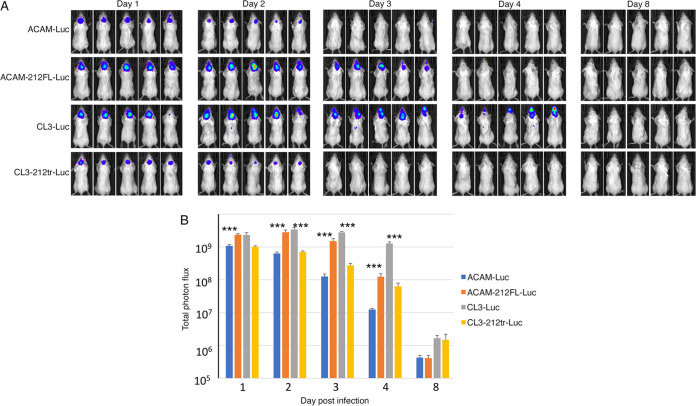
Although providing long-lasting immunity, smallpox vaccination was associated with local and systemic reactions and rarely with severe complications, including progressive vaccinia and postvaccinia encephalitis. As the Dryvax smallpox vaccine consists of a population of variants, we investigated a particularly pathogenic isolate called clone 3 (CL3). Virus replication was monitored by inserting the gene encoding firefly luciferase (Luc) into the genomes of CL3 and ACAM2000, the second-generation smallpox vaccine derived from a less virulent clone. Greater luminescence occurred following intranasal or intraperitoneal inoculation of mice with CL3-Luc than ACAM2000-Luc. Previous genome sequencing of CL3 and ACAM2000 revealed numerous differences that could affect pathogenicity. We focused on a 4.2-kbp segment, containing several open reading frames, in CL3 that is absent from ACAM2000 and determined that lower virulence of the latter was associated with a truncation of the interferon α/β (IFN-α/β) decoy receptor. Truncation of the decoy receptor in CL3-Luc and repair of the truncated version in ACAM2000-Luc decreased and increased virulence, respectively. Blockade of the mouse type 1 IFN receptor increased the virulence of ACAM2000-Luc to that of CL3-Luc, consistent with the role of IFN in attenuating the former. The severities of disease following intracranial inoculation of immunocompetent mice and intraperitoneal inoculation of T cell-depleted mice were also greater in viruses expressing the full-length decoy receptor. Previous evidence for the low affinity of a similarly truncated decoy receptor for IFN and the presence of a full-length decoy receptor in virus isolated from a patient with progressive vaccinia support our findings. Attenuated live viruses make effective vaccines, although concerns exist due to infrequent complications, particularly in individuals with immunological defects. Such complications occurred with smallpox vaccines, which were shown to be comprised of populations of variants. Clone 3, isolated from Dryvax, the vaccine most widely used in the United States during the smallpox eradication campaign, was particularly pathogenic in animal models. We demonstrated that the full-length IFN-α/β decoy receptor in CL3 and a truncation of the receptor in the clone used for the second-generation smallpox vaccine ACAM2000 account for their difference in pathogenicity. Viruses expressing the full-length decoy receptor were more virulent following intranasal, intraperitoneal, or intracranial inoculation of mice than ACAM2000, and disease was exacerbated following T cell depletion. Correspondingly, the full-length decoy receptor is present in smallpox vaccines with high rates of side effects and in a Dryvax clone obtained from a lesion in a patient with progressive vaccinia.
虽然天花疫苗能提供持久的免疫力,但会引起局部和全身反应,偶尔还会出现严重并发症,包括进行性牛痘和牛痘后脑炎。由于 Dryvax 天花疫苗由多种变体组成,我们研究了一种特别具有致病性的分离株,称为克隆 3(CL3)。通过将编码萤火虫荧光素酶(Luc)的基因插入 CL3 和 ACAM2000 基因组中,我们监测病毒复制,ACAM2000 是由毒力较弱的克隆衍生而来的第二代天花疫苗。与 ACAM2000-Luc 相比,CL3-Luc 经鼻内或腹腔接种后产生更强的荧光。CL3 和 ACAM2000 的先前基因组测序显示,许多差异可能会影响其致病性。我们专注于 CL3 中包含几个开放阅读框的 4.2-kbp 片段,该片段在 ACAM2000 中缺失,并确定后者的低毒力与干扰素 α/β(IFN-α/β)诱饵受体的截断有关。CL3-Luc 中的诱饵受体截断和 ACAM2000-Luc 中截断版本的修复分别降低和增加了毒力。阻断小鼠 I 型 IFN 受体增加了 ACAM2000-Luc 的毒力,使其与 CL3-Luc 相当,这与 IFN 在减弱前者方面的作用一致。在免疫功能正常的小鼠颅内接种和 T 细胞耗竭小鼠腹腔接种后,表达全长诱饵受体的病毒引起的疾病严重程度也更高。先前的证据表明,类似截断的诱饵受体与 IFN 的低亲和力以及在患有进行性牛痘的患者中分离出的病毒中存在全长诱饵受体支持我们的发现。减毒活病毒可作为有效的疫苗,但由于罕见的并发症(尤其是在免疫缺陷个体中),人们对此存在担忧。这种并发症发生在天花疫苗中,这些疫苗被证明是由变体组成的。从 Dryvax 中分离出来的 CL3 是在美国天花根除运动中使用最广泛的疫苗,在动物模型中特别具有致病性。我们证明,CL3 中的全长 IFN-α/β 诱饵受体和第二代天花疫苗 ACAM2000 中受体的截断是导致其致病性差异的原因。与 ACAM2000 相比,表达全长诱饵受体的病毒在经鼻内、腹腔内或颅内接种小鼠后毒力更强,在 T 细胞耗竭后疾病加重。相应地,全长诱饵受体存在于具有高副作用率的天花疫苗中,也存在于从患有进行性牛痘的患者病变中获得的 Dryvax 克隆中。