Singh Aprajita, Singh Alakh Narayan, Rathor Nisha, Chaudhry Rama, Singh Sudhir Kumar, Nath Gopal
Department of Microbiology, Institute of Medical Sciences, Banaras Hindu University, Varanasi, India.
Department of Microbiology, All India Institute of Medical Sciences, New Delhi, India.
Front Pharmacol. 2022 Feb 7;13:778676. doi: 10.3389/fphar.2022.778676. eCollection 2022.
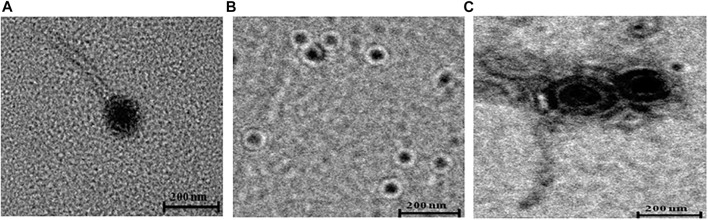
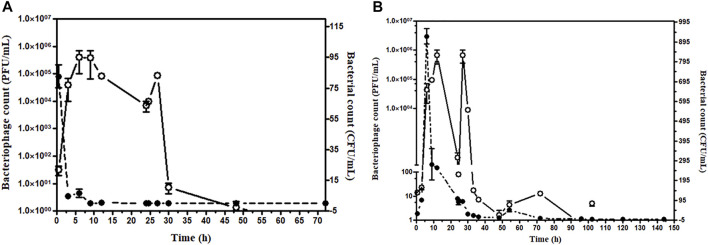
The emergence of resistance against last-resort antibiotics, carbapenem and colistin, in has been reported across the globe. Bacteriophage therapy seems to be one of the most promising alternatives. This study aimed to optimize the quantity and frequency of bacteriophage cocktail dosage/s required to eradicate the bacteria in immunocompetent septicemic mice. The three most active phages ɸKpBHU4, ɸKpBHU7, and ɸKpBHU14 characterized by molecular and TEM analyses were in the form of cocktail and was given intraperitoneally to mice after inducing the septicemia mice model with a constant dose of 8 × 10 colony-forming unit/mouse (CFU/mouse) . After that, the efficacy of the phage cocktail was analyzed at different dosages, that is, in increasing, variable, constant, and repeated dosages. Furthermore, interleukin-6 and endotoxin levels were estimated with variable doses of phage cocktail. We have elucidated that phage therapy is effective against the septicemia mice model and is a promising alternative to antibiotic treatments. Our work delineates that a single dose of phage cocktail with 1 × 10 plaque-forming unit/mouse (PFU/mouse) protects the mice from fatal outcomes at any stage of septicemia. However, a higher phage dosage of 1 × 10 PFU/mice is fatal when given at the early hours of septicemia, while this high dose is not fatal at the later stages of septicemia. Moreover, multiple repeated dosages are required to eradicate the bacteria from peripheral blood. In addition, the IL-6 levels in the 1 × 10 PFU/mouse group remain lower, but in the 1 × 10 PFU/mouse group remains high at all points, which were associated with fatal outcomes. Our study showed that the optimized relatively lower and multiple dosages of phage cocktails with the strict monitoring of vitals in clinical settings might cure septicemia caused by MDR bacteria with different severity of infection.
全球范围内均有报道出现了对碳青霉烯类和黏菌素等最后一道防线抗生素产生耐药性的情况。噬菌体疗法似乎是最有前景的替代方法之一。本研究旨在优化噬菌体鸡尾酒制剂剂量所需的数量和频率,以根除免疫功能正常的败血症小鼠体内的细菌。通过分子和透射电镜分析鉴定出的三种最具活性的噬菌体ɸKpBHU4、ɸKpBHU7和ɸKpBHU14制成鸡尾酒制剂形式,在用8×10菌落形成单位/小鼠(CFU/小鼠)的恒定剂量诱导败血症小鼠模型后,经腹腔注射给小鼠。之后,分析了噬菌体鸡尾酒制剂在不同剂量下的疗效,即递增、可变、恒定和重复剂量。此外,还评估了不同剂量噬菌体鸡尾酒制剂下白细胞介素-6和内毒素水平。我们已经阐明噬菌体疗法对败血症小鼠模型有效,是抗生素治疗的一种有前景的替代方法。我们的研究表明,单剂量1×10噬斑形成单位/小鼠(PFU/小鼠)的噬菌体鸡尾酒制剂可在败血症的任何阶段保护小鼠免于致命结局。然而,在败血症早期给予1×10 PFU/小鼠的较高噬菌体剂量是致命的,而在败血症后期该高剂量并不致命。此外,需要多次重复给药才能从外周血中根除细菌。此外,1×10 PFU/小鼠组的白细胞介素-6水平一直较低,但1×10 PFU/小鼠组的白细胞介素-6水平在所有时间点都很高,这与致命结局相关。我们的研究表明,在临床环境中严格监测生命体征的情况下,优化的相对较低且多次给药的噬菌体鸡尾酒制剂可能治愈由不同感染严重程度的多重耐药菌引起的败血症。