Xu Tingting, Gu Hanxin, Zhang Changsong, Zhang Wushuang, Liang Xiaolong, Cheng Xiaoxia
The Affiliated Suzhou Science and Technology Town Hospital of Nanjing Medical University, Suzhou, China.
Department of Gastrointestinal Surgery, the First Affiliated Hospital of Chongqing Medical University, Chongqing, China.
Front Genet. 2022 Feb 7;13:843538. doi: 10.3389/fgene.2022.843538. eCollection 2022.
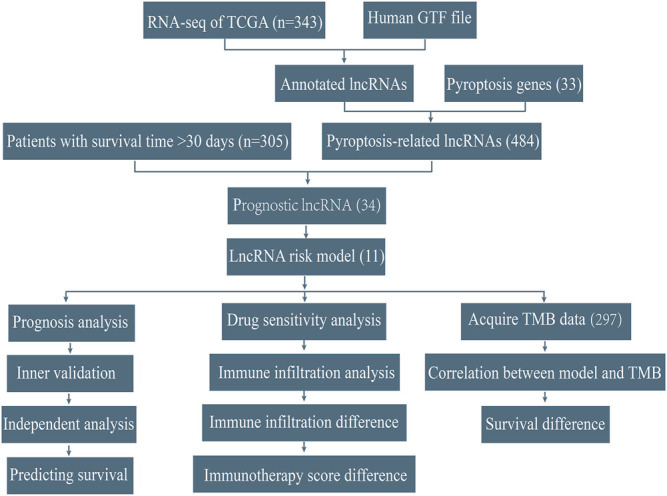
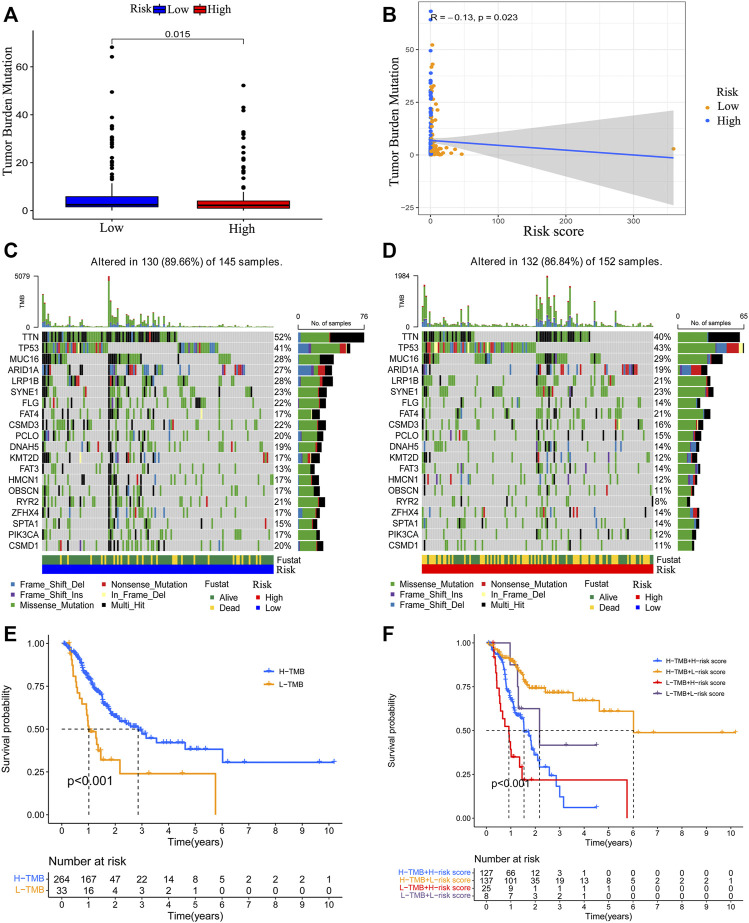
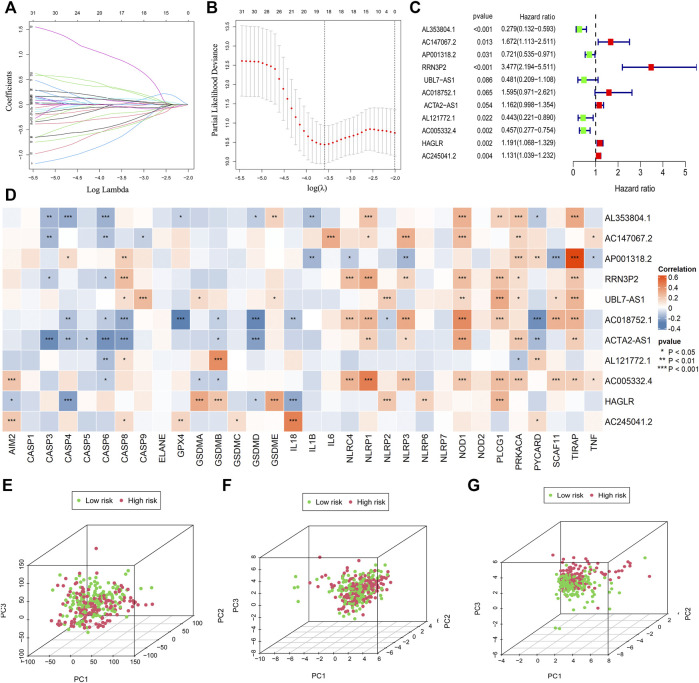
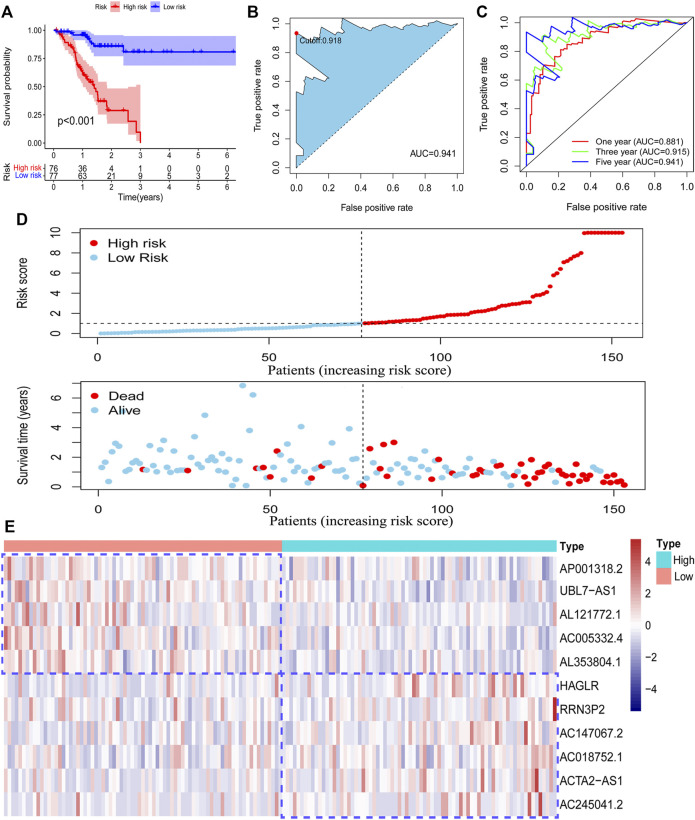
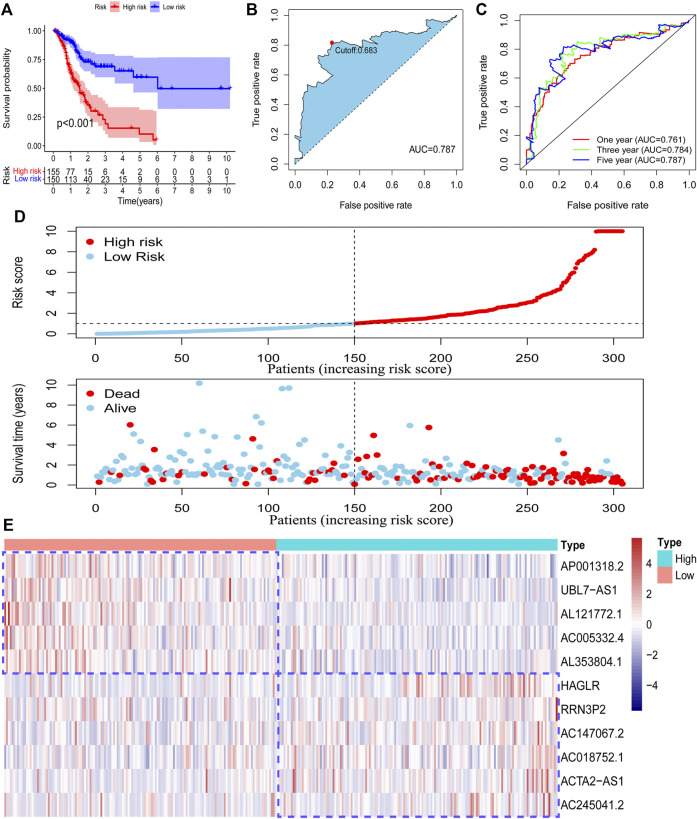
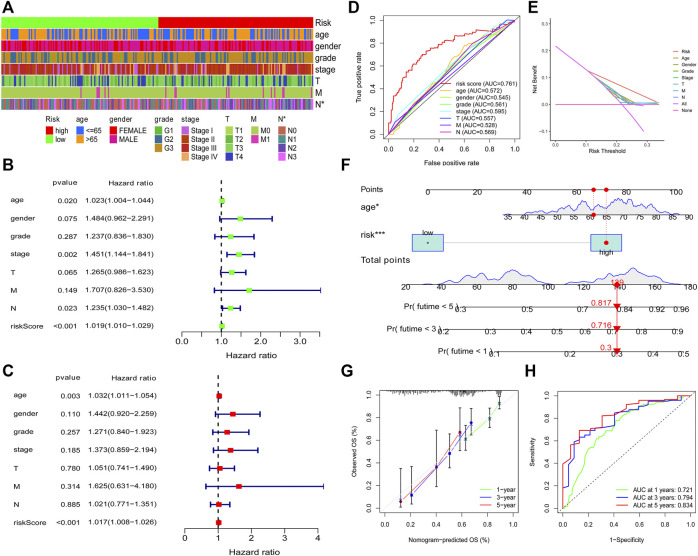
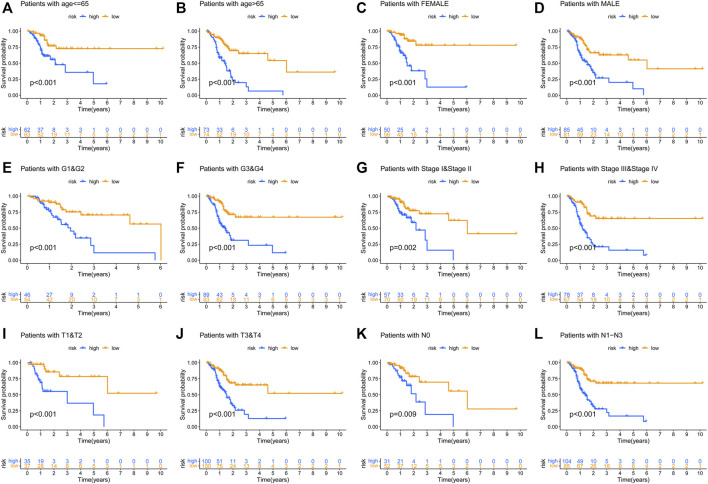
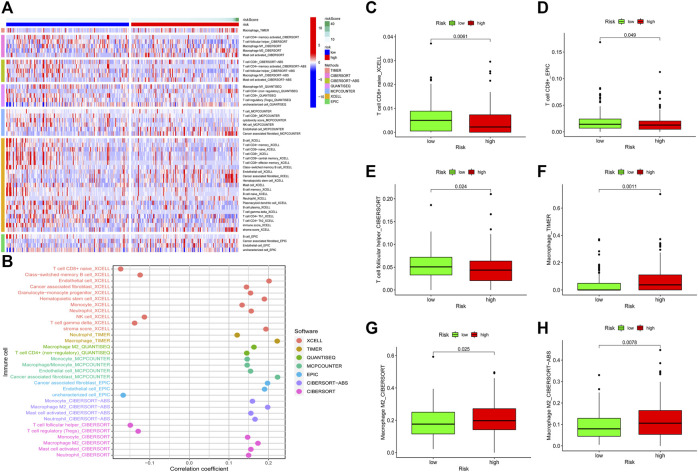
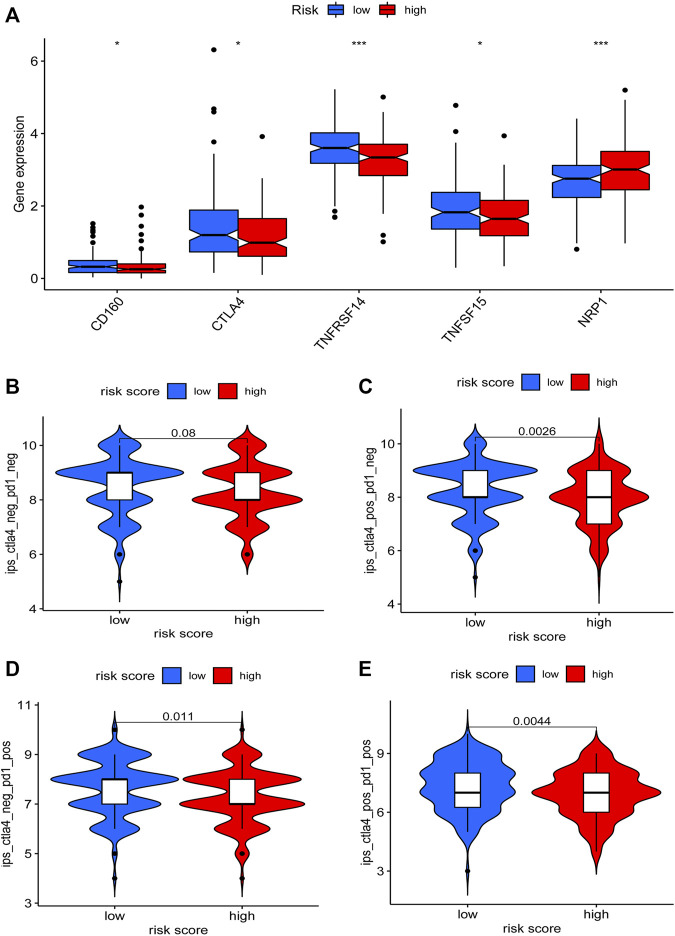
Gastric cancer (GC) is one of the most common malignant gastrointestinal tumors worldwide. Pyroptosis was widely reported to exert a crucial function in tumor development. In addition, pyroptosis was also proved to be associated with the immune landscape. However, whether pyroptosis-related lncRNAs are associated with the prognosis and the immune landscape of GC remains unclear. In the present study, we first constructed a novel risk model by using pyroptosis-related lncRNAs. We identified 11 pyroptosis-related lncRNAs for the establishment of the risk model. The risk model could be used to predict the survival outcome and immune landscape of GC patients. The results of survival analysis and AUC value of a time-related ROC curve proved that our risk model has an elevated efficiency and accuracy in predicting the survival outcome of patients. We also found that the risk model was also associated with the immune landscape, drug sensitivity, and tumor mutation burden of GC patients. In conclusion, our risk model plays a crucial role in the tumor immune microenvironment and could be used to predict survival outcomes of GC patients.
胃癌(GC)是全球最常见的恶性胃肠道肿瘤之一。广泛报道细胞焦亡在肿瘤发展中发挥关键作用。此外,细胞焦亡也被证明与免疫格局有关。然而,细胞焦亡相关lncRNAs是否与GC的预后和免疫格局相关仍不清楚。在本研究中,我们首先利用细胞焦亡相关lncRNAs构建了一种新型风险模型。我们鉴定出11种细胞焦亡相关lncRNAs用于建立风险模型。该风险模型可用于预测GC患者的生存结局和免疫格局。生存分析结果和时间相关ROC曲线的AUC值证明,我们的风险模型在预测患者生存结局方面具有更高的效率和准确性。我们还发现该风险模型也与GC患者的免疫格局、药物敏感性和肿瘤突变负担有关。总之,我们的风险模型在肿瘤免疫微环境中起关键作用,可用于预测GC患者的生存结局。