Department of Electronics and Communication Engineering, Sethu Institute of Technology, Kariapatti, India.
College of Science and Engineering, Hamad Bin Khalifa University, Qatar Foundation, Doha, Qatar.
Front Public Health. 2022 Feb 7;10:834032. doi: 10.3389/fpubh.2022.834032. eCollection 2022.
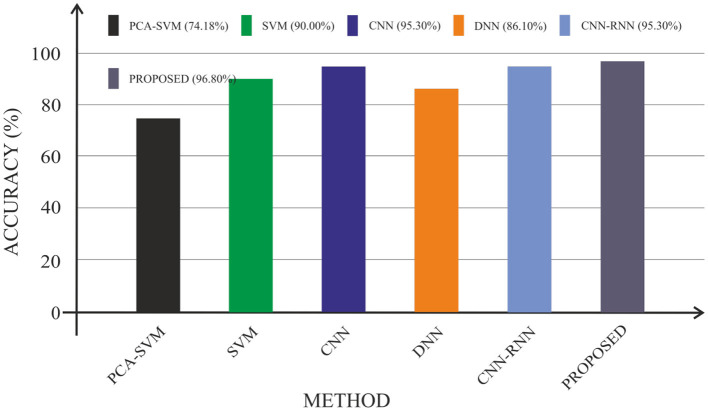
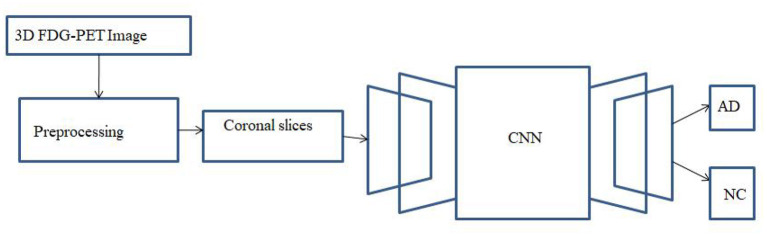
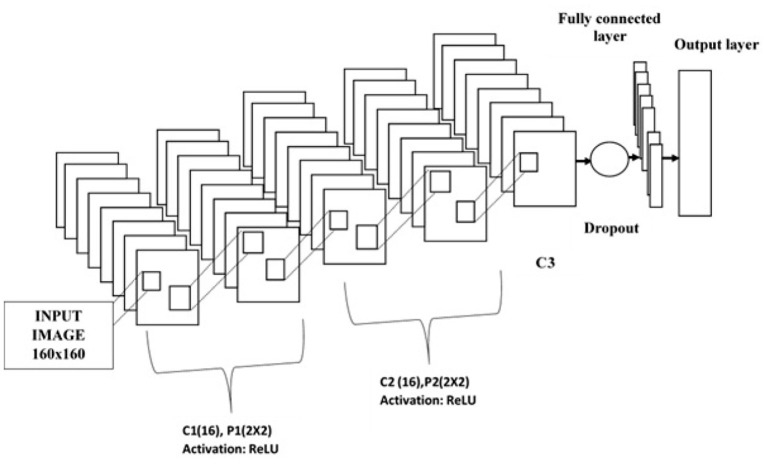
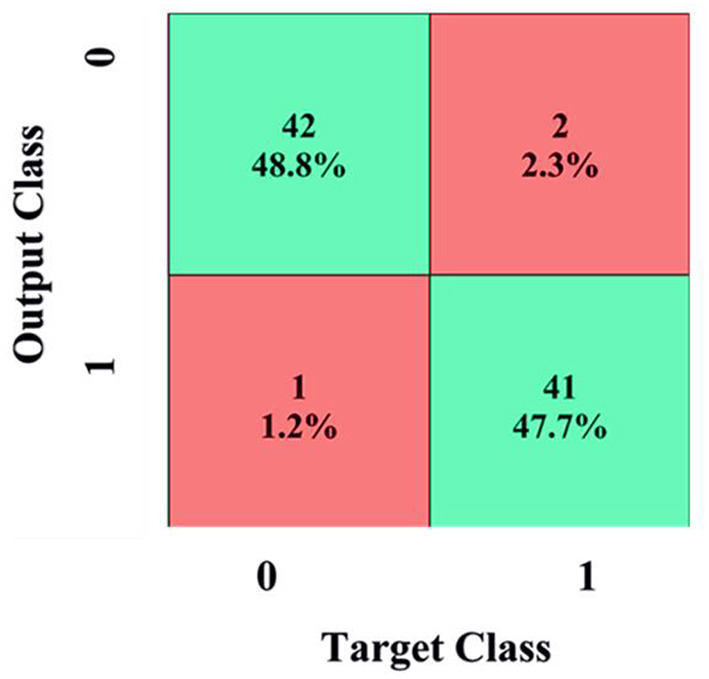
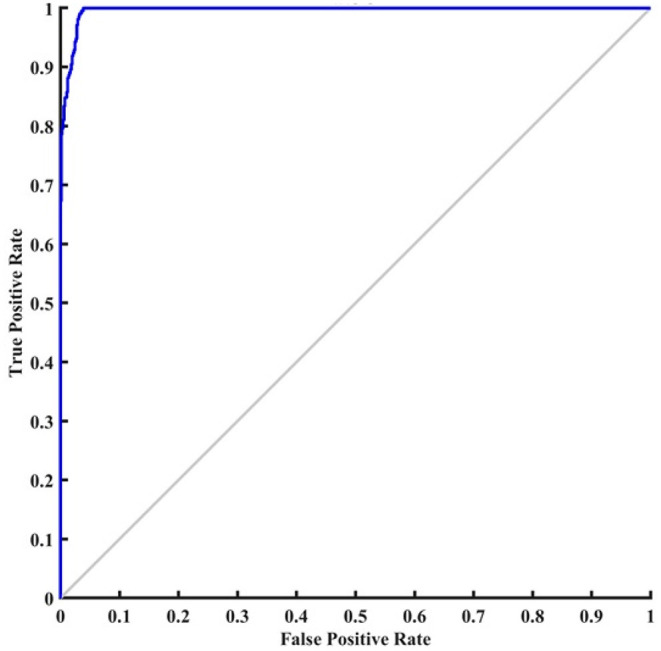
Alzheimer's Disease (AD) is a progressive, neurodegenerative brain disease and is an incurable ailment. No drug exists for AD, but its progression can be delayed if the disorder is identified at its initial stage. Therefore, an early analysis of AD is of fundamental importance for patient care and efficient treatment. Neuroimaging techniques aim to assist the physician in the diagnosis of brain disorders by using images. Positron emission tomography (PET) is a kind of neuroimaging technique employed to create 3D images of the brain. Due to many PET images, researchers attempted to develop computer-aided diagnosis (CAD) to differentiate normal control from AD. Most of the earlier methods used image processing techniques for preprocessing and attributes extraction and then developed a model or classifier to classify the brain images. As a result, the retrieved features had a significant impact on the recognition rate of previous techniques. A novel and enhanced CAD system based on a convolutional neural network (CNN) is formulated to address this issue, capable of discriminating normal control from Alzheimer's disease patients. The proposed approach is evaluated using the 18FDG-PET images of 855 patients, including 635 normal control and 220 Alzheimer's disease patients from the ADNI database. The result showed that the proposed CAD system yields an accuracy of 96%, a sensitivity of 96%, and a specificity of 94%, leading to splendid performance when related to the methods already in use that are specified in the literature.
阿尔茨海默病(AD)是一种进行性神经退行性脑疾病,是一种无法治愈的疾病。目前尚无治疗 AD 的药物,但如果在疾病早期发现,其进展可以得到延缓。因此,早期分析 AD 对患者护理和有效治疗至关重要。神经影像学技术旨在通过图像帮助医生诊断脑部疾病。正电子发射断层扫描(PET)是一种神经影像学技术,用于创建大脑的 3D 图像。由于有许多 PET 图像,研究人员试图开发计算机辅助诊断(CAD)来区分正常对照和 AD。大多数早期方法使用图像处理技术进行预处理和特征提取,然后开发模型或分类器对脑图像进行分类。因此,以前技术的识别率受检索到的特征的显著影响。为了解决这个问题,提出了一种基于卷积神经网络(CNN)的新型增强 CAD 系统,可以区分正常对照和阿尔茨海默病患者。该方法使用 ADNI 数据库中 855 名患者(包括 635 名正常对照和 220 名阿尔茨海默病患者)的 18FDG-PET 图像进行评估。结果表明,所提出的 CAD 系统的准确率为 96%,灵敏度为 96%,特异性为 94%,与文献中指定的现有方法相比,性能出色。