Aparicio-Trejo Omar Emiliano, Aranda-Rivera Ana Karina, Osorio-Alonso Horacio, Martínez-Klimova Elena, Sánchez-Lozada Laura Gabriela, Pedraza-Chaverri José, Tapia Edilia
Departamento de Fisiopatología Cardio-Renal, Instituto Nacional de Cardiología "Ignacio Chávez", Mexico City 14080, Mexico.
Laboratorio F-315, Departamento de Biología, Facultad de Química, Universidad Nacional Autónoma de México, Mexico City 04510, Mexico.
Antioxidants (Basel). 2022 Feb 11;11(2):356. doi: 10.3390/antiox11020356.
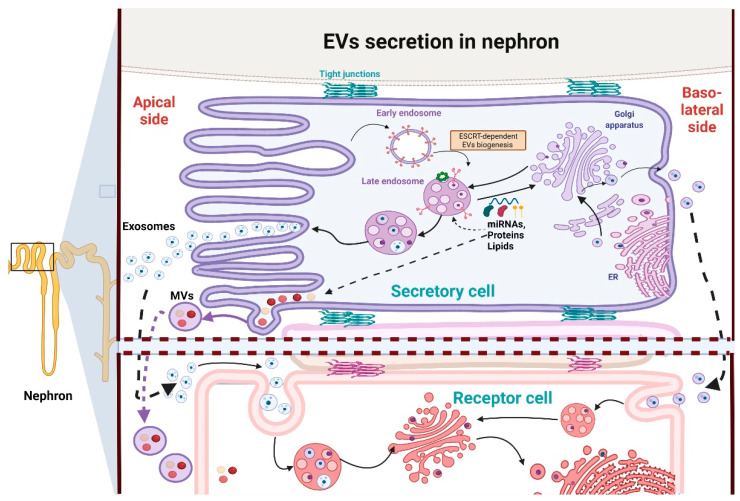
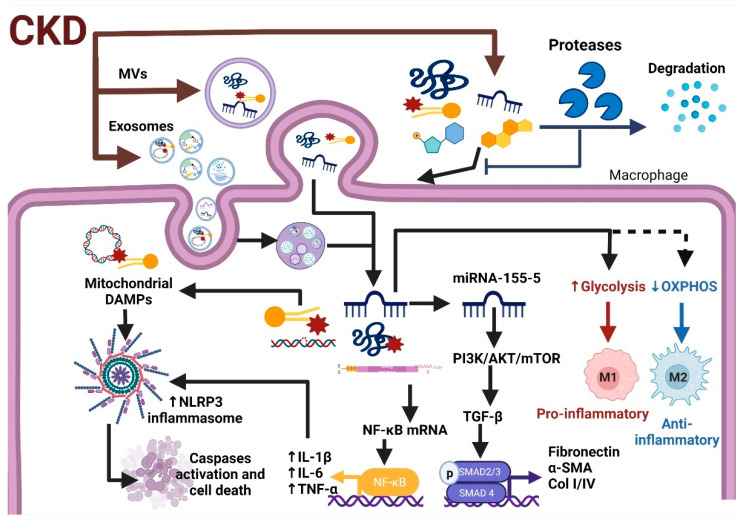
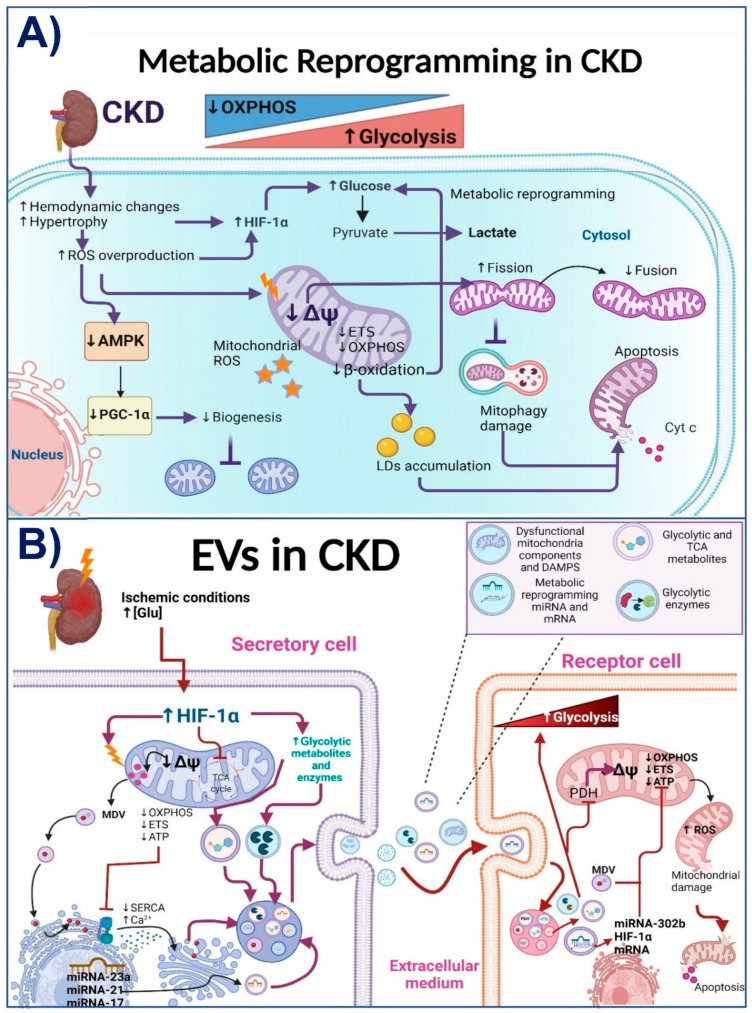
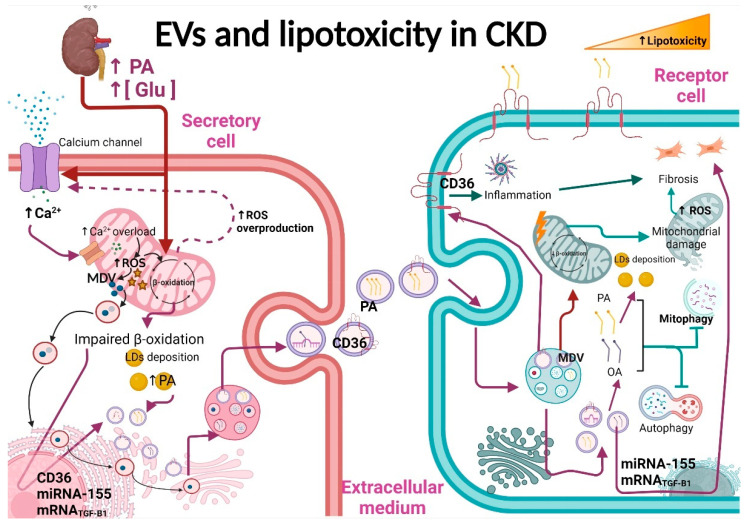
Chronic kidney disease (CKD) is a world health problem increasing dramatically. The onset of CKD is driven by several mechanisms; among them, metabolic reprogramming and changes in redox signaling play critical roles in the advancement of inflammation and the subsequent fibrosis, common pathologies observed in all forms of CKD. Extracellular vesicles (EVs) are cell-derived membrane packages strongly associated with cell-cell communication since they transfer several biomolecules that serve as mediators in redox signaling and metabolic reprogramming in the recipient cells. Recent studies suggest that EVs, especially exosomes, the smallest subtype of EVs, play a fundamental role in spreading renal injury in CKD. Therefore, this review summarizes the current information about EVs and their cargos' participation in metabolic reprogramming and mitochondrial impairment in CKD and their role in redox signaling changes. Finally, we analyze the effects of these EV-induced changes in the amplification of inflammatory and fibrotic processes in the progression of CKD. Furthermore, the data suggest that the identification of the signaling pathways involved in the release of EVs and their cargo under pathological renal conditions can allow the identification of new possible targets of injury spread, with the goal of preventing CKD progression.
慢性肾脏病(CKD)是一个急剧增加的全球性健康问题。CKD的发病由多种机制驱动;其中,代谢重编程和氧化还原信号变化在炎症进展及随后的纤维化过程中起关键作用,而纤维化是所有形式的CKD中常见的病理表现。细胞外囊泡(EVs)是源自细胞的膜包裹结构,与细胞间通讯密切相关,因为它们能传递多种生物分子,这些生物分子在受体细胞的氧化还原信号传导和代谢重编程中充当介质。最近的研究表明,EVs,尤其是最小的亚型外泌体,在CKD的肾脏损伤传播中起重要作用。因此,本综述总结了有关EVs及其货物参与CKD中的代谢重编程和线粒体损伤以及它们在氧化还原信号变化中的作用的当前信息。最后,我们分析了这些由EVs诱导的变化在CKD进展过程中对炎症和纤维化过程放大的影响。此外,数据表明,识别病理肾脏条件下参与EVs及其货物释放的信号通路,有助于识别损伤传播的新潜在靶点,以预防CKD进展。