Aldawsari Ghadeer M, Sabico Shaun, Alamro Abir A, Alenad Amal, Wani Kaiser, Alnaami Abdullah M, Khattak Malak N K, Masoud Mohammad S, Al-Daghri Nasser M, Alokail Majed S
Biochemistry Department, College of Science, King Saud University, Riyadh 11451, Saudi Arabia.
Chair for Biomarkers of Chronic Diseases, College of Science, King Saud University, Riyadh 11451, Saudi Arabia.
Biology (Basel). 2022 Feb 11;11(2):286. doi: 10.3390/biology11020286.
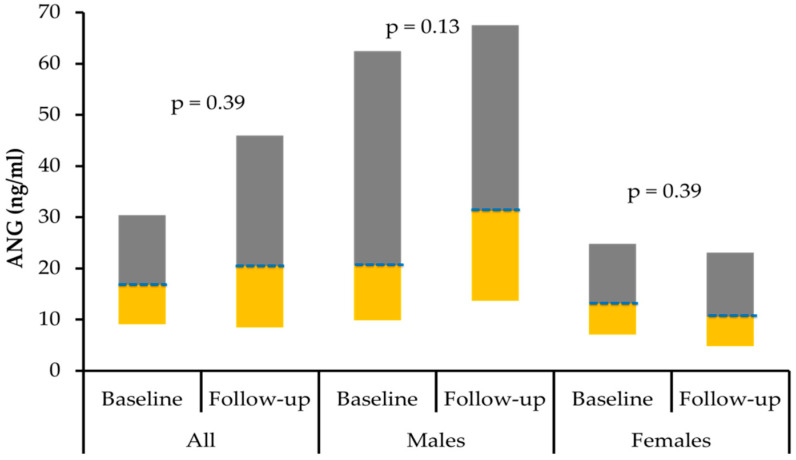
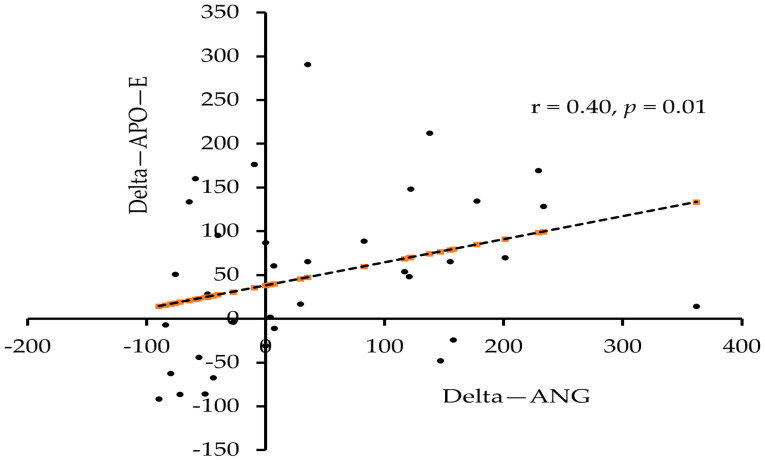
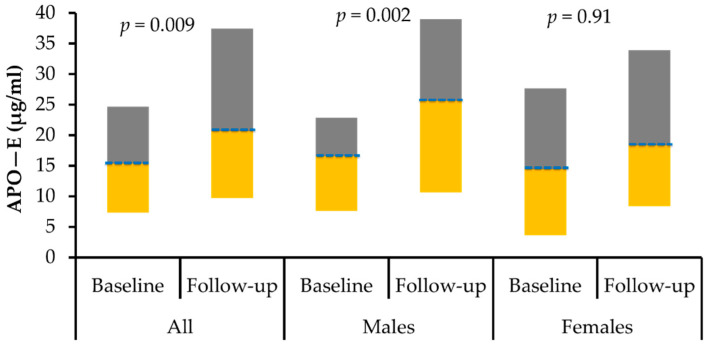
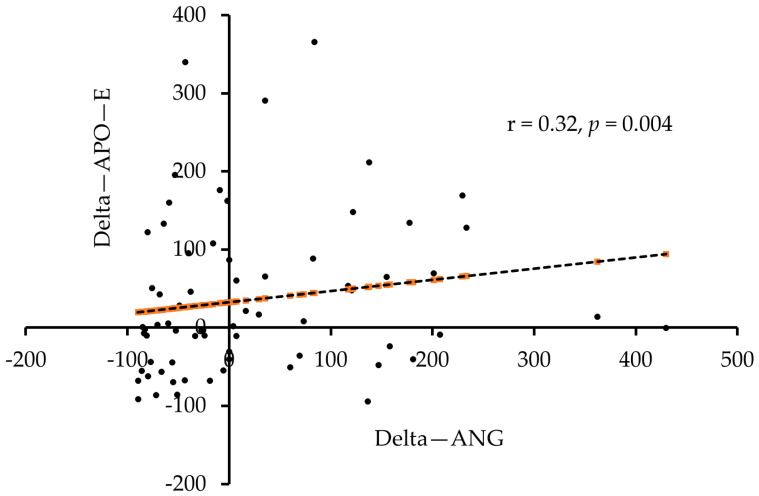
Angiogenin (ANG), a multifunctional protein known to induce blood vessel formation, is a potential biomarker for cardiovascular diseases; however, whether it is affected by vitamin D supplementation is not known. This interventional study in vitamin D-deficient Saudi adults was designed to investigate it. A total of 100 vitamin D-deficient Saudi adults aged 30-50 years were randomly selected to undergo 6-month vitamin D supplementation. Circulating levels of fasting glucose, lipids, vitamin D, apolipoproteins (AI, AII, B, CI, CII, CIII, E, and H), and ANG were measured using commercially available assays at baseline and after six months. Overall, vitamin D levels increased significantly post intervention. With this, levels of apo-CIII and apo-E significantly increased (-values of 0.001 and 0.009, respectively) with a significant parallel decrease in apo-B ( = 0.003). ANG levels were significantly positively associated with most apolipoproteins and inversely correlated with HDL-cholesterol. Post intervention, the changes in ANG levels were positively correlated with apo-E (r = 0.32; < 0.01 in all subjects and r = 0.40; < 0.05 in males). Vitamin D supplementation may modestly affect ANG levels. The association observed between ANG and apo-E is worthy of further investigation since both biomarkers have been linked to neurodegenerative disorders.
血管生成素(ANG)是一种已知可诱导血管形成的多功能蛋白质,是心血管疾病的潜在生物标志物;然而,其是否受维生素D补充剂的影响尚不清楚。这项针对维生素D缺乏的沙特成年人的干预性研究旨在对此进行调查。总共随机选取了100名年龄在30至50岁之间的维生素D缺乏的沙特成年人,让他们接受为期6个月的维生素D补充。在基线和6个月后,使用市售检测方法测量空腹血糖、血脂、维生素D、载脂蛋白(AI、AII、B、CI、CII、CIII、E和H)以及ANG的循环水平。总体而言,干预后维生素D水平显著升高。与此同时,载脂蛋白CIII和载脂蛋白E水平显著升高(分别为P值0.001和0.009),而载脂蛋白B显著下降(P = 0.003)。ANG水平与大多数载脂蛋白显著正相关,与高密度脂蛋白胆固醇呈负相关。干预后,ANG水平的变化与载脂蛋白E呈正相关(r = 0.32;所有受试者中P < 0.01,男性中r = 0.40;P < 0.05)。补充维生素D可能会适度影响ANG水平。由于这两种生物标志物都与神经退行性疾病有关,因此观察到的ANG与载脂蛋白E之间的关联值得进一步研究。