Tetz George, Tetz Victor
Department of Proteome Research, Human Microbiology Institute, New York, NY 10013, USA.
Department for Proteome Research, Tetz Laboratories, New York, NY 10013, USA.
Microorganisms. 2022 Jan 25;10(2):280. doi: 10.3390/microorganisms10020280.
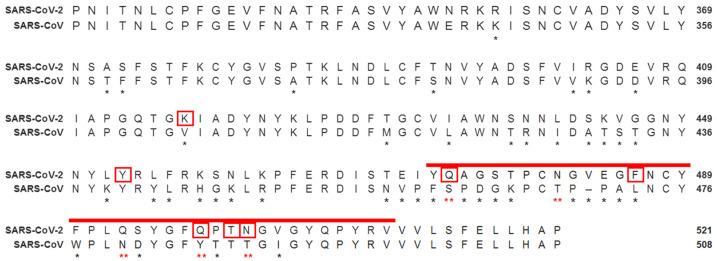
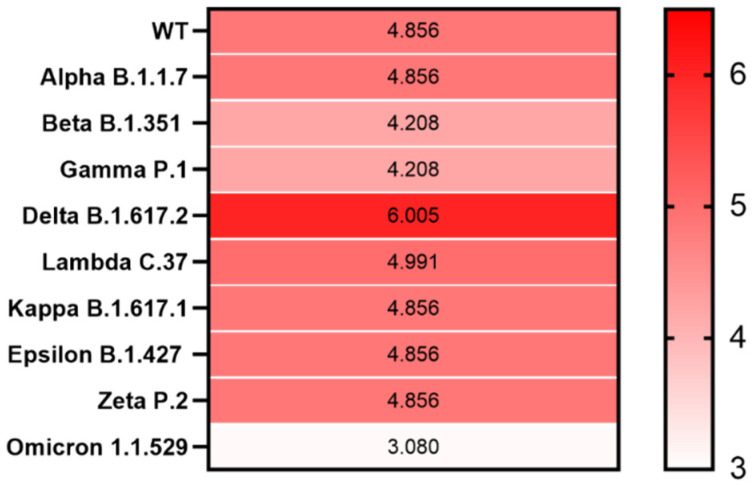
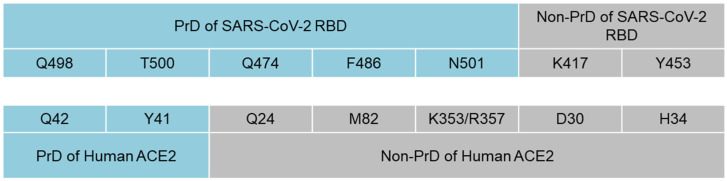
Currently, the world is struggling with the coronavirus disease 2019 (COVID-19) pandemic, caused by severe acute respiratory syndrome coronavirus 2 (SARS-CoV-2). Prions are proteins that possess a unique conformational conversion, with the ability to rapidly shift between multiple conformations due to residue hydrophobicity and net sequence charge, and viral prion-like proteins are known as potential regulators of viral infections. However, the prion-like domains (PrD) in the SARS-CoV-2 proteome have not been analyzed. In this in silico study, using the PLAAC algorithm, we identified the presence of prion-like domains in the SARS-CoV-2 spike protein. Compared with other viruses, a striking difference was observed in the distribution of prion-like domains in the spike protein since SARS-CoV-2 is the only coronavirus with a prion-like domain found in the receptor-binding domain of the S1 region of the spike protein. The presence and unique distribution of prion-like domains in the SARS-CoV-2 receptor-binding domains of the spike protein are particularly interesting since although the SARS-CoV-2 and SARS-CoV S proteins share the same host cell receptor, angiotensin-converting enzyme 2 (ACE2), SARS-CoV-2 demonstrates a 10- to 20-fold higher affinity for ACE2. We identified prion-like domains in the α1 helix of the ACE2 receptor that interact with the viral receptor-binding domain of SARS-CoV-2. Finally, we found substantial differences in the prion-like domain of the S1 region of the spike protein across emerging variants including Omicron (B.1.1.529). Taken together, the present findings indicate that the identified PrDs in the SARS-CoV-2 receptor-binding domain (RBD) and ACE2 region that interact with RBD play important functional roles in viral adhesion and entry.
目前,全球正与由严重急性呼吸综合征冠状病毒2(SARS-CoV-2)引起的2019冠状病毒病(COVID-19)大流行作斗争。朊病毒是具有独特构象转换的蛋白质,由于残基疏水性和净序列电荷,能够在多种构象之间快速转换,而病毒类朊病毒蛋白被认为是病毒感染的潜在调节因子。然而,SARS-CoV-2蛋白质组中的类朊病毒结构域(PrD)尚未得到分析。在这项计算机模拟研究中,我们使用PLAAC算法,在SARS-CoV-2刺突蛋白中鉴定出类朊病毒结构域的存在。与其他病毒相比,刺突蛋白中类朊病毒结构域的分布存在显著差异,因为SARS-CoV-2是唯一一种在刺突蛋白S1区域的受体结合域中发现类朊病毒结构域的冠状病毒。刺突蛋白的SARS-CoV-2受体结合域中类朊病毒结构域的存在和独特分布尤其令人感兴趣,因为尽管SARS-CoV-2和SARS-CoV的S蛋白共享相同的宿主细胞受体——血管紧张素转换酶2(ACE2),但SARS-CoV-2对ACE2的亲和力要高10到20倍。我们在ACE2受体的α1螺旋中鉴定出与SARS-CoV-2病毒受体结合域相互作用的类朊病毒结构域。最后,我们发现包括奥密克戎(B.1.1.529)在内的新出现变体的刺突蛋白S1区域的类朊病毒结构域存在显著差异。综上所述,目前的研究结果表明,在SARS-CoV-2受体结合域(RBD)和与RBD相互作用的ACE2区域中鉴定出的PrD在病毒粘附和进入中发挥着重要的功能作用。