Fu Xiaofeng, Hong Luwei, Gong Haiying, Kan Guangjuan, Zhang Pengfei, Cui Ting-Ting, Fan Gonglin, Si Xing, Zhu Jiang
Department of Ultrasound, Women's Hospital, Zhejiang University School of Medicine, Hangzhou, Zhejiang, 310000, People's Republic of China.
Department of Radiology, The Second Affiliated Hospital, Zhejiang University School of Medicine, Hangzhou, Zhejiang, 310000, People's Republic of China.
Int J Gen Med. 2022 Feb 15;15:1517-1535. doi: 10.2147/IJGM.S335571. eCollection 2022.
Glioma is a common type of tumor in the central nervous system characterized by high morbidity and mortality. Autophagy plays vital roles in the development and progression of glioma, and is involved in both normal physiological and various pathophysiological progresses.
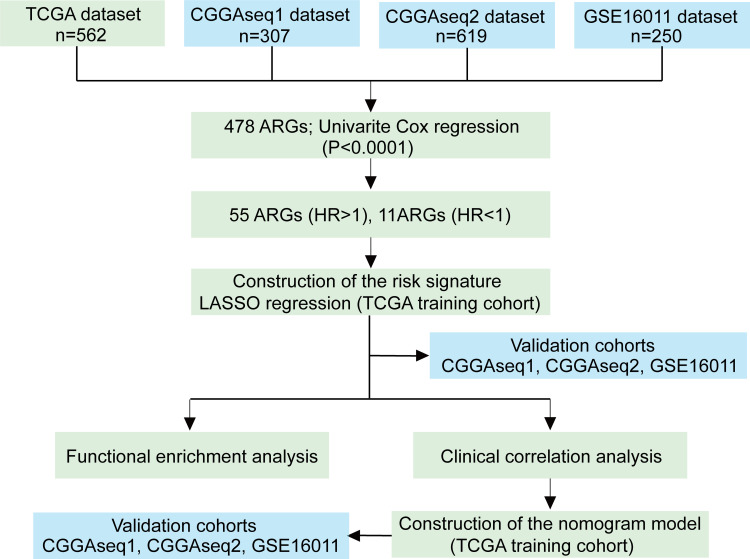
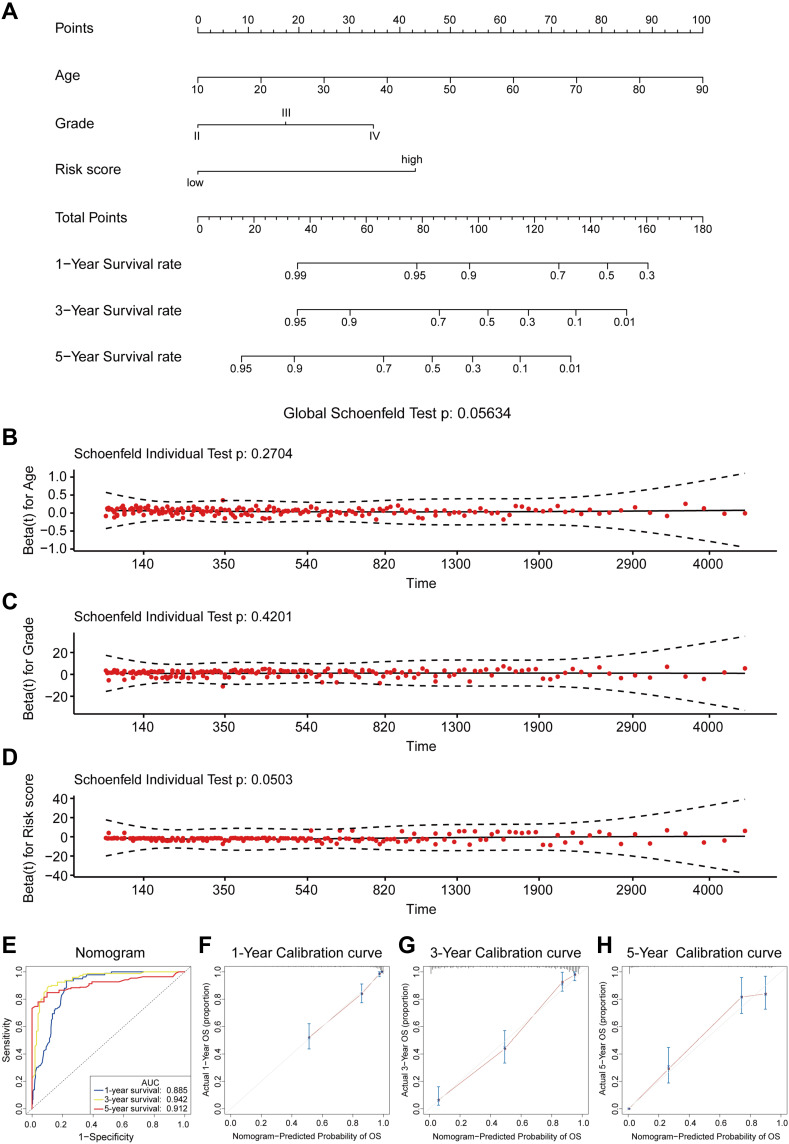
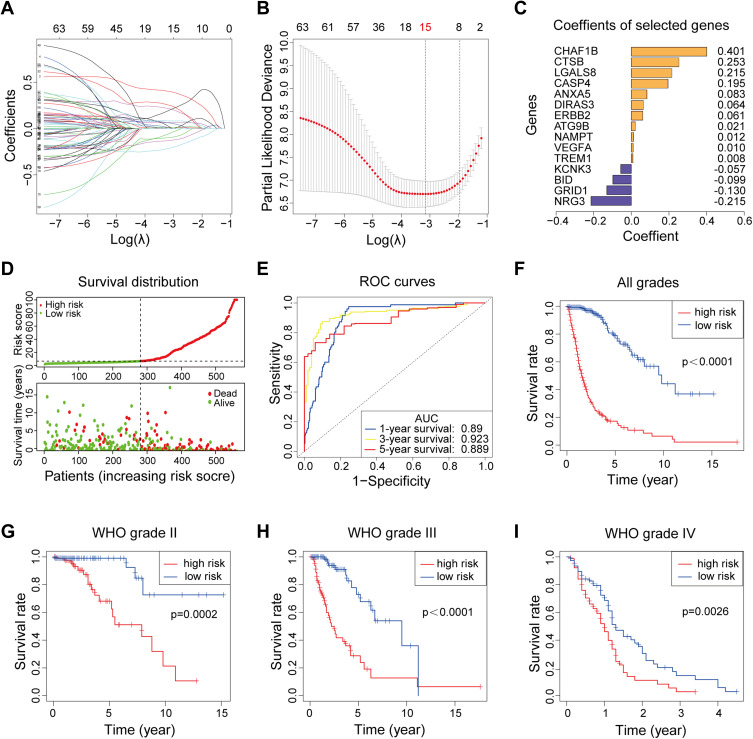
A total of 531 autophagy-related genes (ARGs) were obtained and 1738 glioma patients were collected from three public databases. We performed least absolute shrinkage and selection operator regression to identify the optimal prognosis-related genes and constructed an autophagy-related risk signature. The performance of the signature was validated by receiver operating characteristic analysis, survival analysis, clinic correlation analysis, and Cox regression. A nomogram model was established by using multivariate Cox regression analysis. Schoenfeld's global and individual test were used to estimate time-varying covariance for the assumption of the Cox proportional hazard regression analysis. The R programming language was used as the main data analysis and visualizing tool.
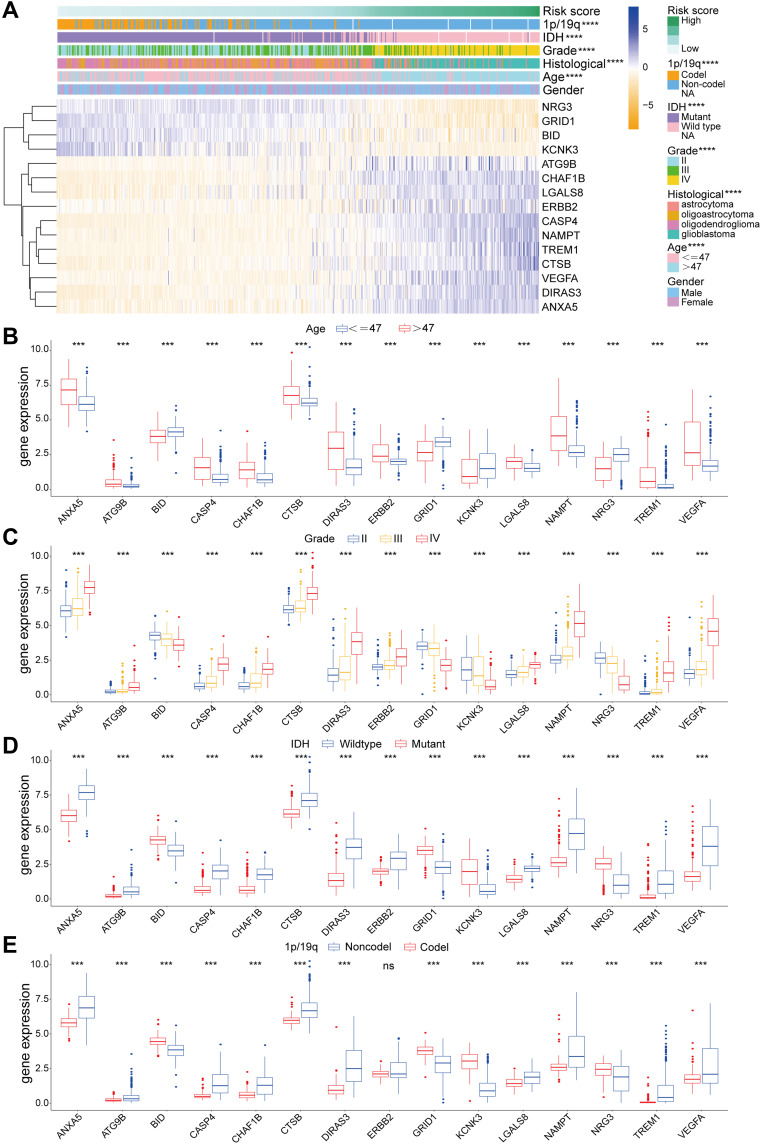
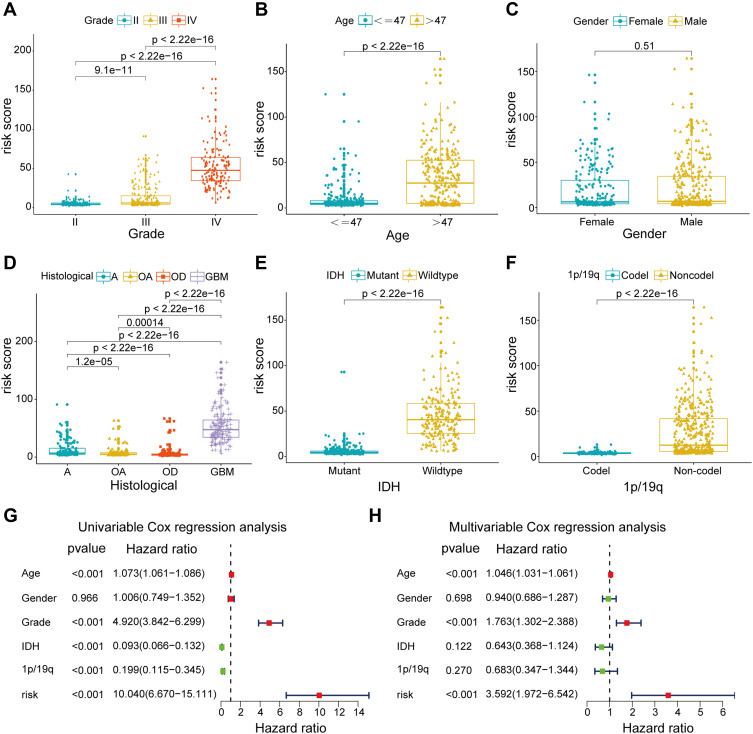
An overall survival-related risk signature consisting of 15 ARGs was constructed and significantly stratified glioma patients into high- and low-risk groups ( < 0.0001). The area under the ROC curve of 1-, 3-, 5-year survival was 0.890, 0.923, and 0.889, respectively. Univariate and multivariate Cox analyses indicated that the risk signature was a satisfactory independent prognostic factor. Moreover, a nomogram model integrating risk signature with clinical information for predicting survival rates of patients with glioma was constructed (C-index=0.861±0.024).
This study constructed a novel and reliable ARG-related risk signature, which was verified as a satisfactory prognostic marker. The nomogram model could provide a reference for individually predicting the prognosis for each patient with glioma and promoting the selection of optimal treatment.
胶质瘤是中枢神经系统常见的肿瘤类型,具有高发病率和高死亡率。自噬在胶质瘤的发生发展中起着至关重要的作用,并参与正常生理和各种病理生理过程。
从三个公共数据库中获取了总共531个自噬相关基因(ARGs),并收集了1738例胶质瘤患者。我们进行了最小绝对收缩和选择算子回归,以识别最佳的预后相关基因,并构建了一个自噬相关风险特征。通过受试者工作特征分析、生存分析、临床相关性分析和Cox回归对该特征的性能进行了验证。使用多变量Cox回归分析建立了列线图模型。采用Schoenfeld全局检验和个体检验来估计Cox比例风险回归分析假设的时变协方差。使用R编程语言作为主要的数据分析和可视化工具。
构建了一个由15个ARGs组成的总生存相关风险特征,该特征将胶质瘤患者显著分为高风险组和低风险组(<0.0001)。1年、3年、5年生存的ROC曲线下面积分别为0.890、0.923和0.889。单变量和多变量Cox分析表明,风险特征是一个令人满意的独立预后因素。此外,构建了一个将风险特征与临床信息相结合的列线图模型,用于预测胶质瘤患者的生存率(C指数=0.861±0.024)。
本研究构建了一种新颖且可靠地ARGs相关风险特征,经证实是一个令人满意的预后标志物。列线图模型可为个体化预测每个胶质瘤患者的预后以及促进最佳治疗方案的选择提供参考。