Mykuliak Anastasiia, Yrjänäinen Alma, Mäki Antti-Juhana, Gebraad Arjen, Lampela Ella, Kääriäinen Minna, Pakarinen Toni-Karri, Kallio Pasi, Miettinen Susanna, Vuorenpää Hanna
Adult Stem Cell Group, Faculty of Medicine and Health Technology, Tampere University, Tampere, Finland.
Research, Development and Innovation Centre, Tampere University Hospital, Tampere, Finland.
Front Bioeng Biotechnol. 2022 Feb 8;10:764237. doi: 10.3389/fbioe.2022.764237. eCollection 2022.
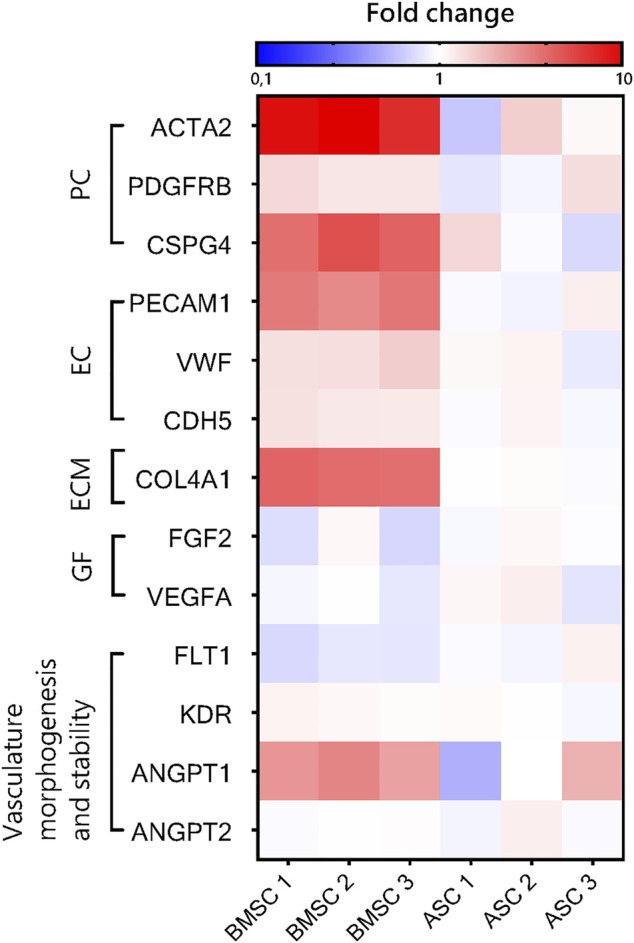
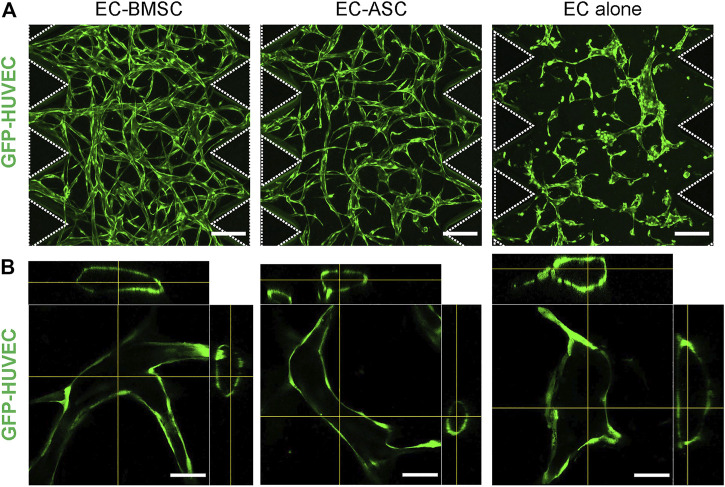
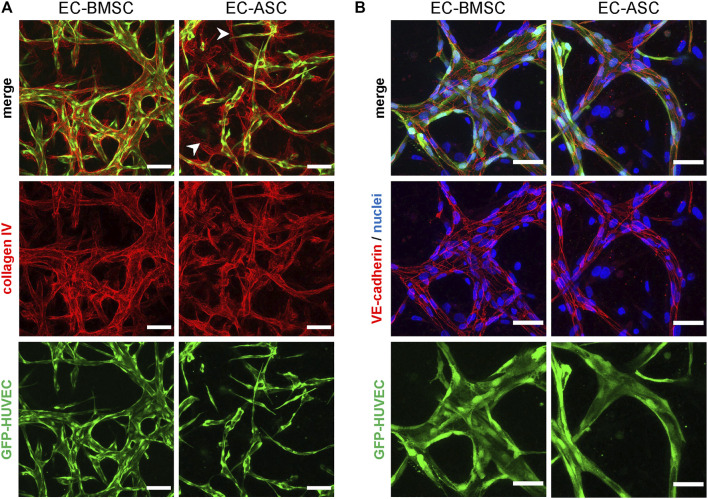
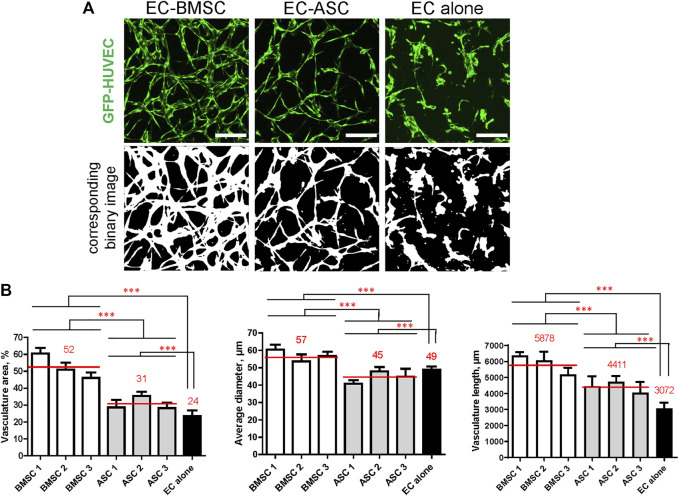
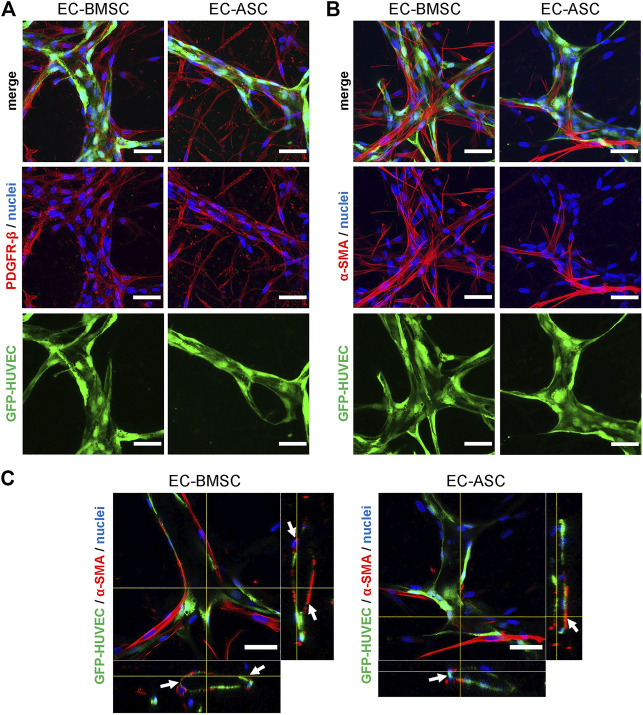
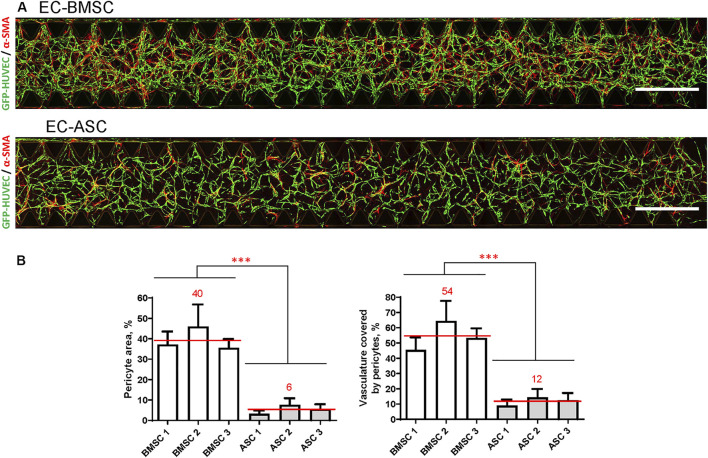
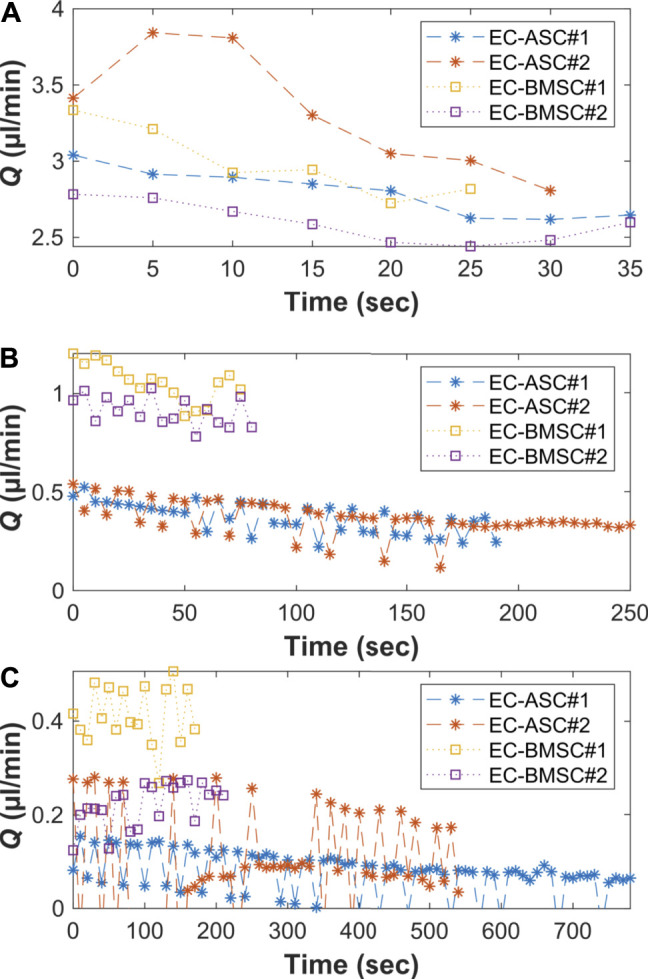
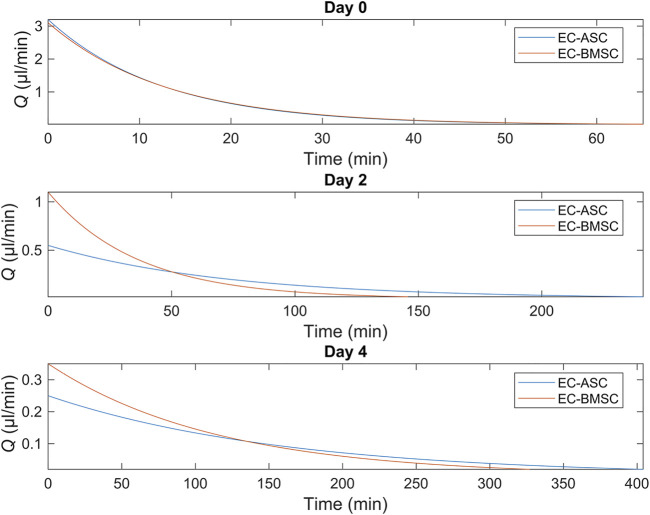
The vasculature is an essential, physiological element in virtually all human tissues. Formation of perfusable vasculature is therefore crucial for reliable tissue modeling. Three-dimensional vascular networks can be formed through the co-culture of endothelial cells (ECs) with stromal cells embedded in hydrogel. Mesenchymal stem/stromal cells (MSCs) derived from bone marrow (BMSCs) and adipose tissue (ASCs) are an attractive choice as stromal cells due to their natural perivascular localization and ability to support formation of mature and stable microvessels . So far, BMSCs and ASCs have been compared as vasculature-supporting cells in static cultures. In this study, BMSCs and ASCs were co-cultured with endothelial cells in a fibrin hydrogel in a perfusable microfluidic chip. We demonstrated that using MSCs of different origin resulted in vascular networks with distinct phenotypes. Both types of MSCs supported formation of mature and interconnected microvascular networks-on-a-chip. However, BMSCs induced formation of fully perfusable microvasculature with larger vessel area and length whereas ASCs resulted in partially perfusable microvascular networks. Immunostainings revealed that BMSCs outperformed ASCs in pericytic characteristics. Moreover, co-culture with BMSCs resulted in significantly higher expression levels of endothelial and pericyte-specific genes, as well as genes involved in vasculature maturation. Overall, our study provides valuable knowledge on the properties of MSCs as vasculature-supporting cells and highlights the importance of choosing the application-specific stromal cell source for vascularized organotypic models.
脉管系统是几乎所有人体组织中必不可少的生理要素。因此,形成可灌注的脉管系统对于可靠的组织建模至关重要。通过将内皮细胞(ECs)与嵌入水凝胶的基质细胞共培养,可以形成三维血管网络。源自骨髓(BMSCs)和脂肪组织(ASCs)的间充质干/基质细胞(MSCs)是作为基质细胞的有吸引力的选择,因为它们天然位于血管周围并且具有支持成熟和稳定微血管形成的能力。到目前为止,BMSCs和ASCs已在静态培养中作为脉管系统支持细胞进行了比较。在本研究中,BMSCs和ASCs在可灌注的微流控芯片中的纤维蛋白水凝胶中与内皮细胞共培养。我们证明,使用不同来源的MSCs会导致具有不同表型的血管网络。两种类型的MSCs都支持在芯片上形成成熟且相互连接的微血管网络。然而,BMSCs诱导形成具有更大血管面积和长度的完全可灌注微血管,而ASCs则导致部分可灌注的微血管网络。免疫染色显示,BMSCs在周细胞特征方面优于ASCs。此外,与BMSCs共培养导致内皮细胞和周细胞特异性基因以及参与脉管系统成熟的基因表达水平显著更高。总体而言,我们的研究提供了关于MSCs作为脉管系统支持细胞特性的宝贵知识,并强调了为血管化器官型模型选择特定应用的基质细胞来源的重要性。