Guan Xiaolin, Meng Xin, Zhu Keyu, Kai Jinyan, Liu Yixuan, Ma Qian, Tong Ying, Zheng Hui, Xie Suhong, Ma Xiaolu, Wang Yanchun, Lu Renquan, Guo Lin
Department of Clinical Laboratory, Fudan University Shanghai Cancer Center, Shanghai, China.
Department of Oncology, Shanghai Medical College, Fudan University, Shanghai, China.
Cell Death Discov. 2022 Feb 26;8(1):84. doi: 10.1038/s41420-022-00881-1.
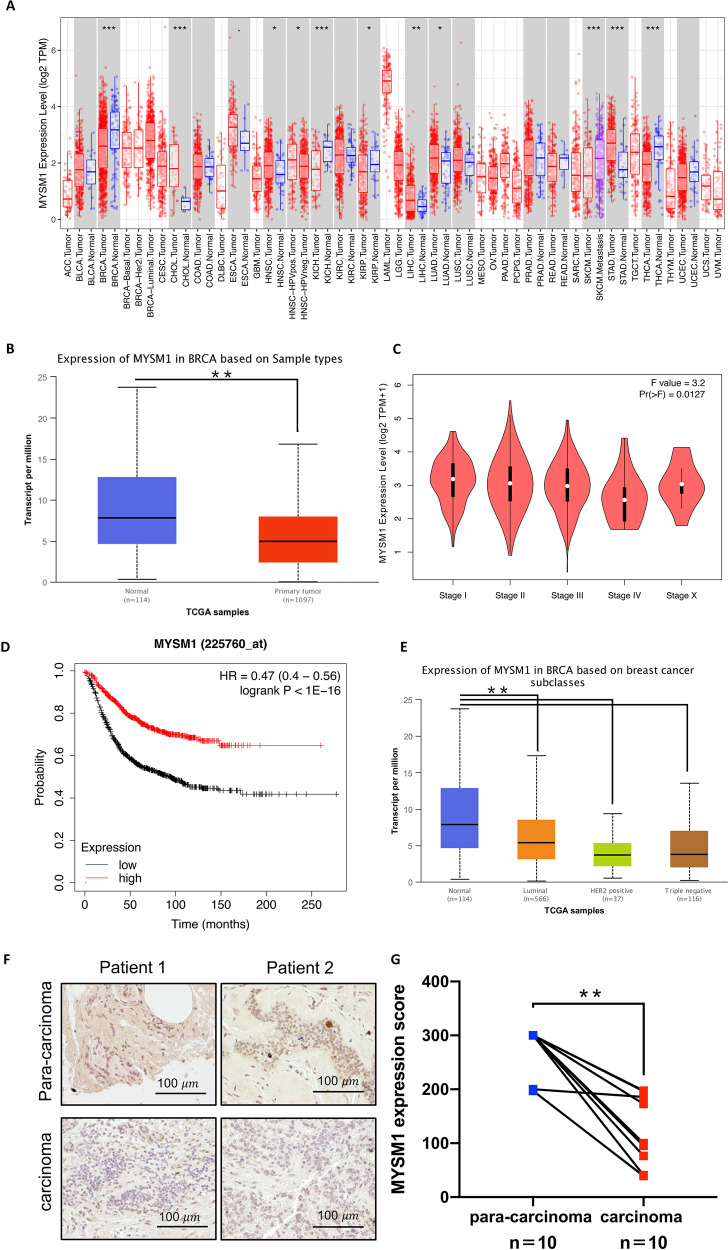
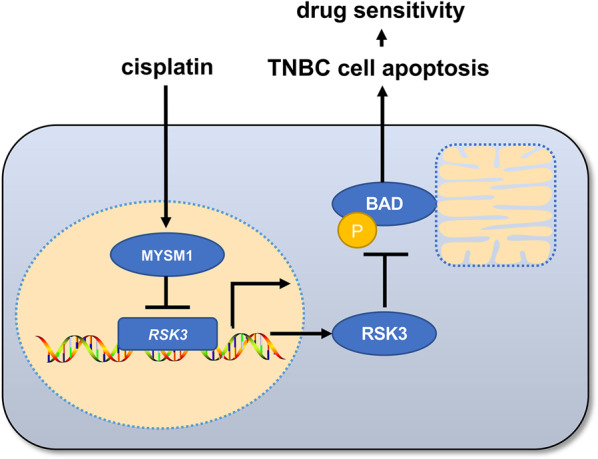
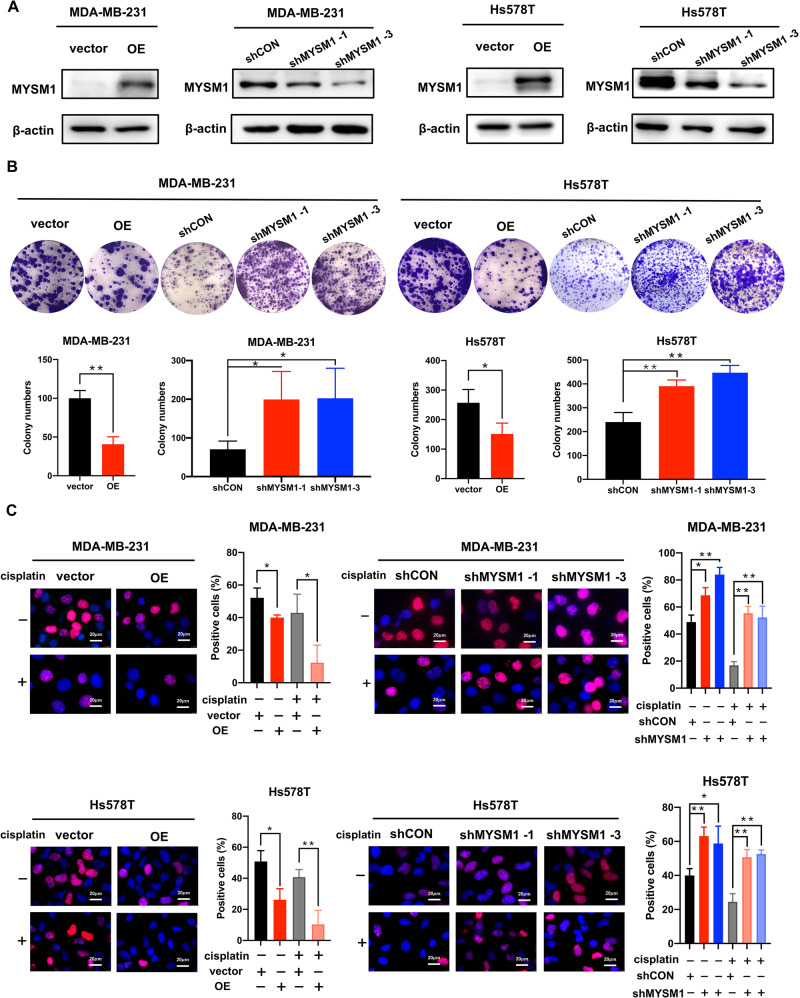
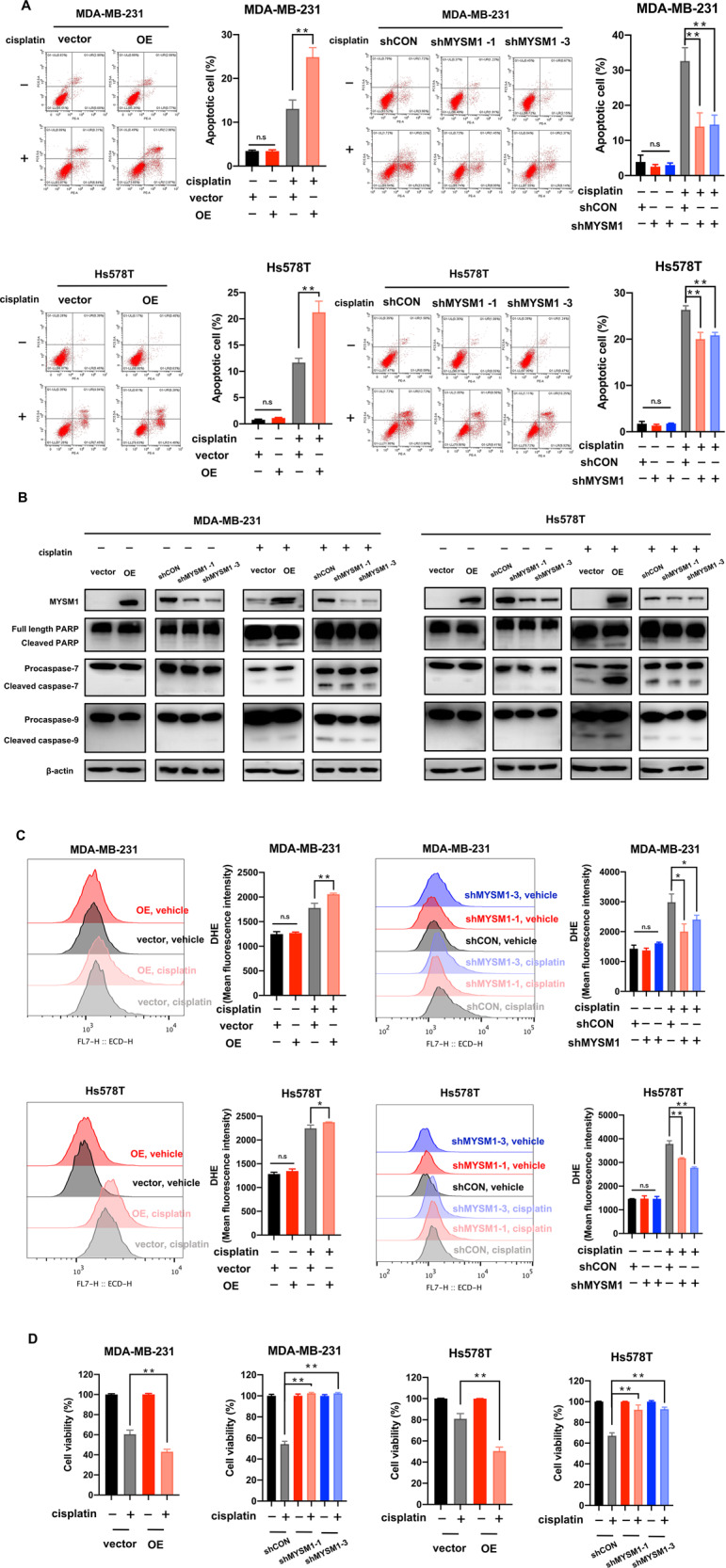
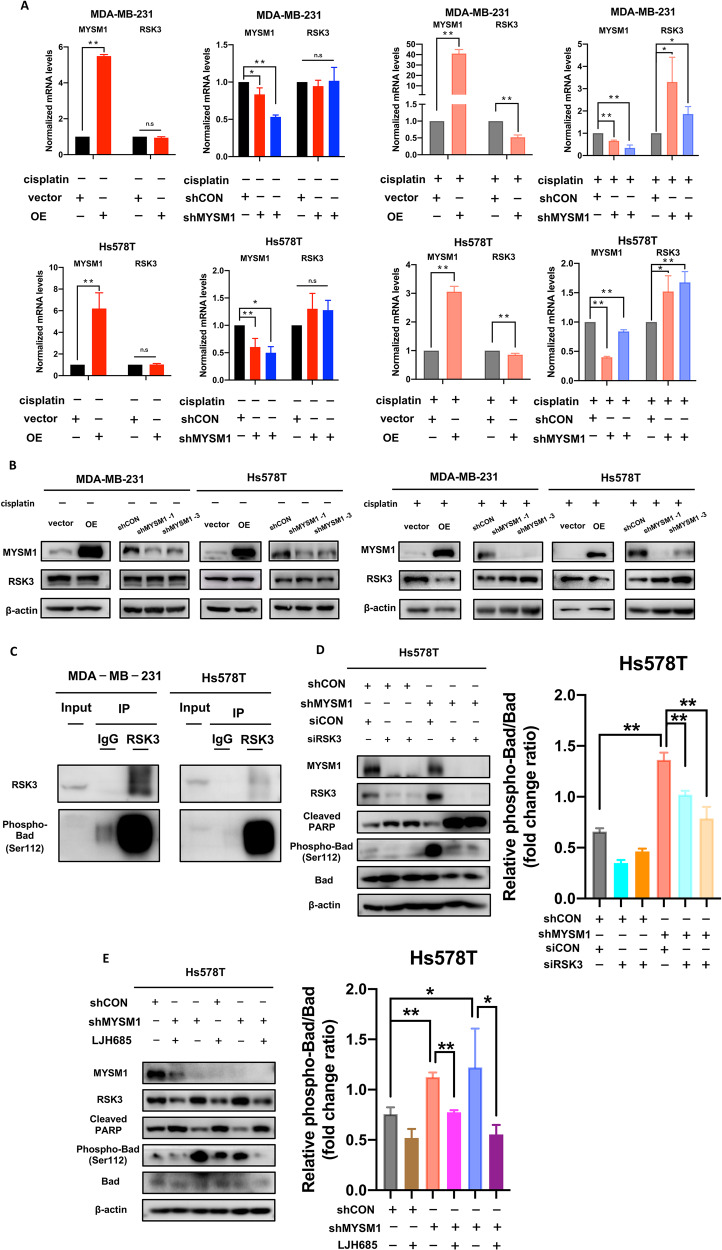
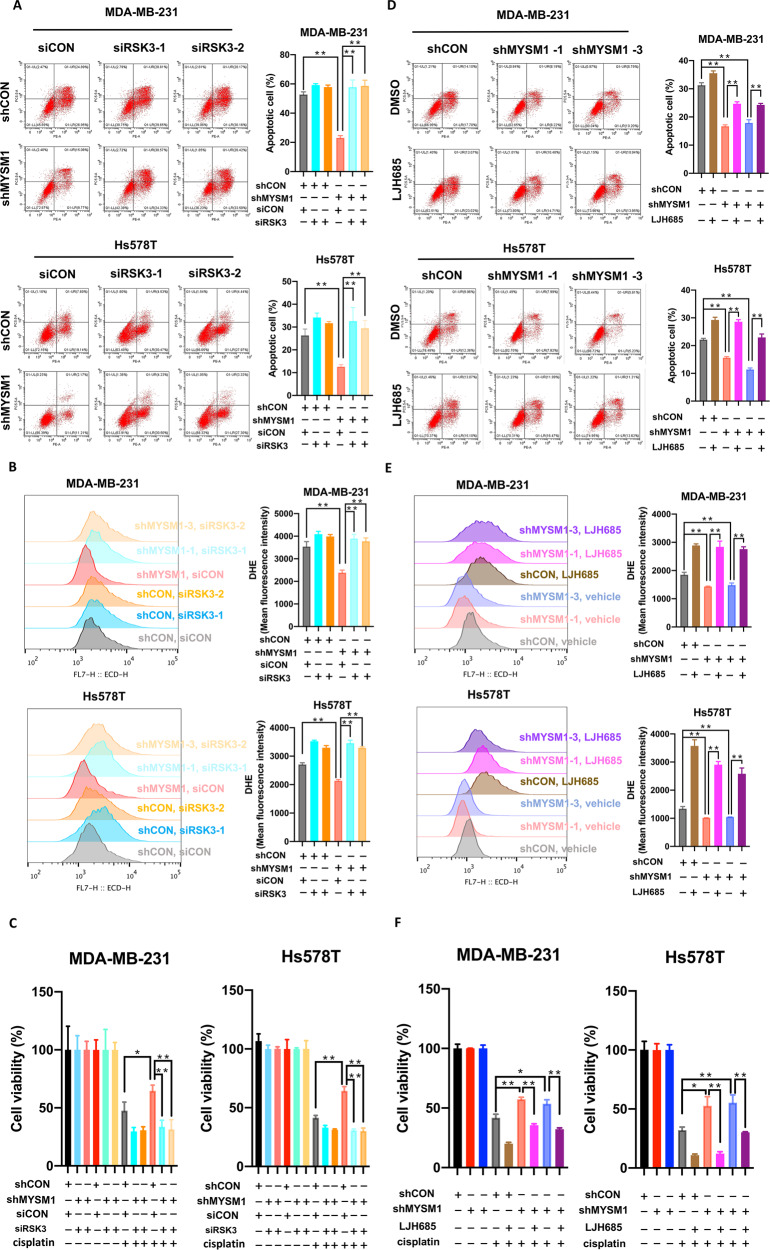
Breast cancer is one of the leading causes of mortality among women. Triple-negative breast cancer (TNBC) is responsible for a large percentage of all breast cancer deaths in women. This study demonstrated the function of Myb-like, SWIRM, and MPN domains 1 (MYSM1), an H2A deubiquitinase (DUB), in TNBC. MYSM1 expression was drastically decreased in breast cancer, especially in TNBC, suggesting a potential anticancer effect. Overexpressing and suppressing MYSM1 expression in TNBC cell lines led to significant biological changes in cell proliferation. Furthermore, MYSM1 overexpression increased cisplatin-induced apoptosis, which might be attributed to RSK3 inactivation and the subsequently decreased phosphorylation of Bcl-2 antagonist of cell death (BAD) (Ser 112). The findings suggest that MYSM1 is a potential target for regulating cell apoptosis and suppressing resistance to cisplatin in TNBC.
乳腺癌是女性死亡的主要原因之一。三阴性乳腺癌(TNBC)在女性所有乳腺癌死亡病例中占很大比例。本研究证明了H2A去泛素化酶(DUB)Myb样、SWIRM和MPN结构域1(MYSM1)在TNBC中的作用。MYSM1在乳腺癌中,尤其是在TNBC中表达大幅降低,提示其具有潜在的抗癌作用。在TNBC细胞系中过表达和抑制MYSM1表达导致细胞增殖发生显著生物学变化。此外,MYSM1过表达增加了顺铂诱导的细胞凋亡,这可能归因于RSK3失活以及随后细胞死亡的Bcl-2拮抗剂(BAD)(Ser 112)磷酸化降低。这些发现表明,MYSM1是调节TNBC细胞凋亡和抑制对顺铂耐药性的潜在靶点。