Fang Jiaru, Liu Dong, Xu Dongxin, Wu Qianni, Li Hongbo, Li Ying, Hu Ning
State Key Laboratory of Optoelectronic Materials and Technologies, Guangdong Province Key Laboratory of Display Material and Technology, School of Electronics and Information Technology, State Key Laboratory of Ophthalmology, Zhongshan Ophthalmic Center, Guangdong Provincial Key Laboratory of Ophthalmology and Visual Science, Sun Yat-sen University, Guangzhou 510006, China.
Stoddart Institute of Molecular Science, Department of Chemistry, ZJU-Hangzhou Global Scientific and Technological Innovation Center, Zhejiang University, Hangzhou 310058, China.
Research (Wash D C). 2022 Feb 7;2022:9854342. doi: 10.34133/2022/9854342. eCollection 2022.
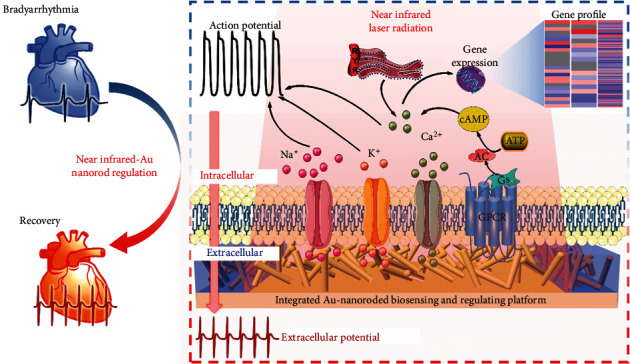
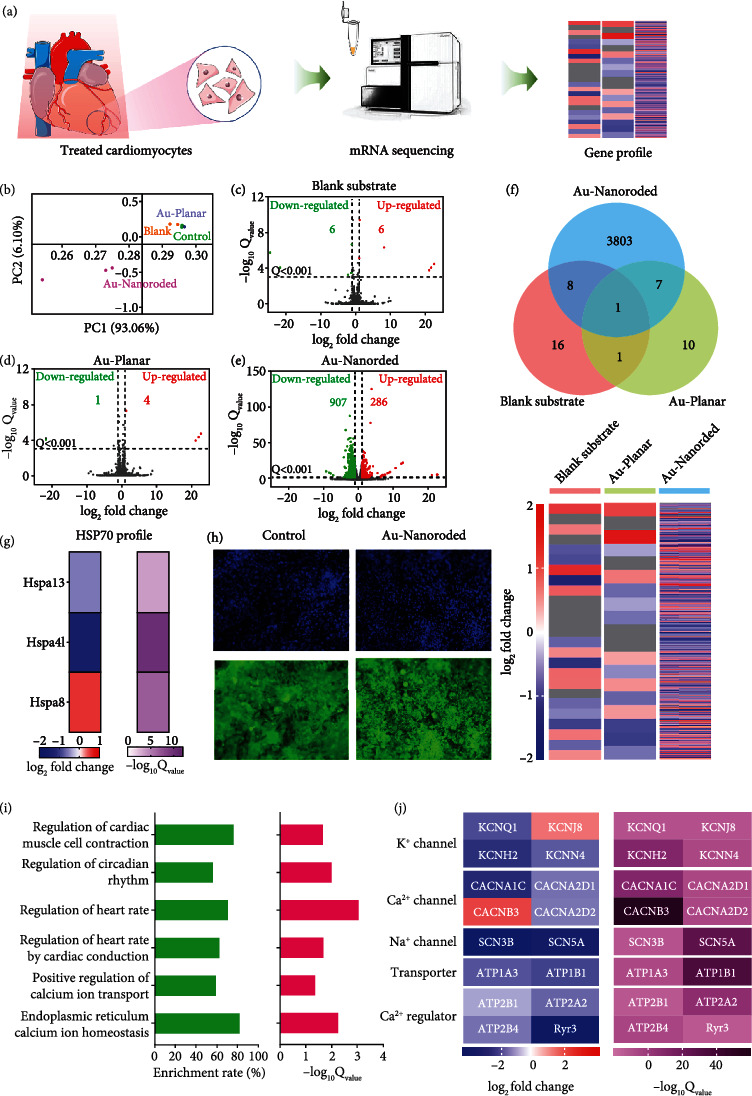
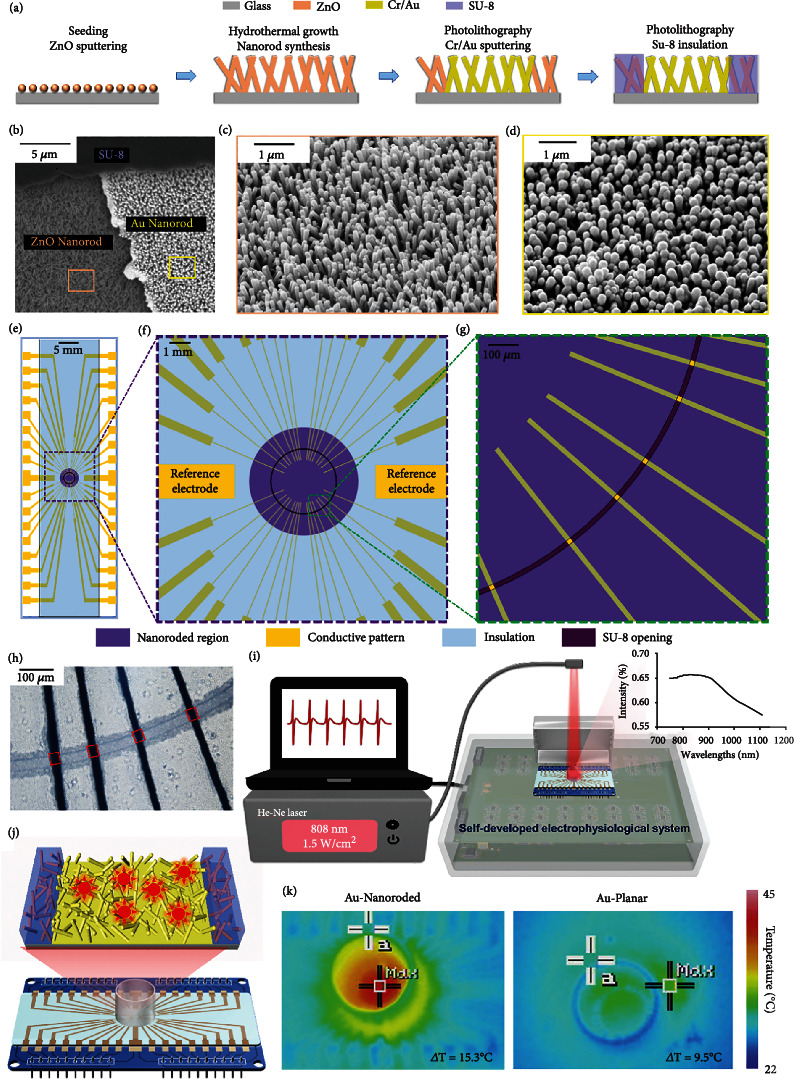
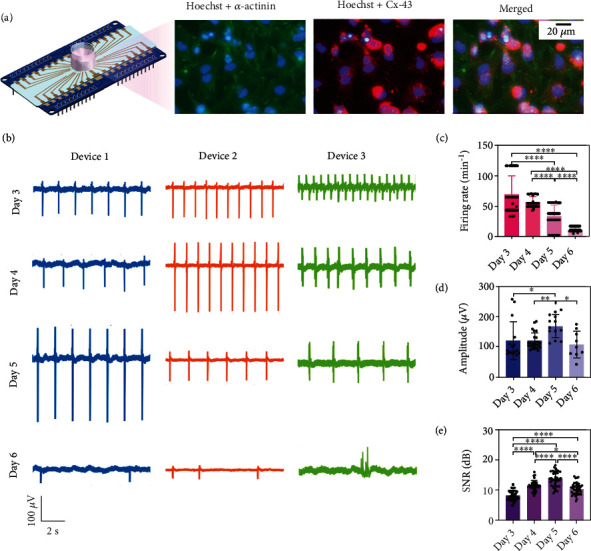
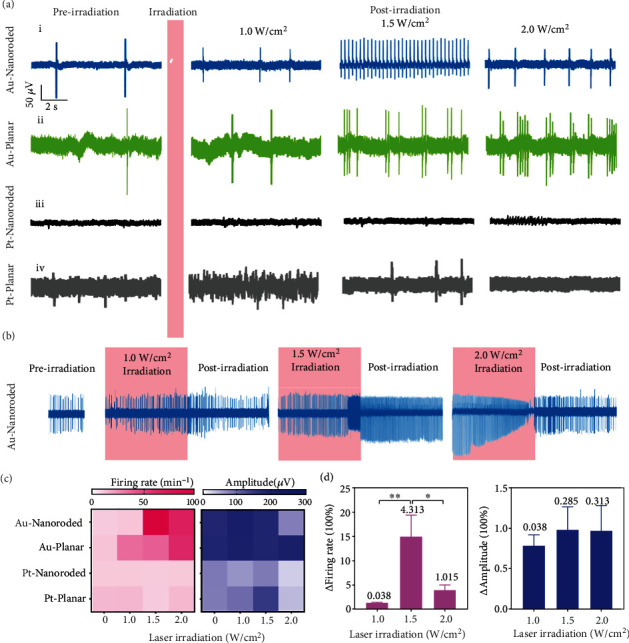
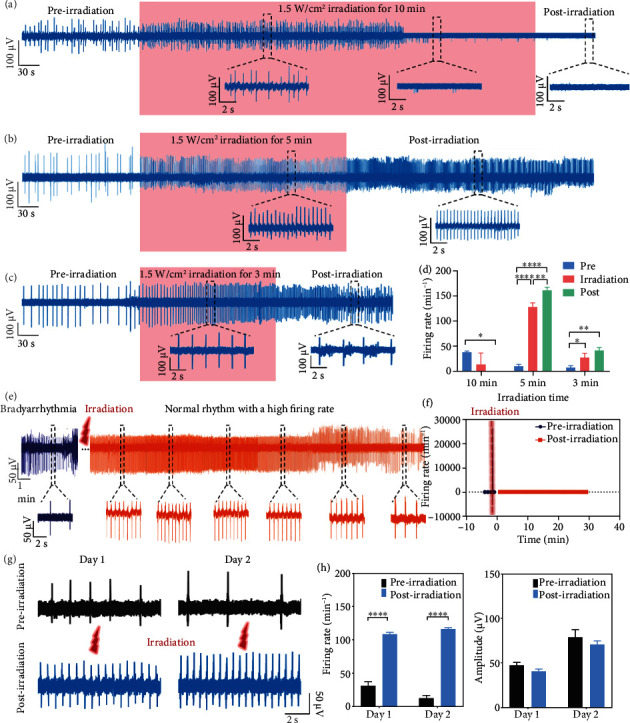
Bradyarrhythmia is a kind of cardiovascular disease caused by dysregulation of cardiomyocytes, which seriously threatens human life. Currently, treatment strategies of bradyarrhythmia mainly include drug therapy, surgery, or implantable cardioverter defibrillators, but these strategies are limited by drug side effect, surgical trauma, and instability of implanted devices. Here, we developed an integrated Au-nanoroded biosensing and regulating platform to investigate the photothermal therapy of cardiac bradyarrhythmia . Au-nanoroded electrode array can simultaneously accumulate energy from the photothermal regulation and monitor the electrophsiological state to restore normal rhythm of cardiomyocytes in real time. To treat the cardiomyocytes cultured on Au-nanoroded device by near-infrared (NIR) laser irradiation, cardiomyocytes return to normal for long term after irradiation of suitable NIR energy and maintenance. Compared with the conventional strategies, the photothermal strategy is more effective and convenient to regulate the cardiomyocytes. Furthermore, mRNA sequencing shows that the differential expression genes in cardiomyocytes are significantly increased after photothermal strategy, which are involved in the regulation of the heart rate, cardiac conduction, and ion transport. This work establishes a promising integrated biosensing and regulating platform for photothermal therapy of bradyarrhythmia in vitro and provides reliable evidence of photothermal regulation on cardiomyocytes for cardiological clinical studies.
缓慢性心律失常是一种由心肌细胞调节异常引起的心血管疾病,严重威胁人类生命。目前,缓慢性心律失常的治疗策略主要包括药物治疗、手术或植入式心脏复律除颤器,但这些策略受到药物副作用、手术创伤和植入设备不稳定性的限制。在此,我们开发了一种集成的金纳米棒生物传感与调节平台,用于研究心脏缓慢性心律失常的光热疗法。金纳米棒电极阵列可以同时从光热调节中积累能量,并监测电生理状态,以实时恢复心肌细胞的正常节律。通过近红外(NIR)激光照射治疗在金纳米棒装置上培养的心肌细胞,在合适的近红外能量照射和维持后,心肌细胞长期恢复正常。与传统策略相比,光热策略调节心肌细胞更有效、更方便。此外,mRNA测序表明,光热策略后心肌细胞中的差异表达基因显著增加,这些基因参与心率、心脏传导和离子转运的调节。这项工作建立了一个有前景的集成生物传感与调节平台,用于体外缓慢性心律失常的光热治疗,并为心脏病学临床研究提供了光热调节心肌细胞的可靠证据。