Department of Molecular Biosciences, University of Texas at Austin, Austin, TX, USA.
Interdisciplinary Life Sciences Graduate Programs, University of Texas at Austin, Austin, TX, USA.
Nature. 2022 Mar;603(7900):343-347. doi: 10.1038/s41586-022-04470-1. Epub 2022 Mar 2.
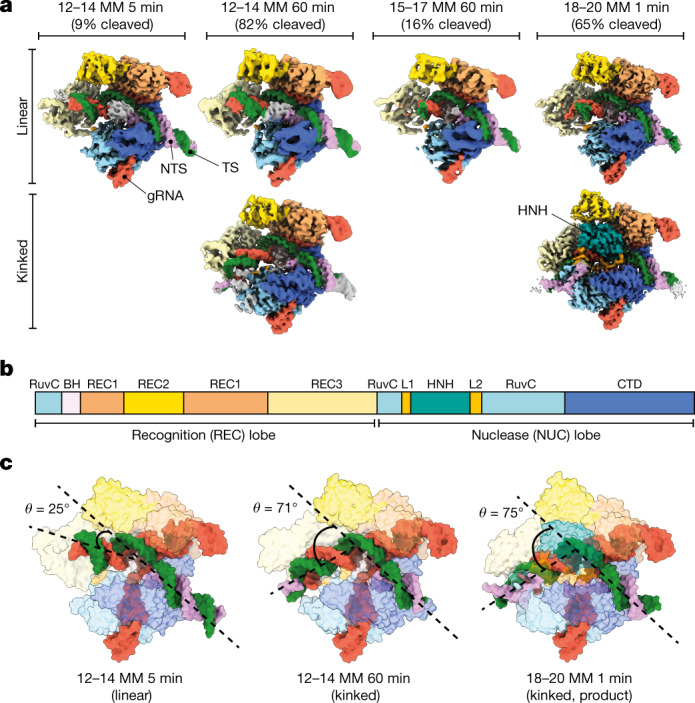
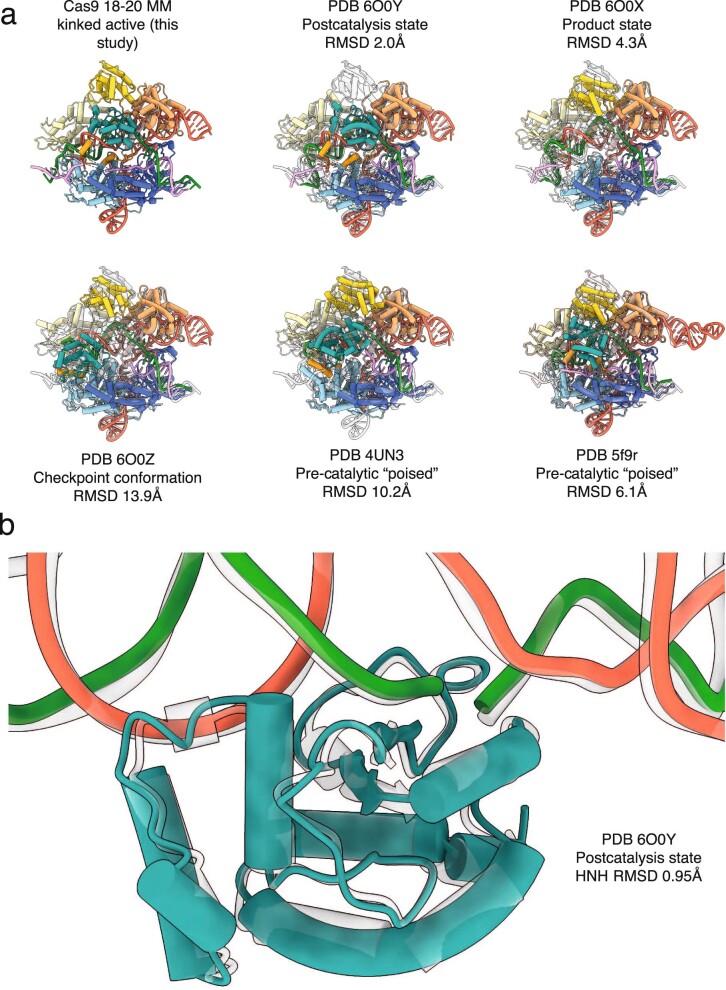
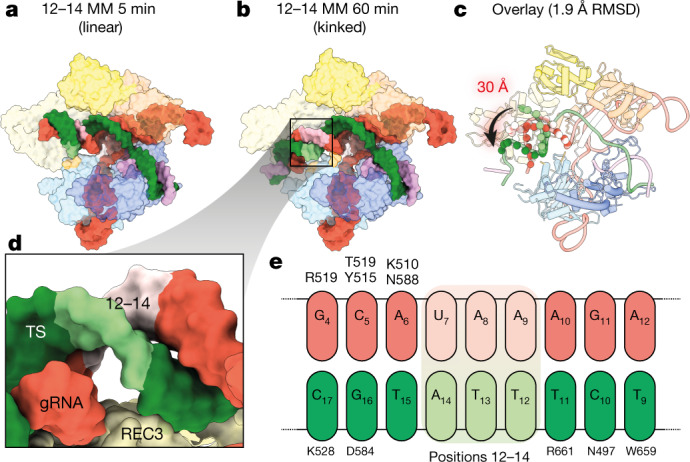
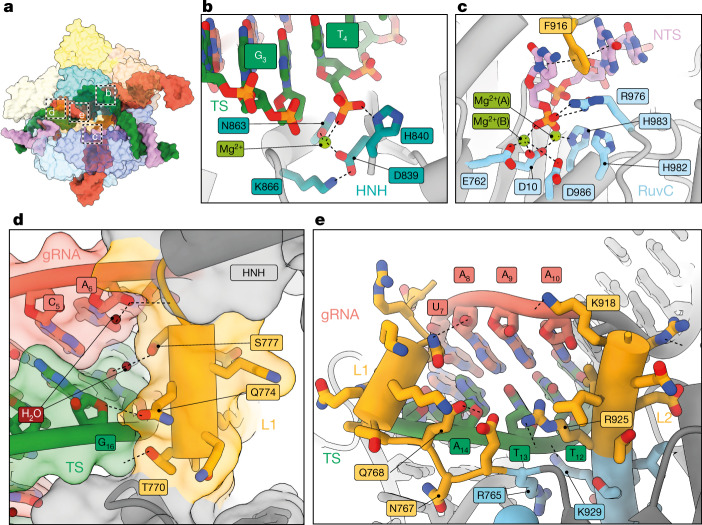
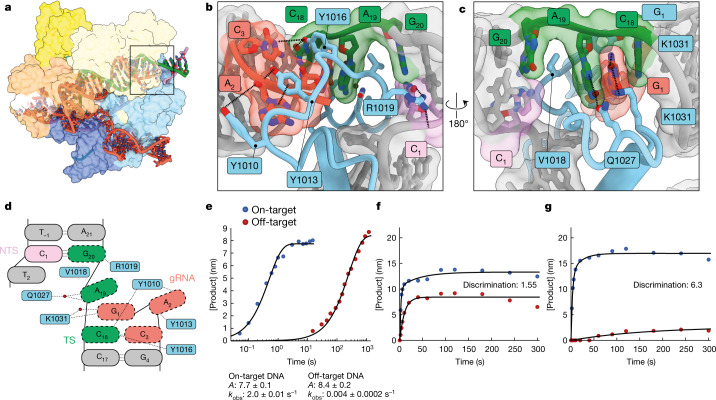
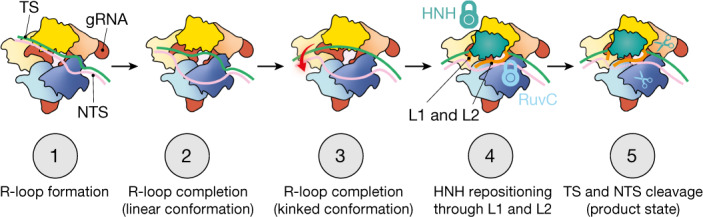
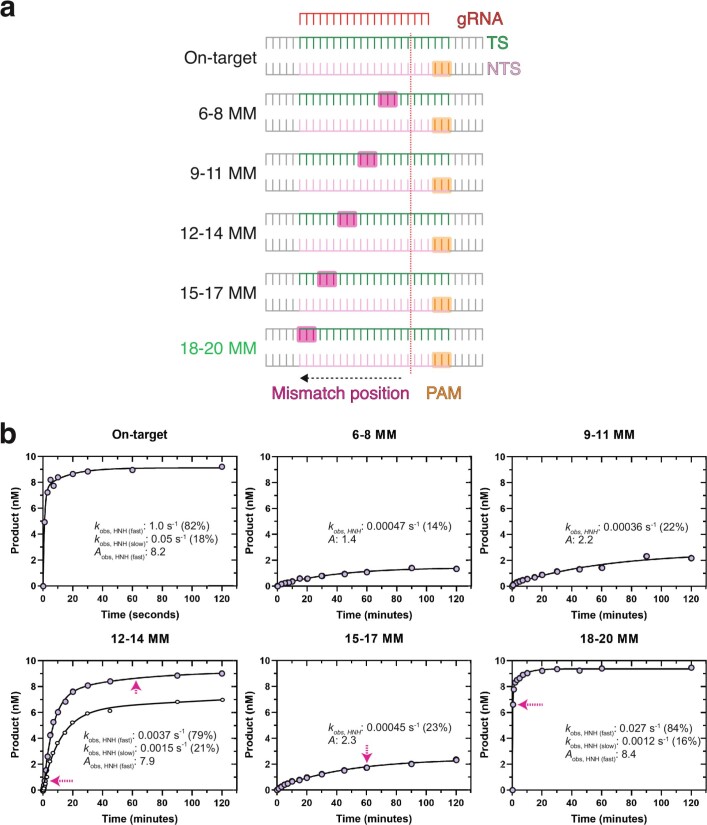
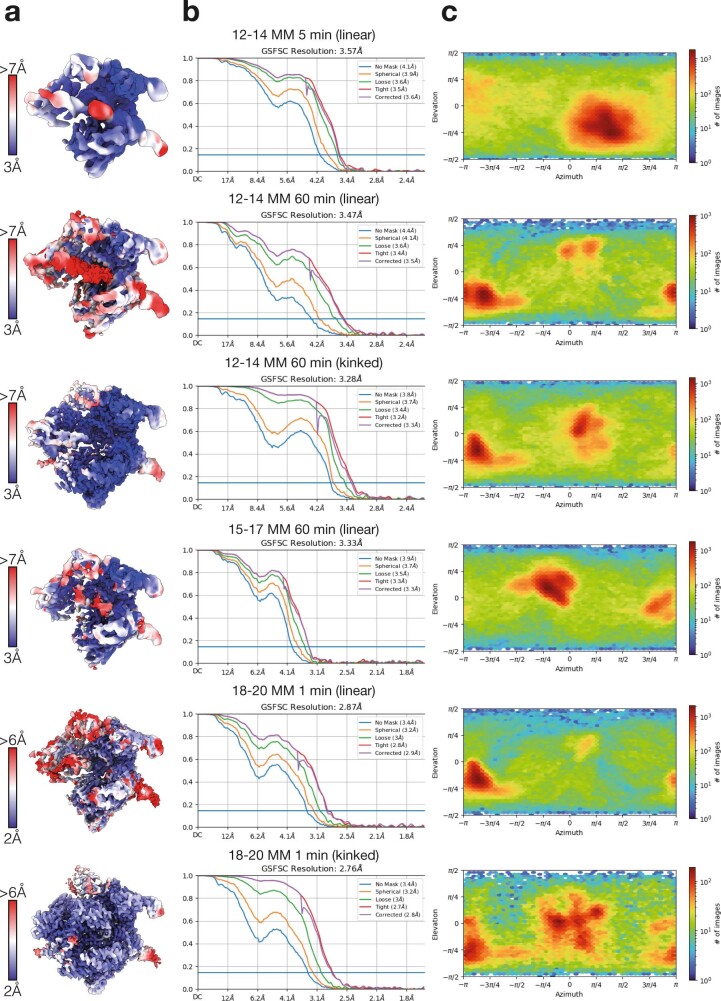
CRISPR-Cas9 as a programmable genome editing tool is hindered by off-target DNA cleavage, and the underlying mechanisms by which Cas9 recognizes mismatches are poorly understood. Although Cas9 variants with greater discrimination against mismatches have been designed, these suffer from substantially reduced rates of on-target DNA cleavage. Here we used kinetics-guided cryo-electron microscopy to determine the structure of Cas9 at different stages of mismatch cleavage. We observed a distinct, linear conformation of the guide RNA-DNA duplex formed in the presence of mismatches, which prevents Cas9 activation. Although the canonical kinked guide RNA-DNA duplex conformation facilitates DNA cleavage, we observe that substrates that contain mismatches distal to the protospacer adjacent motif are stabilized by reorganization of a loop in the RuvC domain. Mutagenesis of mismatch-stabilizing residues reduces off-target DNA cleavage but maintains rapid on-target DNA cleavage. By targeting regions that are exclusively involved in mismatch tolerance, we provide a proof of concept for the design of next-generation high-fidelity Cas9 variants.
CRISPR-Cas9 作为一种可编程的基因组编辑工具,受到脱靶 DNA 切割的限制,而 Cas9 识别错配的潜在机制还了解甚少。尽管已经设计出了对错配具有更高识别能力的 Cas9 变体,但这些变体的靶 DNA 切割率大大降低。在这里,我们使用动力学指导的冷冻电子显微镜来确定 Cas9 在不同错配切割阶段的结构。我们观察到在存在错配的情况下形成的向导 RNA-DNA 双链体的独特线性构象,这阻止了 Cas9 的激活。尽管典型的弯曲向导 RNA-DNA 双链体构象促进了 DNA 切割,但我们观察到,与前导间隔基序相邻的位置存在错配的底物通过 RuvC 结构域中的环的重排而稳定。错配稳定残基的突变降低了脱靶 DNA 切割,但保持了快速的靶 DNA 切割。通过靶向专门参与错配容忍的区域,我们为设计下一代高保真 Cas9 变体提供了一个概念证明。