Center for Cancer and Immunology Research and.
Division of Critical Care Medicine, Children's National Hospital, Washington, DC.
Blood. 2022 Jul 21;140(3):208-221. doi: 10.1182/blood.2021012249.
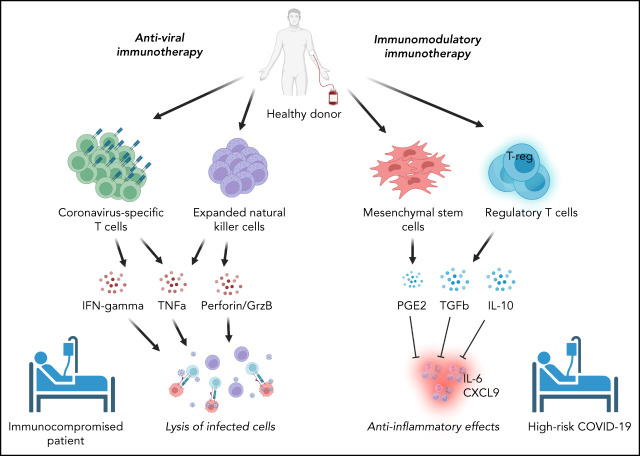
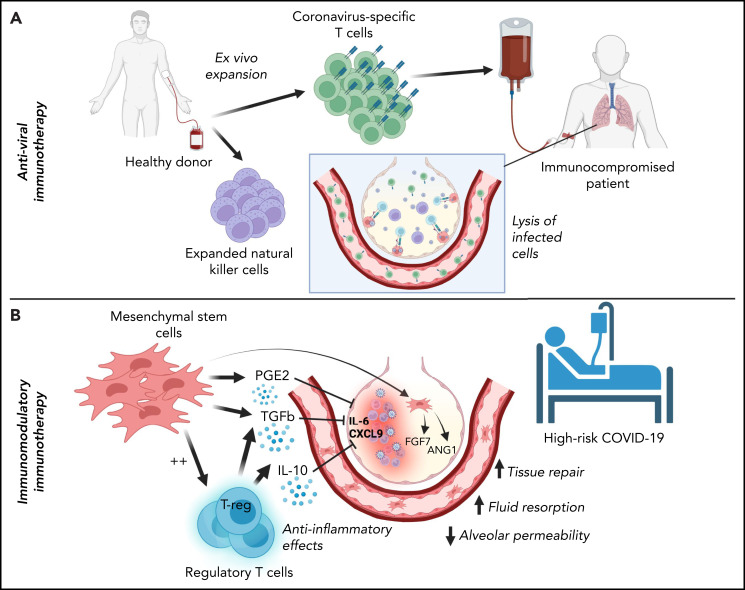
Patients with blood disorders who are immune suppressed are at increased risk for infection with severe acute respiratory syndrome coronavirus 2. Sequelae of infection can include severe respiratory disease and/or prolonged duration of viral shedding. Cellular therapies may protect these vulnerable patients by providing antiviral cellular immunity and/or immune modulation. In this recent review of the field, phase 1/2 trials evaluating adoptive cellular therapies with virus-specific T cells or natural killer cells are described along with trials evaluating the safety, feasibility, and preliminary efficacy of immune modulating cellular therapies including regulatory T cells and mesenchymal stromal cells. In addition, the immunologic basis for these therapies is discussed.
患有血液疾病且免疫抑制的患者感染严重急性呼吸综合征冠状病毒 2 的风险增加。感染的后遗症可能包括严重的呼吸道疾病和/或病毒持续脱落时间延长。细胞疗法可以通过提供抗病毒细胞免疫和/或免疫调节来保护这些脆弱的患者。在最近对该领域的综述中,描述了评估病毒特异性 T 细胞或自然杀伤细胞过继性细胞疗法的 1/2 期试验,以及评估免疫调节细胞疗法(包括调节性 T 细胞和间充质基质细胞)的安全性、可行性和初步疗效的试验。此外,还讨论了这些疗法的免疫学基础。