Department of Biostatistics, University of North Carolina at Chapel Hill, Chapel Hill, NC, USA.
Curriculum in Bioinformatics and Computational Biology, University of North Carolina at Chapel Hill, Chapel Hill, NC, USA.
J Neurodev Disord. 2022 Mar 3;14(1):16. doi: 10.1186/s11689-022-09429-x.
Although survival rates for infants born extremely preterm (gestation < 28 weeks) have improved significantly in recent decades, neurodevelopmental impairment remains a major concern. Children born extremely preterm remain at high risk for cognitive impairment from early childhood to adulthood. However, there is limited evidence on genetic factors associated with cognitive impairment in this population.
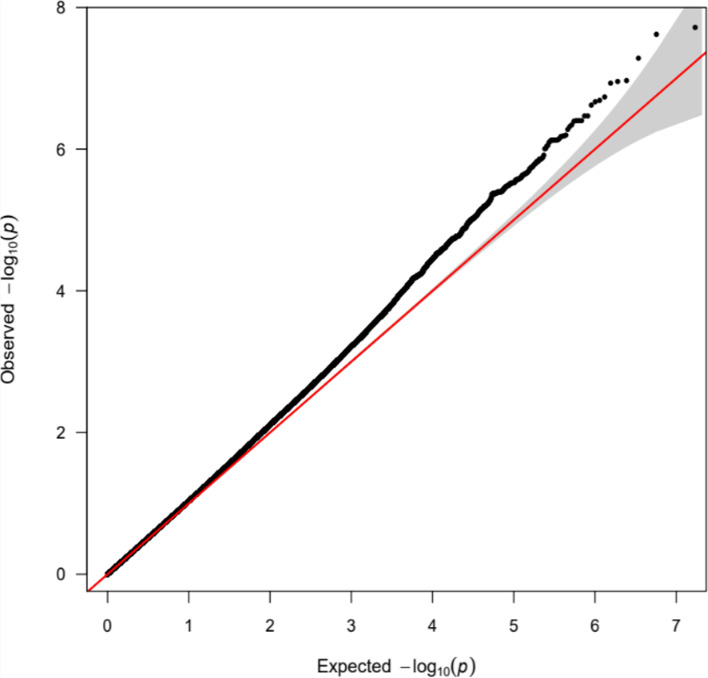
First, we used a latent profile analysis (LPA) approach to characterize neurocognitive function at age 10 for children born extremely preterm. Children were classified into two groups: (1) no or low cognitive impairment, and (2) moderate-to-severe cognitive impairment. Second, we performed TOPMed-based genotype imputation on samples with genotype array data (n = 528). Third, we then conducted a genome-wide association study (GWAS) for LPA-inferred cognitive impairment. Finally, computational analysis was conducted to explore potential mechanisms underlying the variant x LPA association.
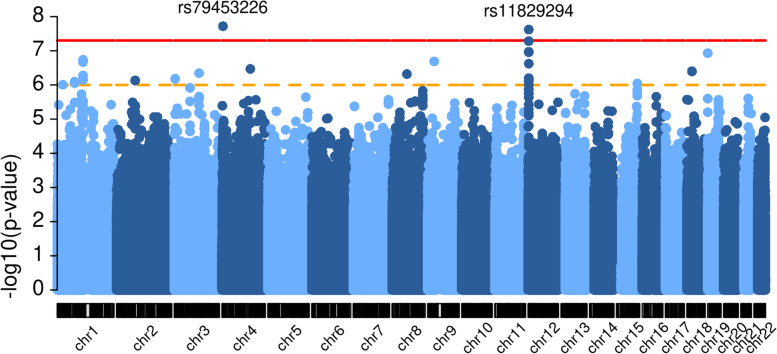
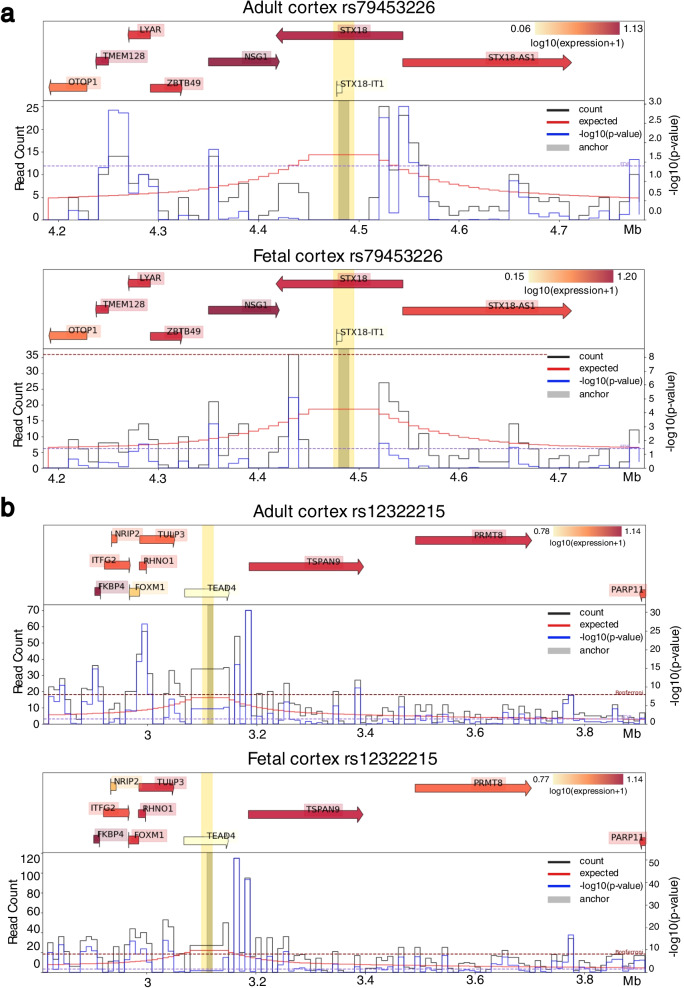
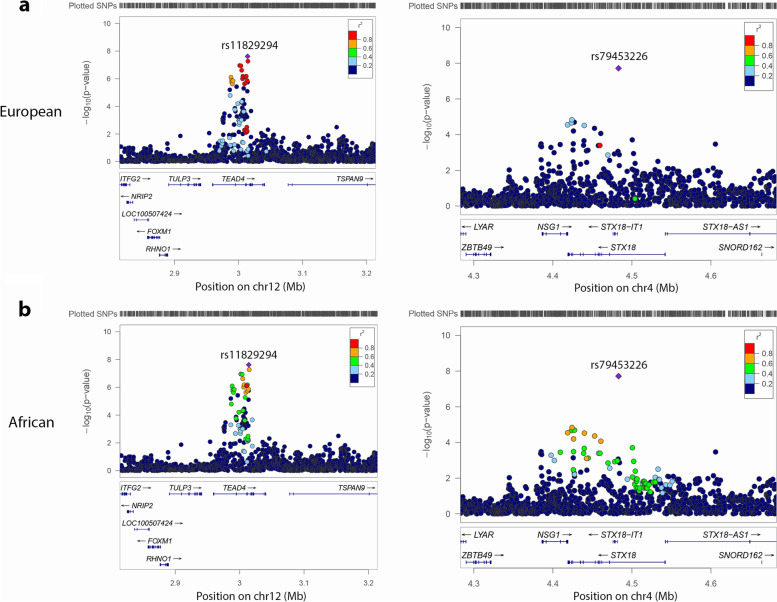
We identified two loci reaching genome-wide significance (p value < 5e-8): TEA domain transcription factor 4 (TEAD4 at rs11829294, p value = 2.40e-8) and syntaxin 18 (STX18 at rs79453226, p value = 1.91e-8). Integrative analysis with brain expression quantitative trait loci (eQTL), chromatin conformation, and epigenomic annotations suggests tetraspanin 9 (TSPAN9) and protein arginine methyltransferase 8 (PRMT8) as potential functional genes underlying the GWAS signal at the TEAD4 locus.
We conducted a novel computational analysis by utilizing an LPA-inferred phenotype with genetics data for the first time. This study suggests that rs11829294 and its LD buddies have potential regulatory roles on genes that could impact neurocognitive impairment for extreme preterm born children.
尽管近几十年来,极早产儿(<28 周妊娠)的存活率有了显著提高,但神经发育障碍仍然是一个主要关注点。极早产儿的儿童在儿童期到成年期仍存在认知障碍的高风险。然而,关于与该人群认知障碍相关的遗传因素的证据有限。
首先,我们使用潜在剖面分析(LPA)方法来描述极早产儿 10 岁时的神经认知功能。将儿童分为两组:(1)无或轻度认知障碍,(2)中度至重度认知障碍。其次,我们对具有基因分型阵列数据的样本进行了基于 TOPMed 的基因分型。然后,我们对 LPA 推断的认知障碍进行了全基因组关联研究(GWAS)。最后,进行了计算分析以探索潜在的变异与 LPA 关联的机制。
我们确定了两个达到全基因组显著水平的位点(p 值 < 5e-8):TEA 结构域转录因子 4(TEAD4 在 rs11829294,p 值 = 2.40e-8)和突触素 18(STX18 在 rs79453226,p 值 = 1.91e-8)。与大脑表达数量性状基因座(eQTL)、染色质构象和表观遗传注释的综合分析表明,四旋蛋白 9(TSPAN9)和蛋白精氨酸甲基转移酶 8(PRMT8)可能是 TEAD4 基因座 GWAS 信号的潜在功能基因。
我们首次利用 LPA 推断的表型和遗传学数据进行了一项新的计算分析。这项研究表明,rs11829294 及其 LD 伙伴可能对基因具有潜在的调节作用,这些基因可能影响极早产儿的神经认知障碍。