Clinical Microbiology and Infectious Diseases Department, Hospital General Universitario Gregorio Marañon, 46 C/ Doctor Esquerdo, 28009, Madrid, Spain.
Pharmacy Department, Hospital General Universitario Gregorio Marañón, 46 C/Dr Esquerdo, 28009, Madrid, Spain.
BMC Infect Dis. 2022 Mar 3;22(1):211. doi: 10.1186/s12879-022-07153-4.
There is a paucity of knowledge on the long-term outcome in patients diagnosed with COVID-19. We describe a cohort of patients with a constellation of symptoms occurring four weeks after diagnosis causing different degrees of reduced functional capacity. Although different hypothesis have been proposed to explain this condition like persistent immune activation or immunological dysfunction, to date, no physiopathological mechanism has been identified. Consequently, there are no therapeutic options besides symptomatic treatment and rehabilitation.
We evaluated patients with symptoms that persisted for at least 4 weeks after COVID-19. Epidemiological and clinical data were collected. Blood tests, including inflammatory markers, were conducted, and imaging studies made if deemed necessary. Severe acute respiratory syndrome coronavirus 2 (SARS-CoV-2) reverse transcription polymerase chain reaction (RT-PCR) in plasma, stool, and urine were performed. Patients were offered antiviral treatment (compassionate use).
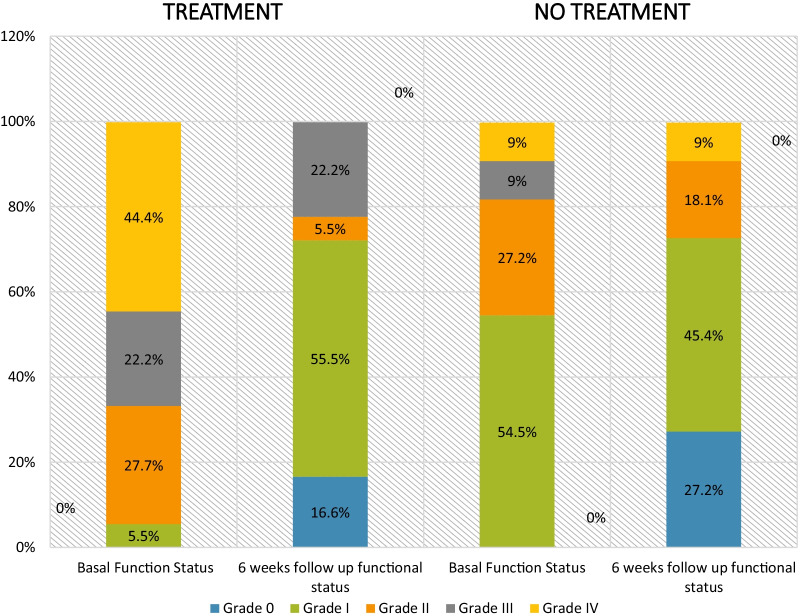
We evaluated 29 patients who reported fatigue, muscle pain, dyspnea, inappropriate tachycardia, and low-grade fever. Median number of days from COVID-19 to positive RT-PCR in extra-respiratory samples was 55 (39-67). Previous COVID-19 was mild in 55% of the cases. Thirteen patients (45%) had positive plasma RT-PCR results and 51% were positive in at least one RT-PCR sample (plasma, urine, or stool). Functional status was severely reduced in 48% of the subjects. Eighteen patients (62%) received antiviral treatment. Improvement was seen in most patients (p = 0.000) and patients in the treatment group achieved better outcomes with significant differences (p = 0.01).
In a cohort of COVID-19 patients with persistent symptoms, 45% of them have detectable plasma SARS-CoV-2 RNA. Our results indicate possible systemic viral persistence in these patients, who may benefit of antiviral treatment strategies.
目前对于 COVID-19 患者的长期预后知之甚少。我们描述了一组患者,他们在诊断后四周出现一系列症状,导致不同程度的功能能力下降。虽然已经提出了多种假说来解释这种情况,如持续的免疫激活或免疫功能障碍,但迄今为止,尚未确定任何病理生理机制。因此,除了对症治疗和康复外,没有其他治疗选择。
我们评估了 COVID-19 后至少持续 4 周出现症状的患者。收集了流行病学和临床数据。进行了血液检查,包括炎症标志物,如果需要还进行了影像学检查。对血浆、粪便和尿液进行了严重急性呼吸综合征冠状病毒 2 (SARS-CoV-2)逆转录聚合酶链反应 (RT-PCR)。为患者提供了抗病毒治疗(同情用药)。
我们评估了 29 名报告疲劳、肌肉疼痛、呼吸困难、不适当心动过速和低热的患者。从 COVID-19 到呼吸道外样本 RT-PCR 阳性的中位时间为 55 天(39-67 天)。之前 COVID-19 为轻症的占 55%。13 名患者(45%)血浆 RT-PCR 结果阳性,51%至少有一种 RT-PCR 样本(血浆、尿液或粪便)阳性。48%的患者功能状态严重受损。18 名患者(62%)接受了抗病毒治疗。大多数患者(p=0.000)症状改善,治疗组患者的结果更好,差异有统计学意义(p=0.01)。
在一组持续有症状的 COVID-19 患者中,45%的患者可检测到血浆 SARS-CoV-2 RNA。我们的结果表明这些患者可能存在系统性病毒持续存在,可能受益于抗病毒治疗策略。