MRC Epidemiology Unit, University of Cambridge, Cambridge, UK.
Curtin School of Population Health, Curtin University, Perth, Western Australia, Australia.
Obes Rev. 2022 Jun;23(6):e13438. doi: 10.1111/obr.13438. Epub 2022 Mar 3.
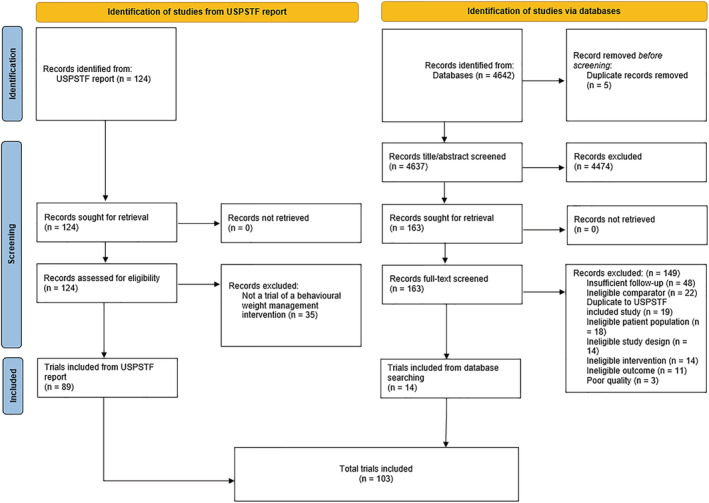
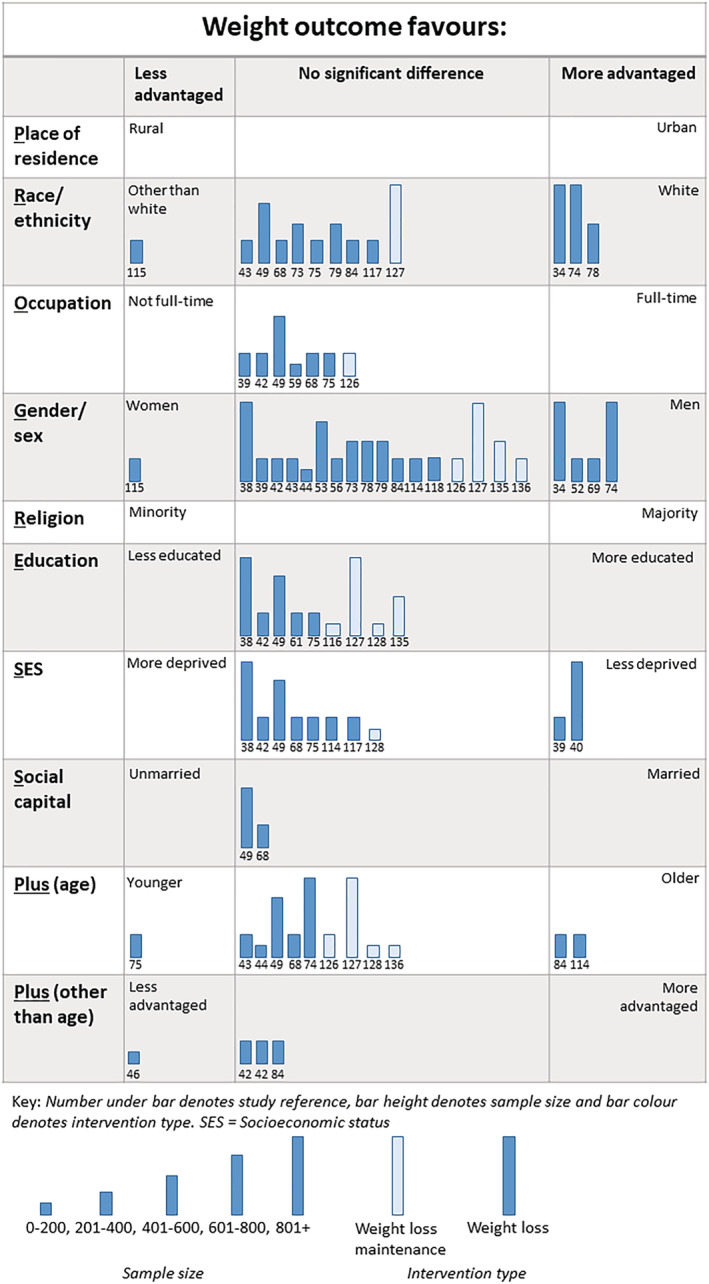
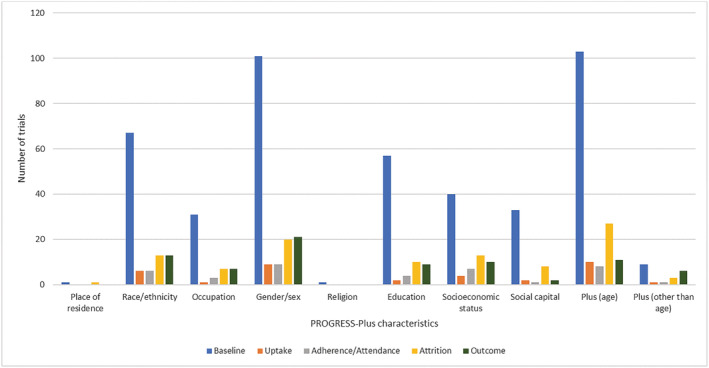
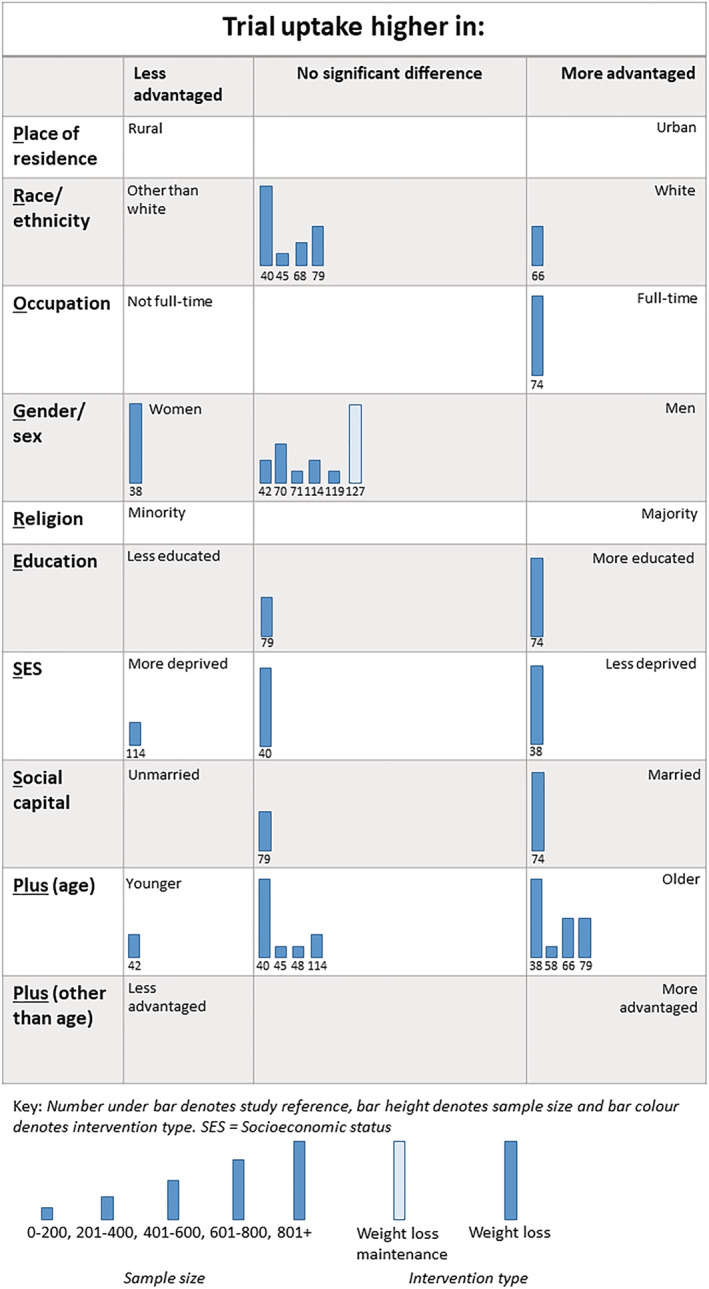
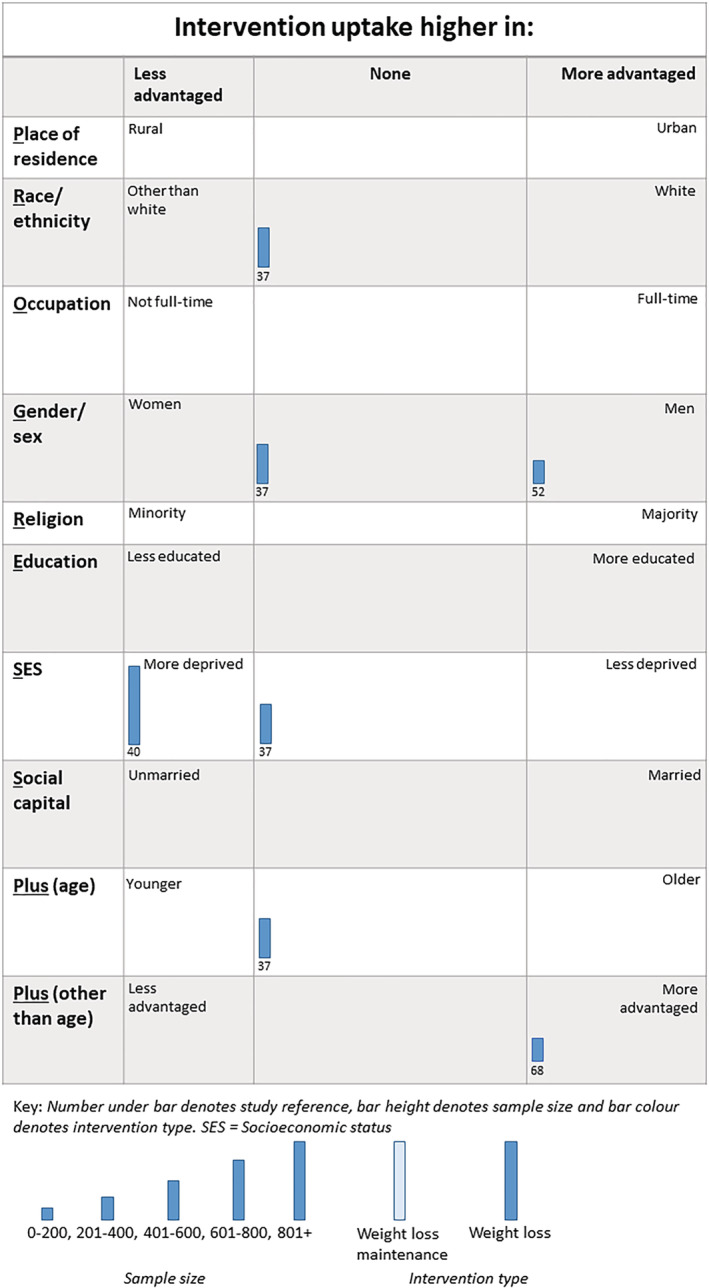
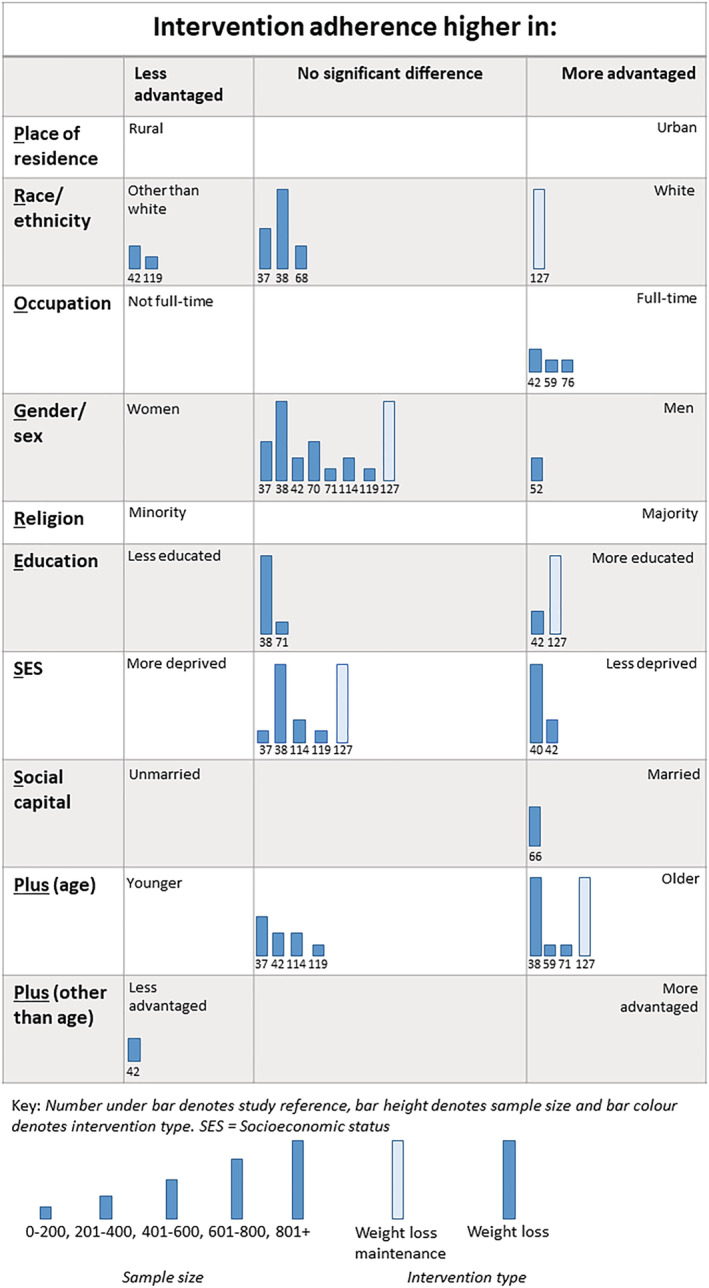
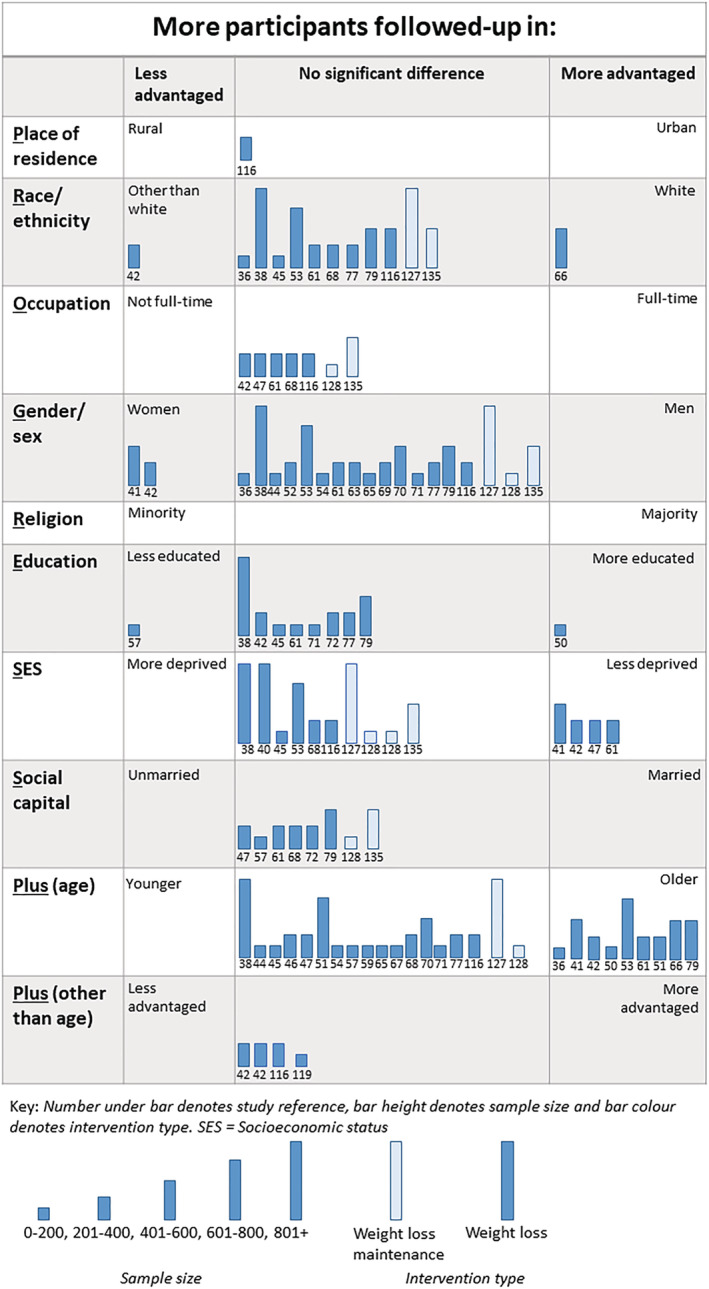
The extent to which behavioral weight management interventions affect health inequalities is uncertain, as is whether trials of these interventions directly consider inequalities. We conducted a systematic review, synthesizing evidence on how different aspects of inequality impact uptake, adherence, and effectiveness in trials of behavioral weight management interventions. We included (cluster-) randomized controlled trials of primary care-applicable behavioral weight management interventions in adults with overweight or obesity published prior to March 2020. Data about trial uptake, intervention adherence, attrition, and weight change by PROGRESS-Plus criteria (place of residence, race/ethnicity, occupation, gender, religion, education, socioeconomic status, social capital, plus other discriminating factors) were extracted. Data were synthesized narratively and summarized in harvest plots. We identified 91 behavioral weight loss interventions and 12 behavioral weight loss maintenance interventions. Fifty-six of the 103 trials considered inequalities in relation to at least one of intervention or trial uptake (n = 15), intervention adherence (n = 15), trial attrition (n = 32), or weight outcome (n = 34). Most trials found no inequalities gradient. If a gradient was observed for trial uptake, intervention adherence, and trial attrition, those considered "more advantaged" did best. Alternative methods of data synthesis that enable data to be pooled and increase statistical power may enhance understanding of inequalities in behavioral weight management interventions.
行为体重管理干预对健康不平等的影响程度尚不确定,这些干预措施的试验是否直接考虑不平等问题也不确定。我们进行了一项系统评价,综合了关于不平等的不同方面如何影响行为体重管理干预试验的参与度、依从性和效果的证据。我们纳入了在 2020 年 3 月之前发表的针对超重或肥胖成年人的初级保健适用行为体重管理干预的(聚类)随机对照试验。提取了按 PROGRESS-Plus 标准(居住地、种族/民族、职业、性别、宗教、教育、社会经济地位、社会资本以及其他歧视因素)记录的试验参与度、干预依从性、失访和体重变化的数据。数据以叙述性方式进行综合,并以收获图进行总结。我们确定了 91 项行为减肥干预措施和 12 项行为减肥维持干预措施。在 103 项试验中,有 56 项至少考虑了与干预或试验参与度(n=15)、干预依从性(n=15)、试验失访(n=32)或体重结果(n=34)有关的不平等问题。大多数试验未发现不平等梯度。如果在试验参与度、干预依从性和试验失访方面观察到梯度,则认为“更有利”的人群效果最好。可以汇集数据并提高统计能力的替代数据综合方法可能会增强对行为体重管理干预中不平等问题的理解。