Mortimer B. Zuckerman Mind Brain Behavior Institute, Columbia University, New York, NY 10027, USA; Department of Biochemistry and Molecular Biophysics, Columbia University, New York, NY 10032, USA; Taub Institute for Research on Alzheimer's Disease and the Aging Brain, Columbia University Irving Medical Center, 630 West 168th Street, New York, NY 10032, USA.
Mortimer B. Zuckerman Mind Brain Behavior Institute, Columbia University, New York, NY 10027, USA; Department of Biochemistry and Molecular Biophysics, Columbia University, New York, NY 10032, USA; Taub Institute for Research on Alzheimer's Disease and the Aging Brain, Columbia University Irving Medical Center, 630 West 168th Street, New York, NY 10032, USA; Department of Structural Biology, Stanford University School of Medicine, Stanford, CA 94305, USA.
Cell. 2022 Apr 14;185(8):1346-1355.e15. doi: 10.1016/j.cell.2022.02.026. Epub 2022 Mar 4.
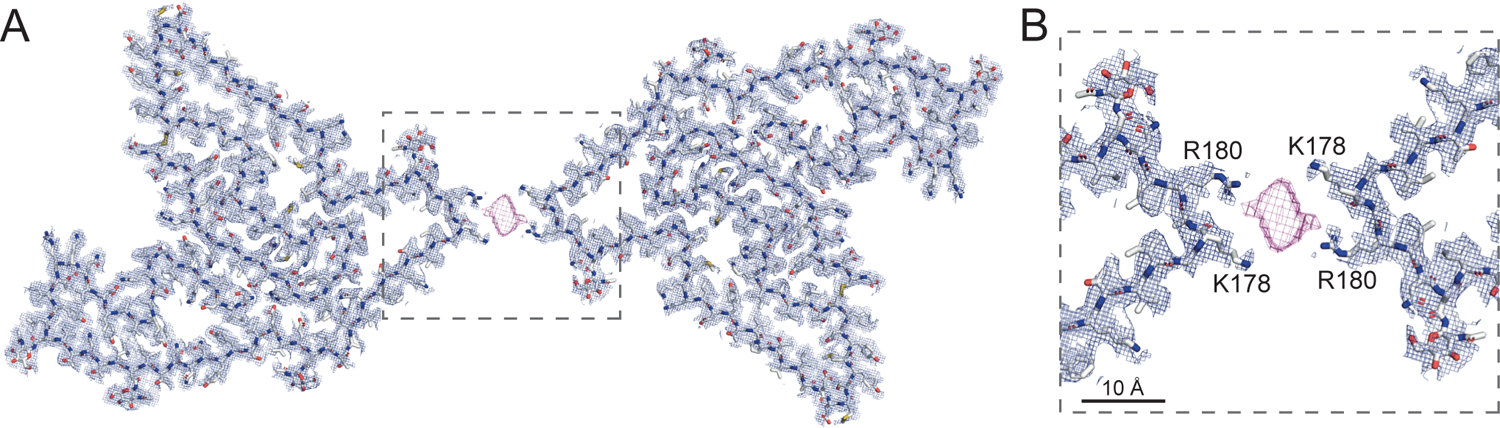
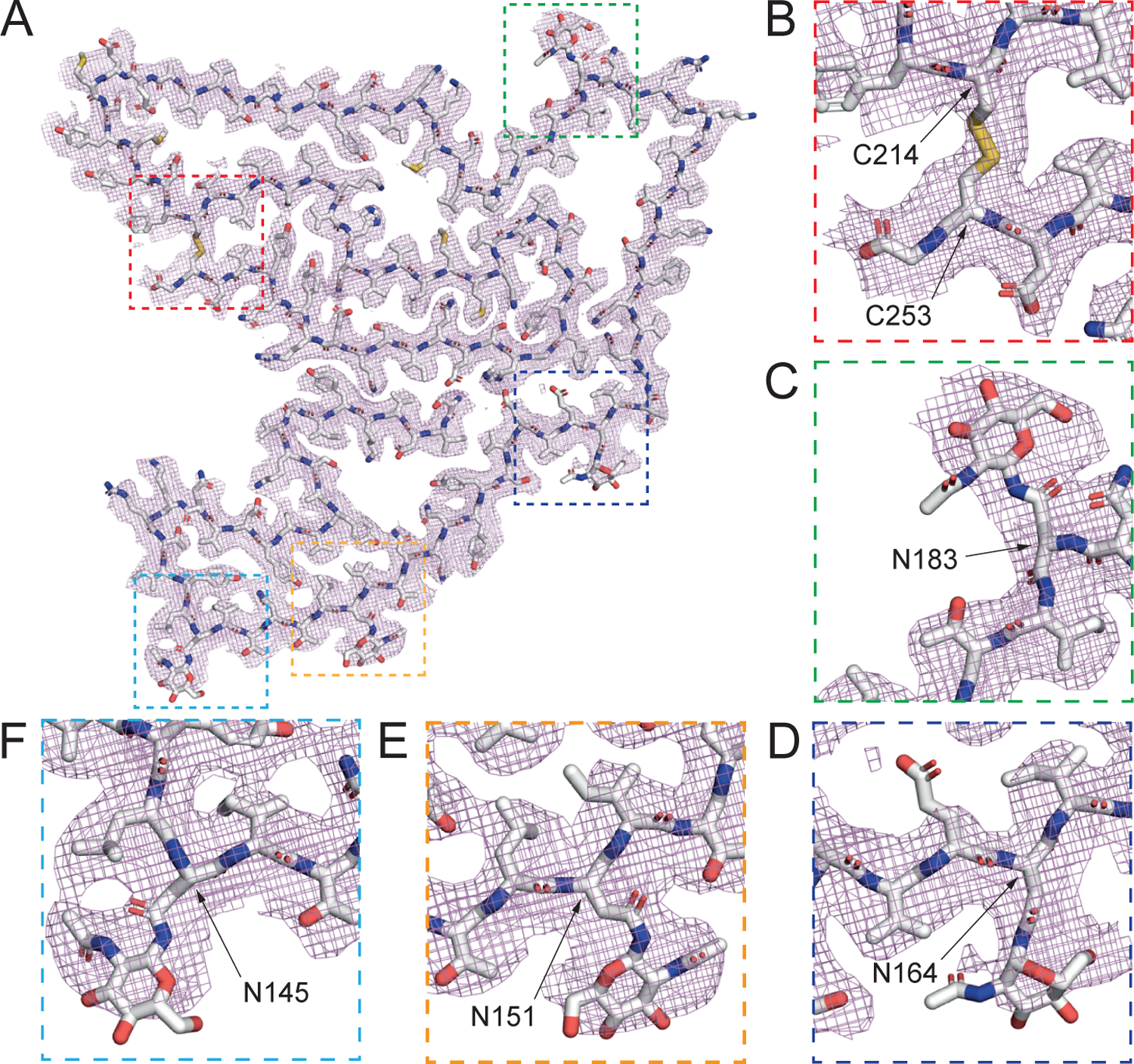
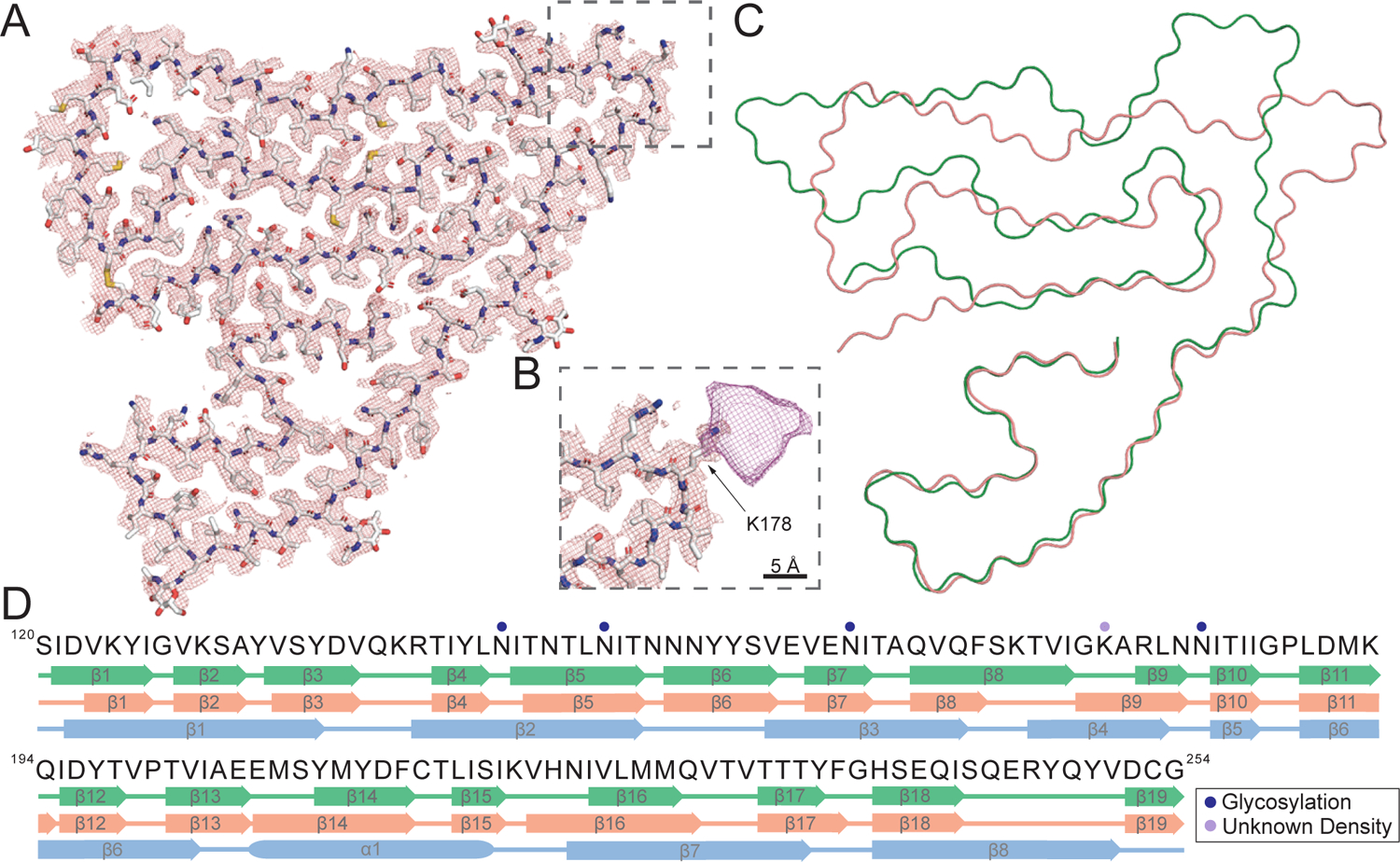
Misfolding and aggregation of disease-specific proteins, resulting in the formation of filamentous cellular inclusions, is a hallmark of neurodegenerative disease with characteristic filament structures, or conformers, defining each proteinopathy. Here we show that a previously unsolved amyloid fibril composed of a 135 amino acid C-terminal fragment of TMEM106B is a common finding in distinct human neurodegenerative diseases, including cases characterized by abnormal aggregation of TDP-43, tau, or α-synuclein protein. A combination of cryoelectron microscopy and mass spectrometry was used to solve the structures of TMEM106B fibrils at a resolution of 2.7 Å from postmortem human brain tissue afflicted with frontotemporal lobar degeneration with TDP-43 pathology (FTLD-TDP, n = 8), progressive supranuclear palsy (PSP, n = 2), or dementia with Lewy bodies (DLB, n = 1). The commonality of abundant amyloid fibrils composed of TMEM106B, a lysosomal/endosomal protein, to a broad range of debilitating human disorders indicates a shared fibrillization pathway that may initiate or accelerate neurodegeneration.
疾病特异性蛋白质的错误折叠和聚集,导致纤维状细胞包涵体的形成,是神经退行性疾病的标志,其特征性纤维结构或构象体定义了每种蛋白病。在这里,我们表明,以前未解决的由 TMEM106B 的 135 个氨基酸 C 末端片段组成的淀粉样纤维,是包括 TDP-43、tau 或 α-突触核蛋白异常聚集的不同人类神经退行性疾病中的常见发现。我们使用冷冻电子显微镜和质谱联用技术,从患有额颞叶痴呆伴 TDP-43 病理(FTLD-TDP,n=8)、进行性核上性麻痹(PSP,n=2)或路易体痴呆(DLB,n=1)的尸检人脑组织中解决了 TMEM106B 纤维的结构,分辨率为 2.7Å。大量由溶酶体/内体蛋白 TMEM106B 组成的淀粉样纤维在广泛的使人衰弱的人类疾病中的共同存在表明存在共同的纤维化途径,该途径可能引发或加速神经退行性变。