Fang Shengyu, Li Lianwang, Weng Shimeng, Guo Yuhao, Zhang Zhong, Wang Lei, Fan Xing, Wang Yinyan, Jiang Tao
Department of Neurosurgery, Beijing Tiantan Hospital, Capital Medical University, Beijing, China.
Beijing Neurosurgical Institute, Capital Medical University, Beijing, China.
Front Oncol. 2022 Feb 16;12:840871. doi: 10.3389/fonc.2022.840871. eCollection 2022.
Glioma-related epilepsy (GRE) is a common symptom in patients with prefrontal glioma. Epilepsy onset is associated with functional network alterations. This study investigated alterations of functional networks in patients with prefrontal glioma and GRE.
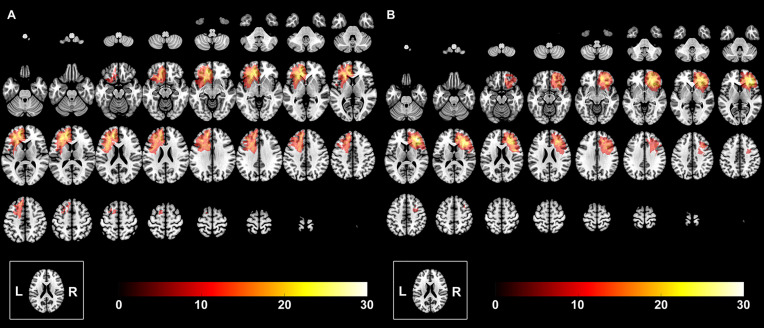
Sixty-five patients with prefrontal lobe gliomas were retrospectively assessed and classified into GRE and non-GRE groups. Additionally, 25 healthy participants were enrolled after matching for general information. Imaging data were acquired within 72 h in pre-operation. The sensorimotor network was used to delineate alterations in functional connectivity (FC) and topological properties. One-way analysis of variance and analysis with Bonferroni correction were used to calculate differences of FC and topological properties.
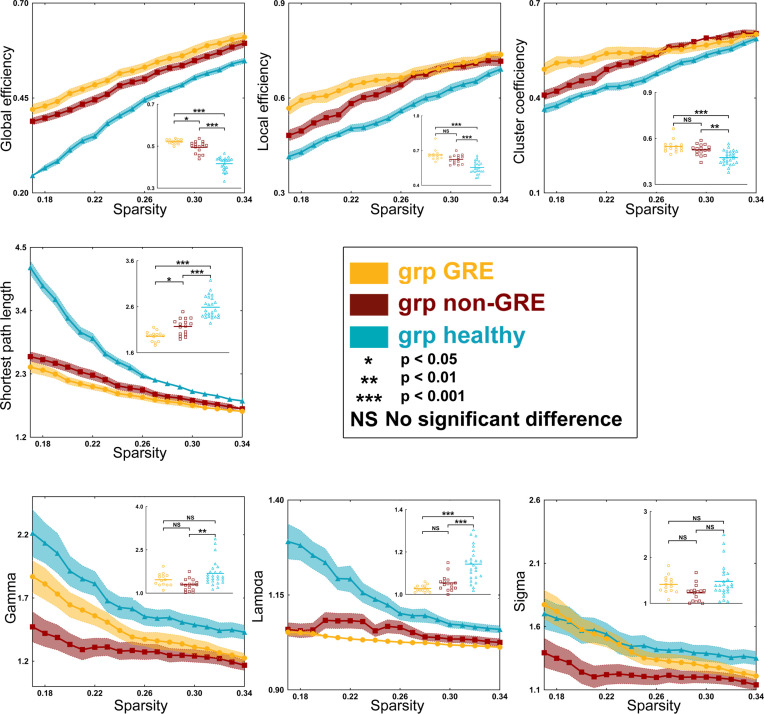
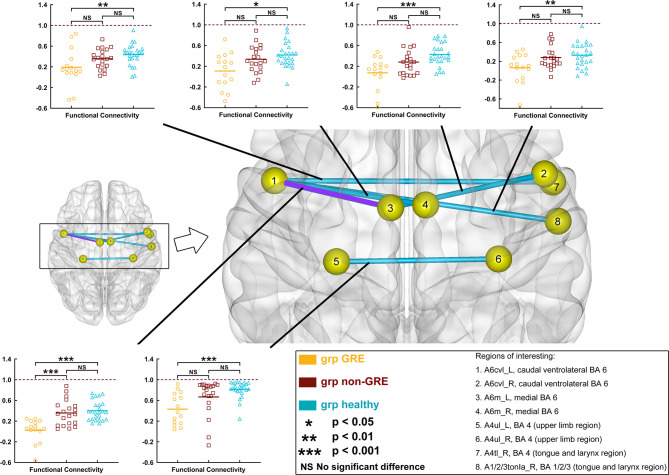
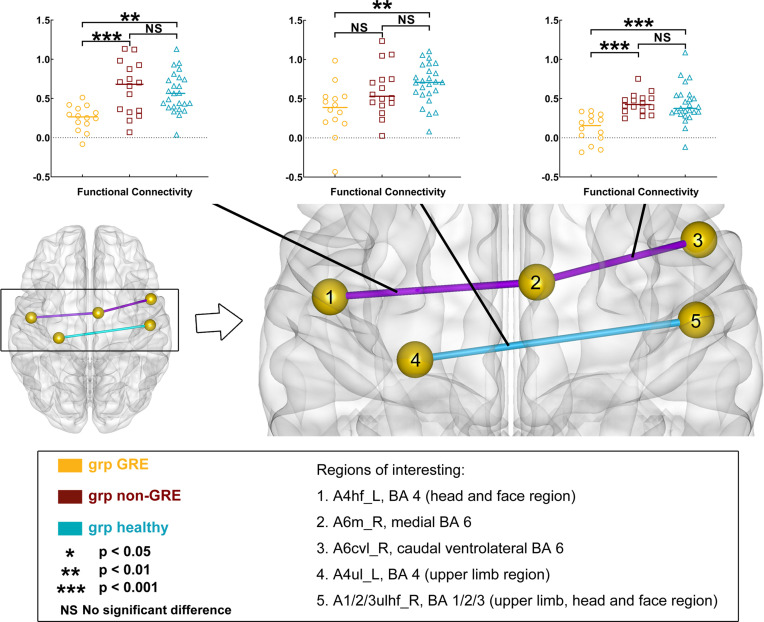
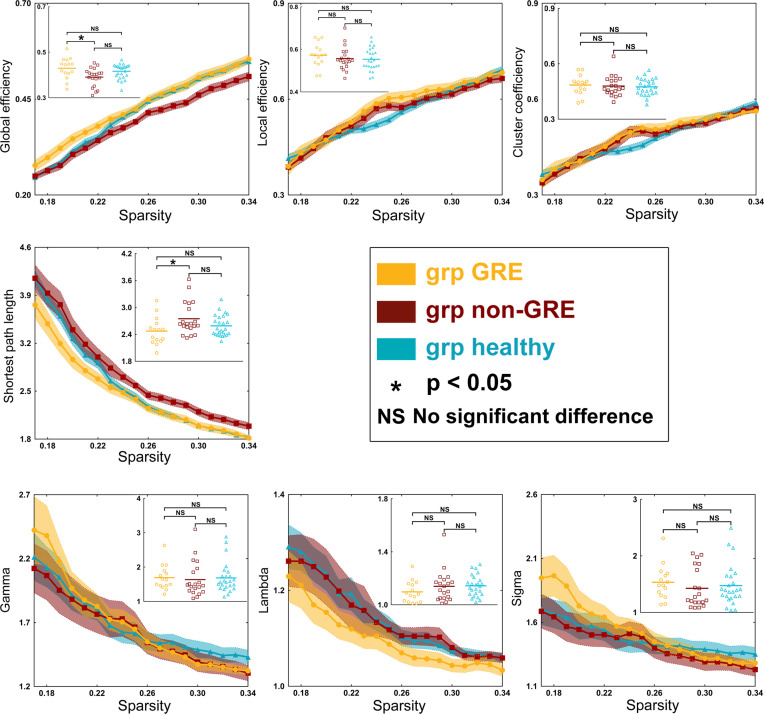
All significant alterations were solely found in the sensorimotor network. Irrespective of gliomas located in the left or right prefrontal lobes, the edge between medial Brodmann area 6 and caudal ventrolateral Brodmann area 6 decreased FC in the GRE group compared with the non-GRE group [ < 0.0001 (left glioma), p = 0.0002 (right glioma)]. Moreover, the shortest path length decrease was found in the GRE group compared with the non-GRE group [ = 0.0292 (left glioma) and = 0.0129 (right glioma)].
The reduction of FC between the medial BA 6 (supplementary motor area) and caudal ventrolateral BA 6 in the ipsilateral hemisphere and the shortening of the path length of the sensorimotor network were characteristics alterations in patients with GRE onset. These findings fill in the gap which is the relationship between GRE onset and the alterations of functional networks in patients with prefrontal glioma.
Glioma related epilepsy is the most common symptom of prefrontal glioma. It is important to identify characteristic alterations in functional networks in patients with GRE. We found that all significant alterations occurred in the sensorimotor network. Moreover, a decreased FC in the supplementary motor area and a shortening of the path's length are additional characteristics of glioma-related epilepsy. We believe that our findings indicate new directions of research that will contribute to future investigations of glioma-related epilepsy onset.
胶质瘤相关癫痫(GRE)是前额叶胶质瘤患者的常见症状。癫痫发作与功能网络改变有关。本研究调查了前额叶胶质瘤合并GRE患者的功能网络改变。
回顾性评估65例前额叶胶质瘤患者,并将其分为GRE组和非GRE组。此外,纳入25名健康参与者,使其一般信息相匹配。术前72小时内采集影像数据。使用感觉运动网络来描绘功能连接(FC)和拓扑属性的改变。采用单因素方差分析和Bonferroni校正分析来计算FC和拓扑属性的差异。
所有显著改变仅在感觉运动网络中发现。无论胶质瘤位于左侧还是右侧前额叶,与非GRE组相比,GRE组中内侧Brodmann 6区与尾侧腹外侧Brodmann 6区之间的边缘FC降低[左侧胶质瘤p<0.0001,右侧胶质瘤p = 0.0002]。此外,与非GRE组相比,GRE组的最短路径长度缩短[左侧胶质瘤p = 0.0292,右侧胶质瘤p = 0.0129]。
同侧半球内侧BA 6(辅助运动区)与尾侧腹外侧BA 6之间FC的降低以及感觉运动网络路径长度的缩短是GRE发作患者的特征性改变。这些发现填补了GRE发作与前额叶胶质瘤患者功能网络改变之间关系的空白。
胶质瘤相关癫痫是前额叶胶质瘤最常见的症状。识别GRE患者功能网络的特征性改变很重要。我们发现所有显著改变都发生在感觉运动网络中。此外,辅助运动区FC降低和路径长度缩短是胶质瘤相关癫痫的额外特征。我们相信我们的发现为未来胶质瘤相关癫痫发作的研究指明了新方向。