Massachusetts Institute of Technology-Woods Hole Oceanographic Institution Joint Program in Oceanography/Applied Ocean Science and Engineering, Woods Hole Oceanographic Institution, Woods Hole, MA 02543.
Department of Chemistry and Geochemistry, Woods Hole Oceanographic Institution, Woods Hole, MA 02543.
Proc Natl Acad Sci U S A. 2022 Mar 15;119(11):e2113386119. doi: 10.1073/pnas.2113386119. Epub 2022 Mar 7.
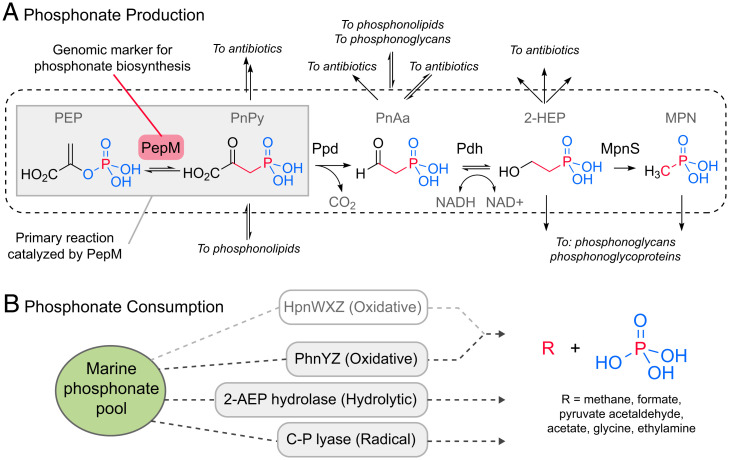
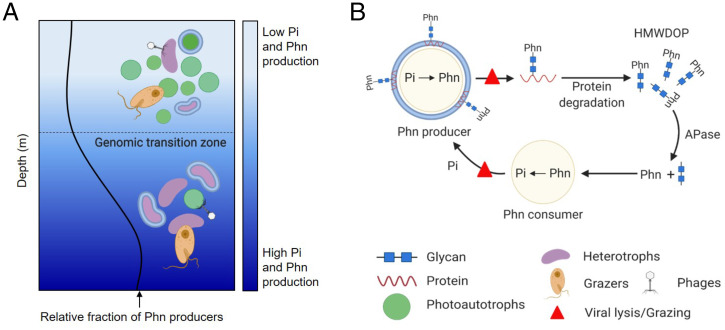
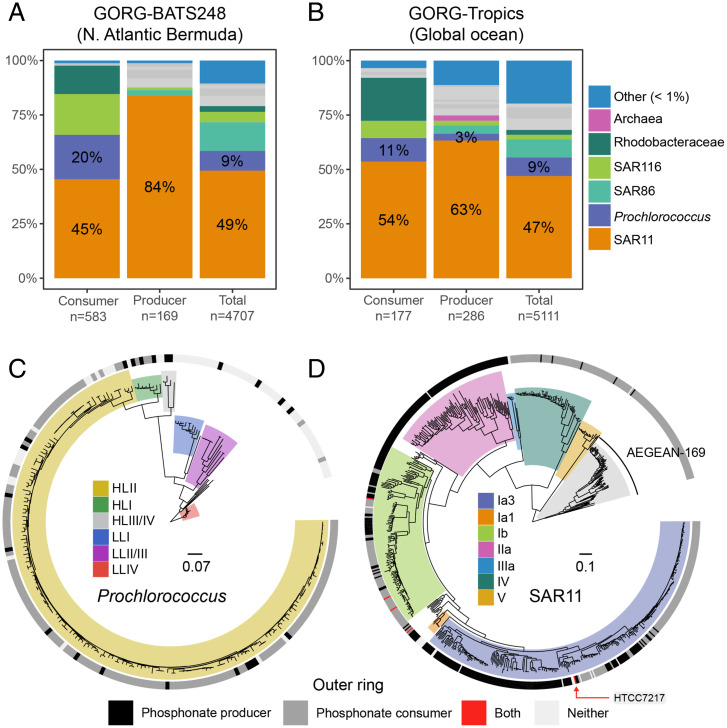
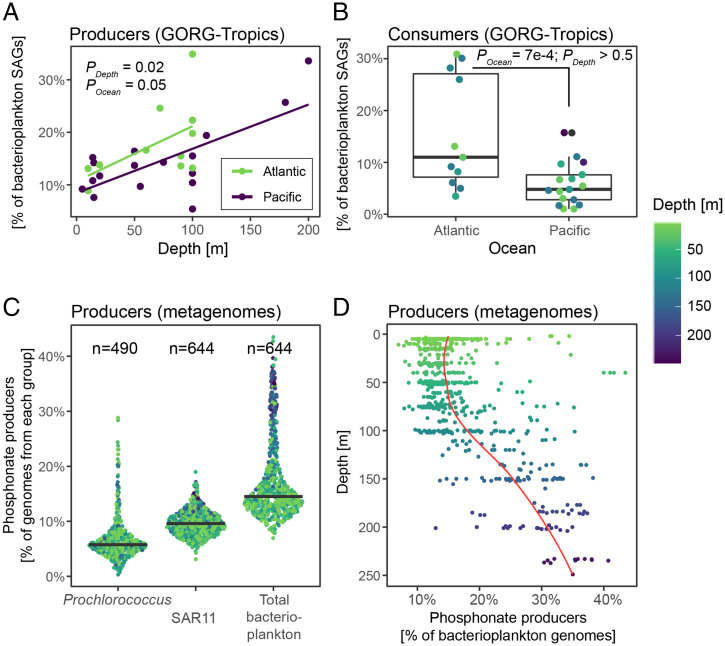
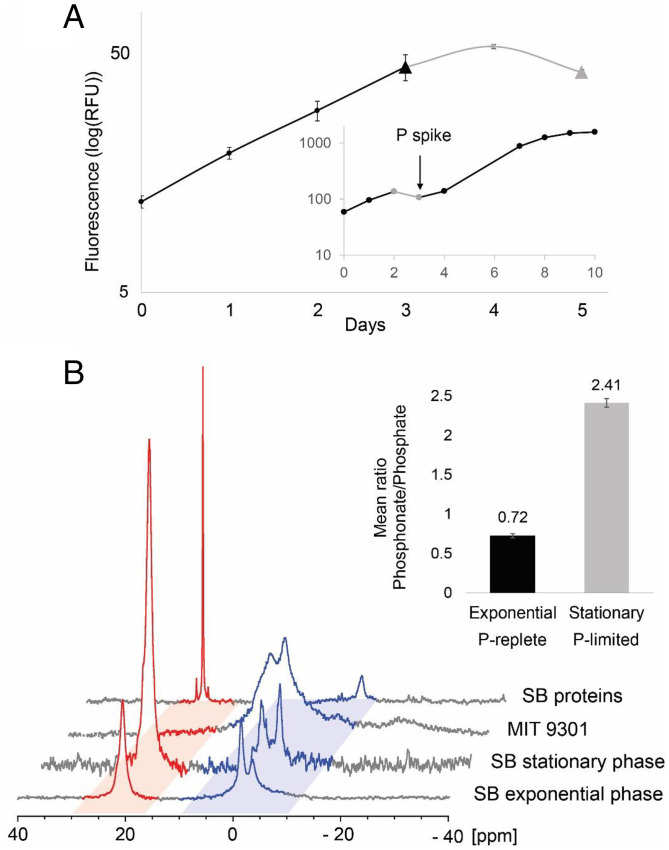
SignificancePhosphonates are a class of phosphorus metabolites characterized by a highly stable C-P bond. Phosphonates accumulate to high concentrations in seawater, fuel a large fraction of marine methane production, and serve as a source of phosphorus to microbes inhabiting nutrient-limited regions of the oligotrophic ocean. Here, we show that 15% of all bacterioplankton in the surface ocean have genes phosphonate synthesis and that most belong to the abundant groups and SAR11. Genomic and chemical evidence suggests that phosphonates are incorporated into cell-surface phosphonoglycoproteins that may act to mitigate cell mortality by grazing and viral lysis. These results underscore the large global biogeochemical impact of relatively rare but highly expressed traits in numerically abundant groups of marine bacteria.
膦酸盐是一类磷代谢物,其特征是具有高度稳定的 C-P 键。膦酸盐在海水中积累到很高的浓度,为大量的海洋甲烷生产提供燃料,并为栖息在贫营养寡营养海洋区域的微生物提供磷源。在这里,我们表明,表层海洋中 15%的细菌浮游生物具有膦酸盐合成基因,而且大多数属于丰富的 和 SAR11 组。基因组和化学证据表明,膦酸盐被掺入到细胞表面的膦糖蛋白中,这些膦糖蛋白可能通过摄食和病毒裂解来减轻细胞死亡率。这些结果突出表明,在海洋细菌数量丰富的群体中,相对罕见但高度表达的特征具有巨大的全球生物地球化学影响。