Department of Health Technology, Technical University of Denmark, 2800, Kgs. Lyngby, Denmark.
Sci Rep. 2022 Mar 7;12(1):3694. doi: 10.1038/s41598-022-07739-7.
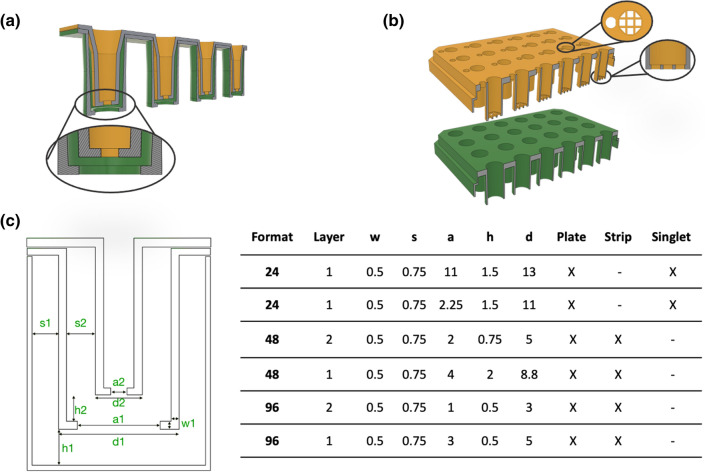
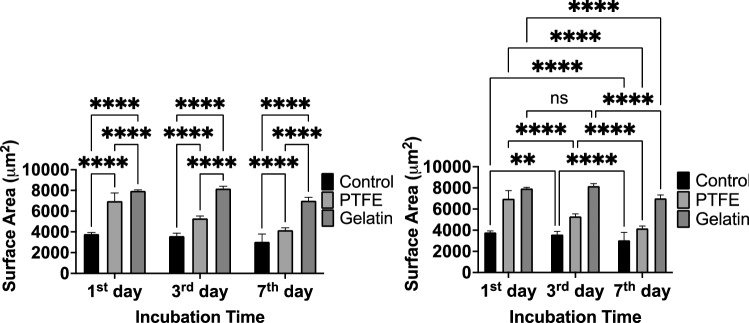
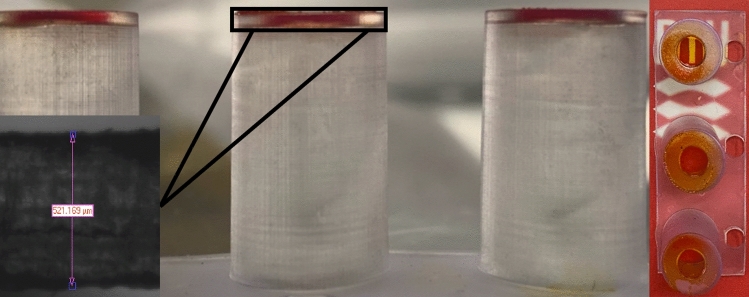
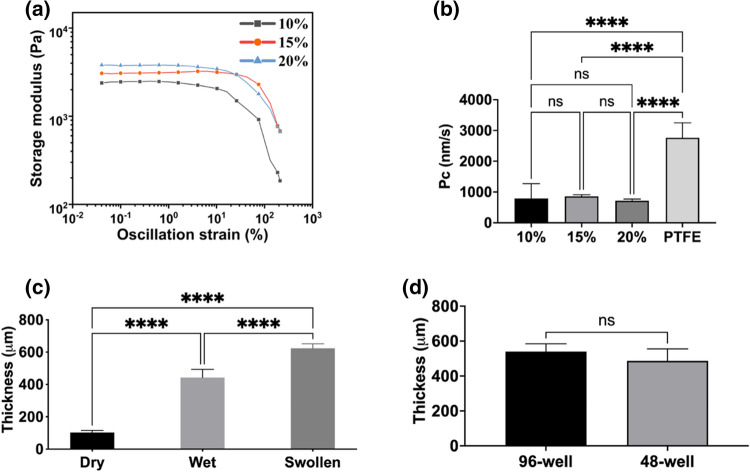
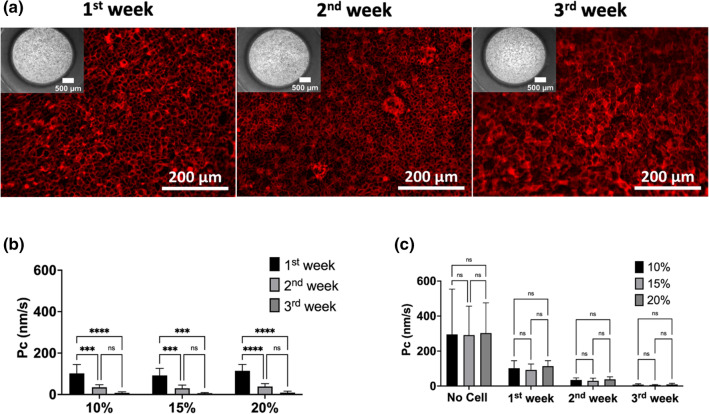
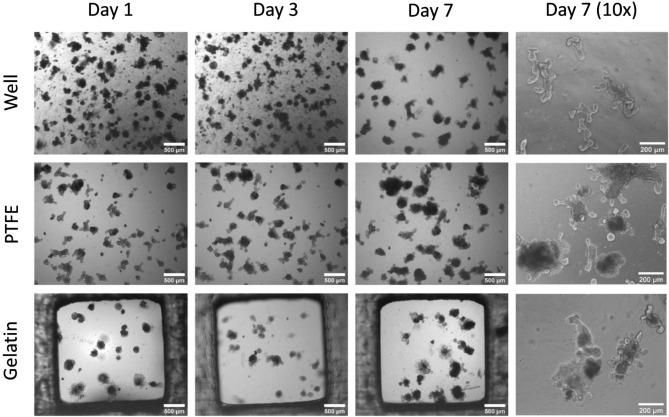
There is a high demand in various fields to develop complex cell cultures. Apart from titer plates, Transwell inserts are the most popular device because they are commercially available, easy to use, and versatile. While Transwell inserts are standardized, there are potential gains to customize inserts in terms of the number of layers, height between the layers and the size and composition of the bioactive membrane. To demonstrate such customization, we present a small library of 3D-printed inserts and a robust method to functionalize the inserts with hydrogel and synthetic membrane materials. The library consists of 24- to 96-well sized inserts as whole plates, strips, and singlets. The density of cultures (the number of wells per plate) and the number of layers was decided by the wall thickness, the capillary forces between the layers and the ability to support fluid operations. The highest density for a two-layer culture was 48-well plate format because the corresponding 96-well format could not support fluidic operations. The bottom apertures were functionalized with hydrogels using a new high-throughput dip-casting technique. This yielded well-defined hydrogel membranes in the apertures with a thickness of about 500 µm and a %CV (coefficient of variance) of < 10%. Consistent intestine barrier was formed on the gelatin over 3-weeks period. Furthermore, mouse intestinal organoid development was compared on hydrogel and synthetic filters glued to the bottom of the 3D-printed inserts. Condensation was most pronounced in inserts with filters followed by the gelatin membrane and the control, which were organoids cultured at the bottom of a titer plate well. This showed that the bottom of an insert should be chosen based on the application. All the inserts were fabricated using an easy-to-use stereolithography (SLA) printer commonly used for dentistry and surgical applications. Therefore, on demand printing of the customized inserts is realistic in many laboratory settings.
各种领域对开发复杂细胞培养物的需求很高。除了微量滴定板外,Transwell 插入物是最受欢迎的设备,因为它们易于使用,具有通用性,而且易于购买。虽然 Transwell 插入物是标准化的,但在层数、层间高度以及生物活性膜的大小和组成方面对插入物进行定制仍然具有潜在的优势。为了展示这种定制化,我们提供了一个由 3D 打印插入物组成的小型文库,以及一种将水凝胶和合成膜材料功能化到插入物上的强大方法。该文库由 24 至 96 孔尺寸的插入物组成,包括整块板、条带和单个插入物。培养物的密度(每个板的孔数)和层数由壁厚度、层间的毛细力以及支持流体操作的能力决定。两层培养物的最高密度为 48 孔板格式,因为相应的 96 孔格式无法支持流体操作。底部孔使用新的高通量浸涂技术用水凝胶进行功能化。这在孔径中产生了具有约 500 µm 厚度和<10%的 CV(变异系数)的良好定义的水凝胶膜。在明胶上形成一致的肠屏障超过 3 周。此外,还比较了在底部粘有 3D 打印插入物的水凝胶和合成过滤器的情况下,小鼠肠类器官的发育情况。在装有过滤器的插入物中,出现的凝结现象最为明显,其次是明胶膜和对照,对照是在微量滴定板孔底部培养的类器官。这表明,应根据应用选择插入物的底部。所有插入物均使用常用于牙科和外科应用的易于使用的立体光刻(SLA)打印机制造。因此,在许多实验室环境中,按需打印定制插入物是可行的。