
新冠疫情影响下的经济复苏预测。
Economic recovery forecasts under impacts of COVID-19.
作者信息
Teng Bin, Wang Sicong, Shi Yufeng, Sun Yunchuan, Wang Wei, Hu Wentao, Shi Chaojun
机构信息
Institute for Financial Studies, Shandong University, Jinan, 250100, China.
Shandong Big Data Research Association, Jinan, 250100, China.
出版信息
Econ Model. 2022 May;110:105821. doi: 10.1016/j.econmod.2022.105821. Epub 2022 Mar 4.
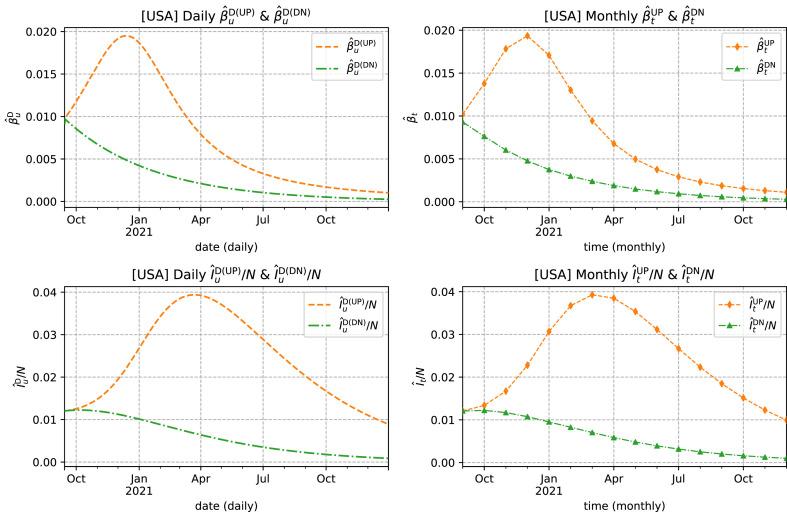
This paper proposes a joint model by combining the time-varying coefficient susceptible-infected-removal model with the hierarchical Bayesian vector autoregression model. This model establishes the relationship between several critical macroeconomic variables and pandemic transmission states and performs economic predictions under two predefined pandemic scenarios. The empirical part of the model predicts the economic recovery of several countries severely affected by COVID-19 (e.g., the United States and India, among others). Under the proposed pandemic scenarios, economies tend to recover rather than fall into prolonged recessions. The economy recovers faster in the scenario where the COVID-19 pandemic is controlled.
本文提出了一种联合模型,将时变系数易感-感染-清除模型与分层贝叶斯向量自回归模型相结合。该模型建立了几个关键宏观经济变量与疫情传播状态之间的关系,并在两种预定义的疫情情景下进行经济预测。该模型的实证部分预测了受新冠疫情严重影响的几个国家(如美国和印度等)的经济复苏情况。在所提出的疫情情景下,经济倾向于复苏而非陷入长期衰退。在新冠疫情得到控制的情景下,经济复苏得更快。




 Zotero 插件