Gambarini Victor, Pantos Olga, Kingsbury Joanne M, Weaver Louise, Handley Kim M, Lear Gavin
School of Biological Sciences, University of Auckland, 3a Symonds Street, Auckland 1010, New Zealand.
The Institute of Environmental Science and Research, 27 Creyke Road, Ilam, Christchurch 8041, New Zealand.
Database (Oxford). 2022 Mar 1;2022. doi: 10.1093/database/baac008.
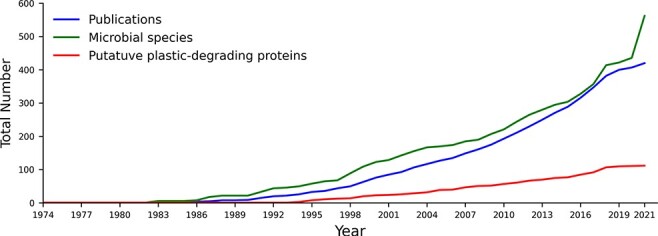
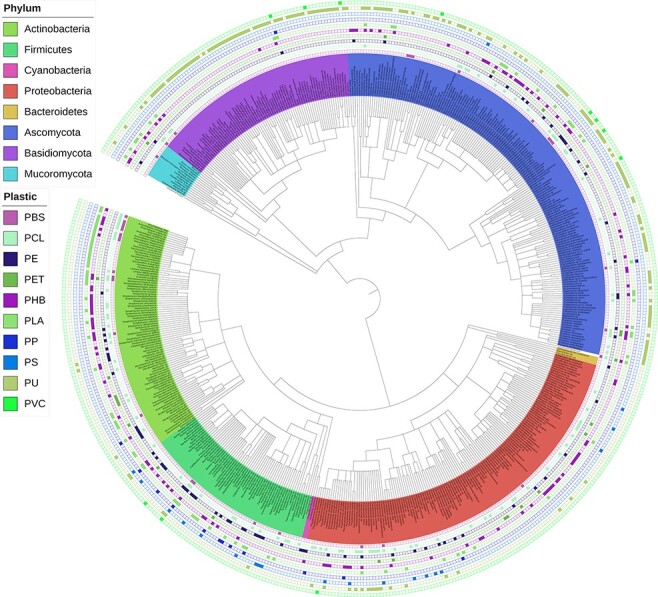
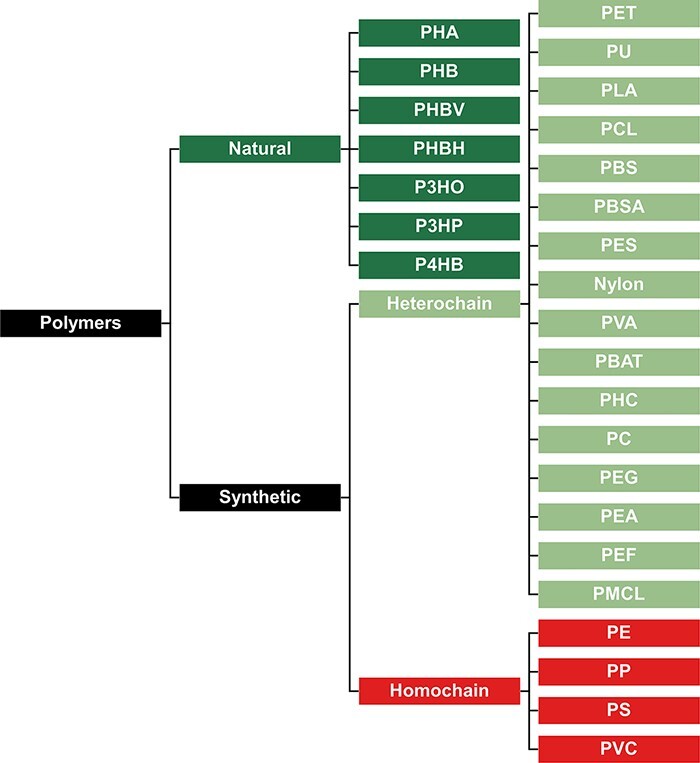
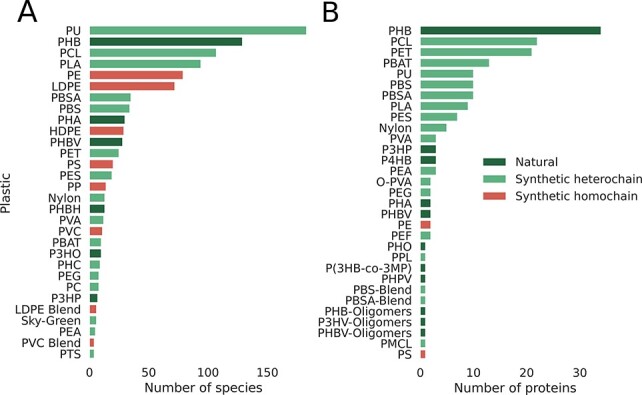
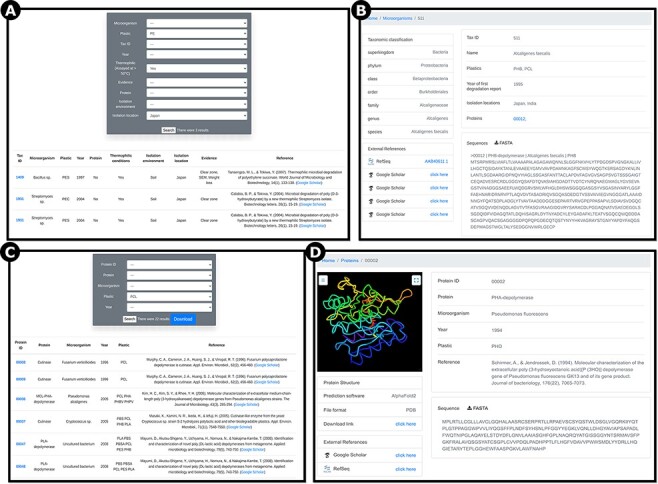
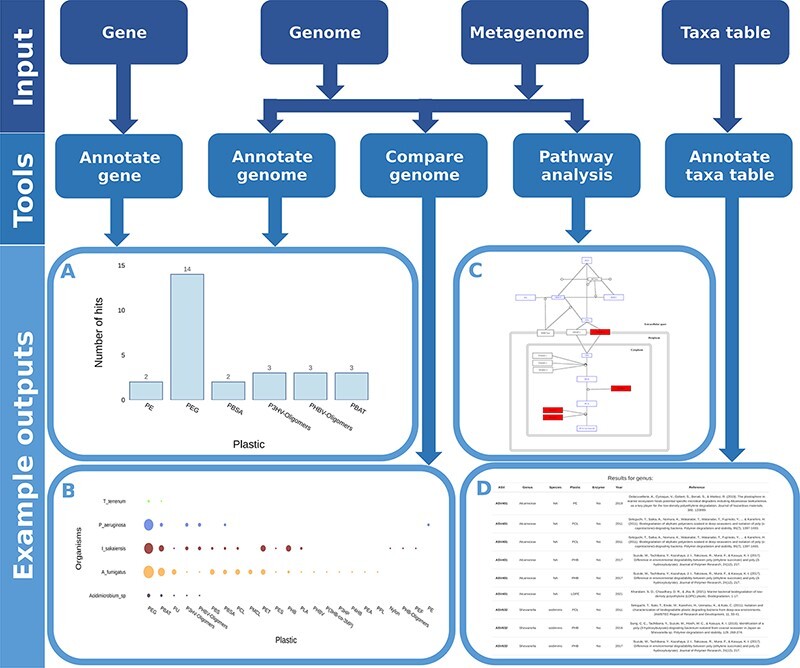
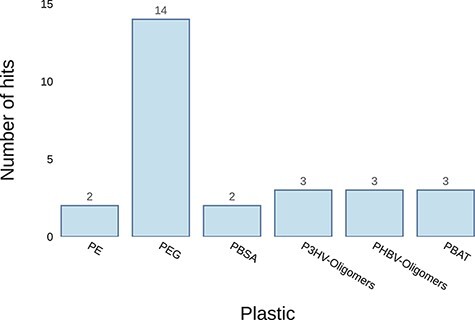
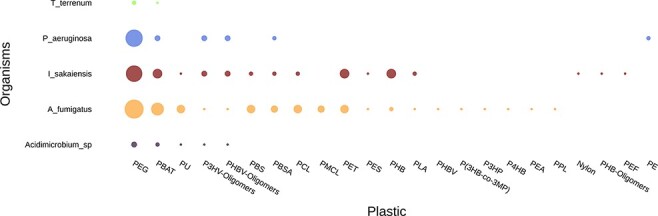
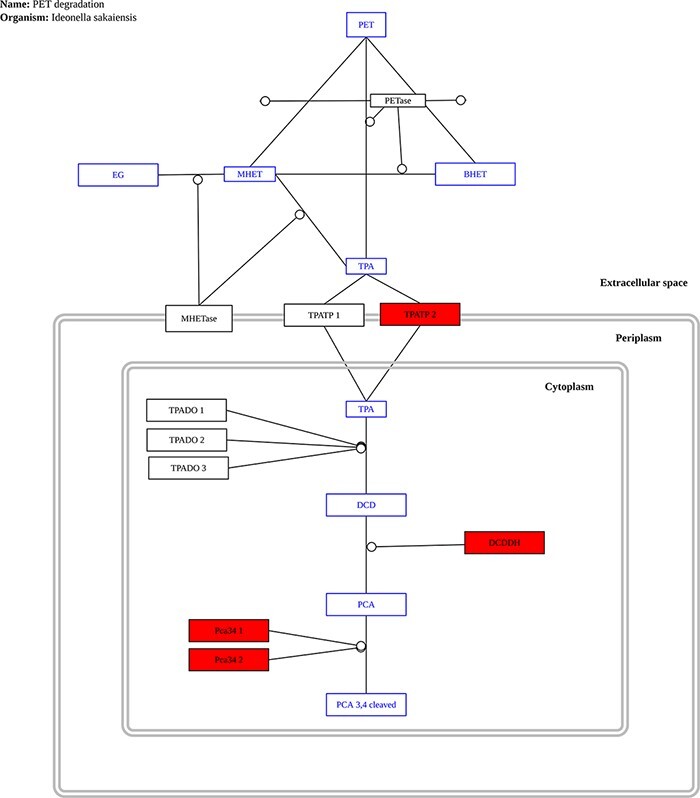
The number of publications reporting putative plastic-degrading microbes and proteins is continuously increasing, necessitating the compilation of these data and the development of tools to facilitate their analysis. We developed the PlasticDB web application to address this need, which comprises a database of microorganisms and proteins reported to biodegrade plastics. Associated metadata, such as the techniques utilized to assess biodegradation, the environmental source of microbial isolate and presumed thermophilic traits are also reported. Proteins in the database are categorized according to the plastic type they are reported to degrade. Each protein structure has been predicted in silico and can be visualized or downloaded for further investigation. In addition to standard database functionalities, such as searching, filtering and retrieving database records, we implemented several analytical tools that accept inputs, including gene, genome, metagenome, transcriptomes, metatranscriptomes and taxa table data. Users can now analyze their datasets for the presence of putative plastic-degrading species and potential plastic-degrading proteins and pathways from those species. Database URL:http://plasticdb.org.
报道假定的塑料降解微生物和蛋白质的出版物数量不断增加,因此有必要汇编这些数据并开发便于分析的工具。我们开发了PlasticDB网络应用程序来满足这一需求,它包含一个据报道可生物降解塑料的微生物和蛋白质数据库。还报告了相关的元数据,如用于评估生物降解的技术、微生物分离株的环境来源和假定的嗜热特性。数据库中的蛋白质根据它们据报道可降解的塑料类型进行分类。每个蛋白质结构都已通过计算机模拟预测,并且可以可视化或下载以供进一步研究。除了标准的数据库功能,如搜索、筛选和检索数据库记录外,我们还实现了几种分析工具,这些工具接受包括基因、基因组、宏基因组、转录组、宏转录组和分类表数据在内的输入。用户现在可以分析他们的数据集,以确定是否存在假定的塑料降解物种以及来自这些物种的潜在塑料降解蛋白质和途径。数据库网址:http://plasticdb.org