Oxford University Clinical Research Unit, Ho Chi Minh City, Vietnam.
University of Medicine and Pharmacy at Ho Chi Minh City, Ho Chi Minh City, Vietnam.
J Infect Dis. 2022 Oct 17;226(8):1338-1347. doi: 10.1093/infdis/jiac093.
Severe dengue, characterized by shock and organ dysfunction, is driven by an excessive host immune response. We investigated the role of hyperinflammation in dengue pathogenesis.
Patients recruited into an observational study were divided into 3 plasma leak severity grades. Hyperinflammatory biomarkers were measured at 4 time points. Frequencies, activation, and cytotoxic potential of natural killer (NK) cells were analyzed by flow cytometry. RNA was extracted from sorted CD56+ NK cells and libraries were prepared using SMART-Seq and sequenced using HiSeq3000 (Illumina).
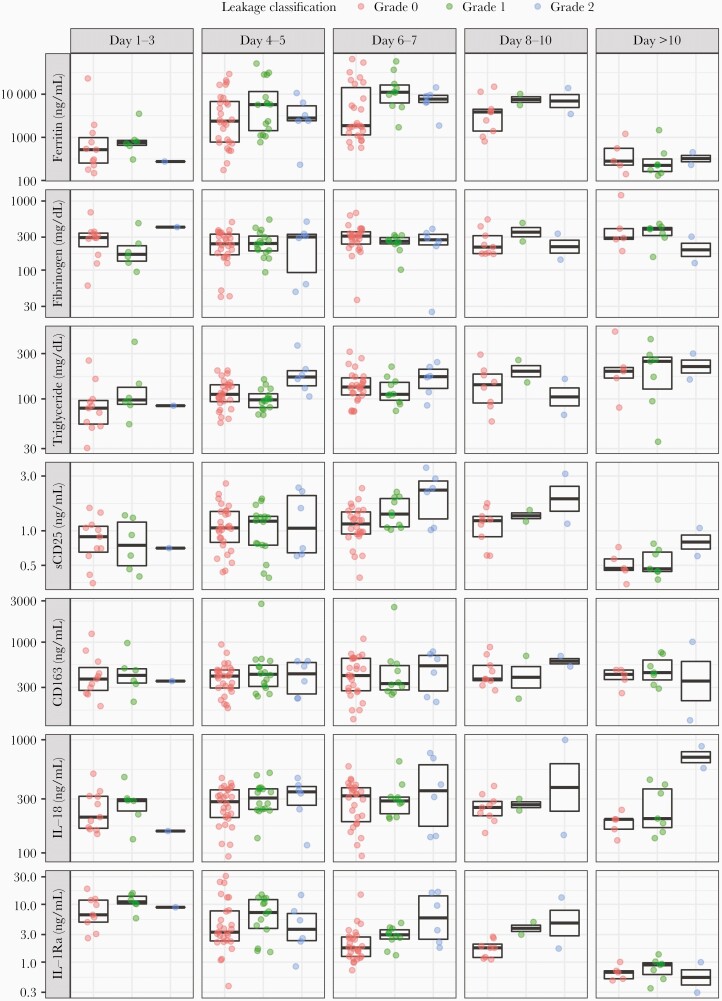
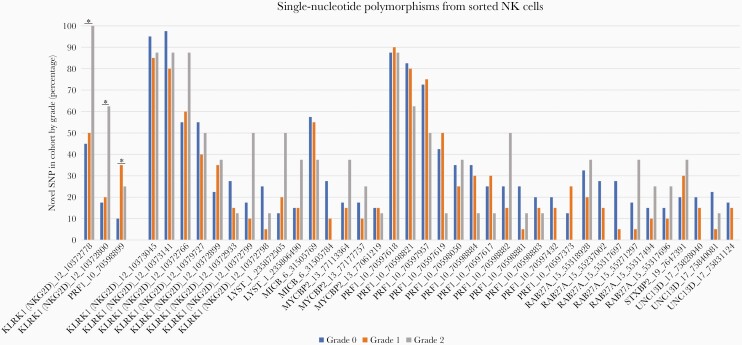
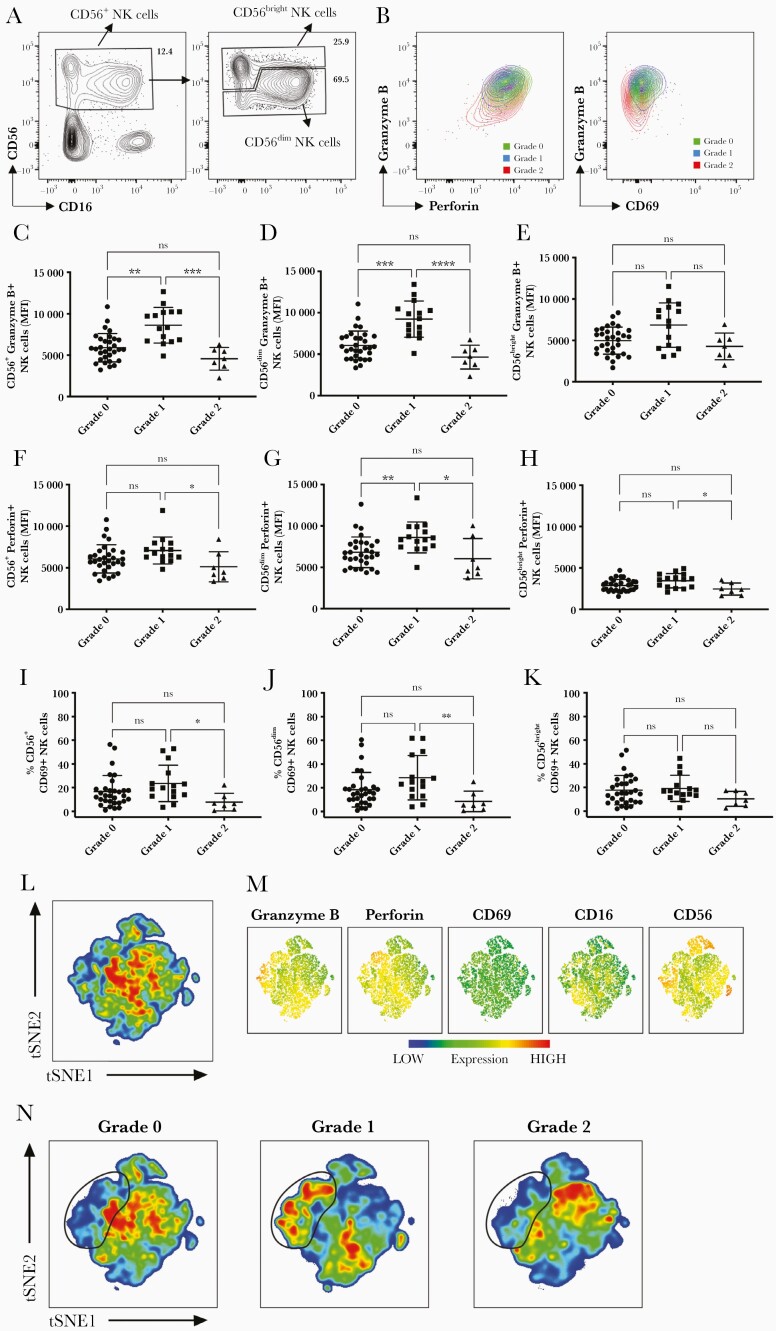
Sixty-nine patients were included (grade 0, 42 patients; grade 1, 19 patients; grade 2, 8 patients). Patients with grade 2 leakage had higher biomarkers than grade 0, including higher peak ferritin levels (83.3% vs 45.2%) and H-scores (median, 148.5 vs 105.5). NK cells from grade 2 patients exhibited decreased expression of perforin and granzyme B and activation markers. RNA sequencing revealed 3 single-nucleotide polymorphisms in NK cell functional genes associated with more severe leakage-NK cell lectin-like receptor K1 gene (KLRK1) and perforin 1 (PRF1).
Features of hyperinflammation are associated with dengue severity, including higher biomarkers, impaired NK cell function, and polymorphisms in NK cell cytolytic function genes (KLRK1 and PRF1). Trials of immunomodulatory therapy in these patients is now warranted.
以休克和器官功能障碍为特征的重症登革热是由宿主过度免疫反应引起的。我们研究了过度炎症反应在登革热发病机制中的作用。
招募的观察性研究患者被分为 3 个血浆渗漏严重程度等级。在 4 个时间点测量过度炎症生物标志物。通过流式细胞术分析自然杀伤 (NK) 细胞的频率、激活和细胞毒性潜力。从分选的 CD56+NK 细胞中提取 RNA,并使用 SMART-Seq 制备文库,并使用 HiSeq3000(Illumina)进行测序。
共纳入 69 例患者(0 级 42 例,1 级 19 例,2 级 8 例)。2 级渗漏患者的生物标志物高于 0 级患者,包括更高的峰值铁蛋白水平(83.3%比 45.2%)和 H 评分(中位数,148.5 比 105.5)。2 级患者的 NK 细胞表达穿孔素和颗粒酶 B 以及激活标志物的水平降低。RNA 测序显示 NK 细胞功能基因中的 3 个单核苷酸多态性与更严重的渗漏相关-NK 细胞凝集素样受体 K1 基因(KLRK1)和穿孔素 1(PRF1)。
过度炎症的特征与登革热的严重程度相关,包括更高的生物标志物、NK 细胞功能受损以及 NK 细胞细胞毒性功能基因(KLRK1 和 PRF1)的多态性。现在有必要对这些患者进行免疫调节治疗试验。