Nanoelectronics Integrated Systems Center (NISC), Nile University, Giza, Egypt.
Electrical Engineering and Computer Science Department, University of California-Irvine, Irvine, USA.
Sci Rep. 2022 Mar 10;12(1):3992. doi: 10.1038/s41598-022-06737-z.
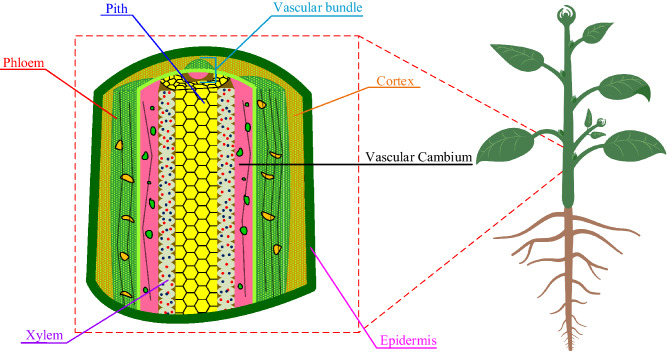
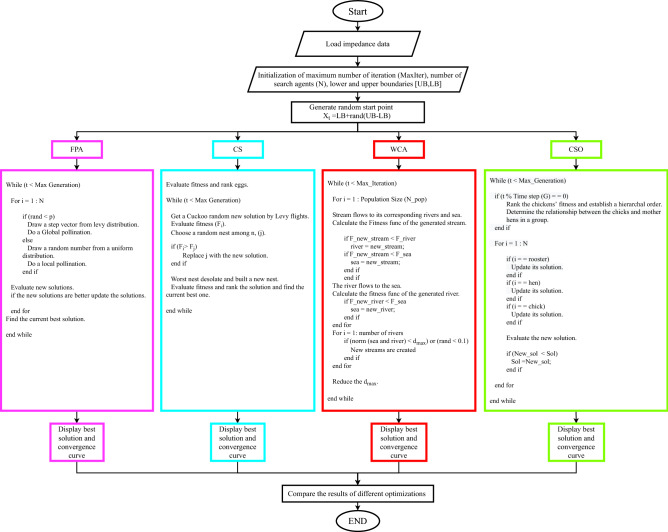
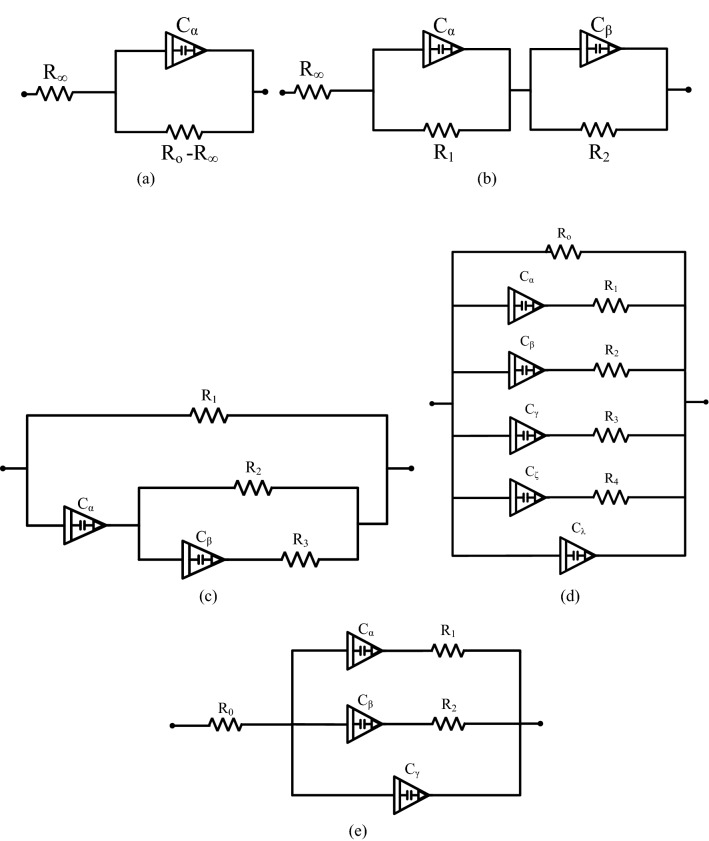
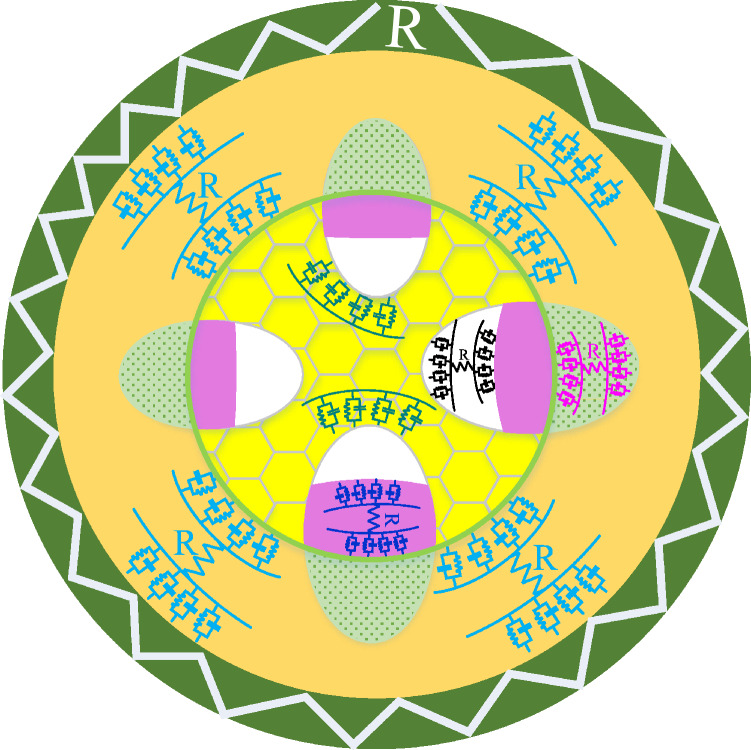
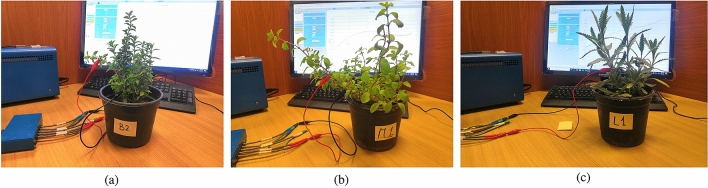
Bio-impedance non-invasive measurement techniques usage is rapidly increasing in the agriculture industry. These measured impedance variations reflect tacit biochemical and biophysical changes of living and non-living tissues. Bio-impedance circuit modeling is an effective solution used in biology and medicine to fit the measured impedance. This paper proposes two new fractional-order bio-impedance plant stem models. These new models are compared with three commonly used bio-impedance fractional-order circuit models in plant modeling (Cole, Double Cole, and Fractional-order Double-shell). The two proposed models represent the characterization of the biological cellular morphology of the plant stem. Experiments are conducted on two samples of three different medical plant species from the family Lamiaceae, and each sample is measured at two inter-electrode spacing distances. Bio-impedance measurements are done using an electrochemical station (SP150) in the range of 100 Hz to 100 kHz. All employed models are compared by fitting the measured data to verify the efficiency of the proposed models in modeling the plant stem tissue. The proposed models give the best results in all inter-electrode spacing distances. Four different metaheuristic optimization algorithms are used in the fitting process to extract all models parameter and find the best optimization algorithm in the bio-impedance problems.
生物阻抗无创测量技术在农业领域的应用正在迅速增加。这些测量的阻抗变化反映了生物和非生物组织的潜在生化和生物物理变化。生物阻抗电路建模是生物学和医学中用于拟合测量阻抗的有效解决方案。本文提出了两种新的分数阶生物阻抗植物茎模型。这些新模型与植物建模中三种常用的生物阻抗分数阶电路模型(Cole、Double Cole 和 Fractional-order Double-shell)进行了比较。这两个提出的模型代表了植物茎生物细胞形态的特征化。实验在三个不同的唇形科药用植物样本上进行,每个样本在两个电极间距下进行测量。生物阻抗测量使用电化学工作站 (SP150) 在 100 Hz 至 100 kHz 的范围内进行。所有采用的模型都通过拟合测量数据进行比较,以验证所提出的模型在植物茎组织建模中的效率。在所提出的模型中,在所有电极间距下都能得到最佳的结果。在拟合过程中使用了四种不同的元启发式优化算法来提取所有模型参数,并找到生物阻抗问题中的最佳优化算法。