Veron Delma, Aggarwal Pardeep K, Li Qi, Moeckel Gilbert, Kashgarian Michael, Tufro Alda
Department of Pediatrics, Yale University School of Medicine, Malvern, PA, United States.
Department of Pathology, Yale University School of Medicine, New Haven, CT, United States.
Front Pharmacol. 2022 Feb 23;12:788886. doi: 10.3389/fphar.2021.788886. eCollection 2021.
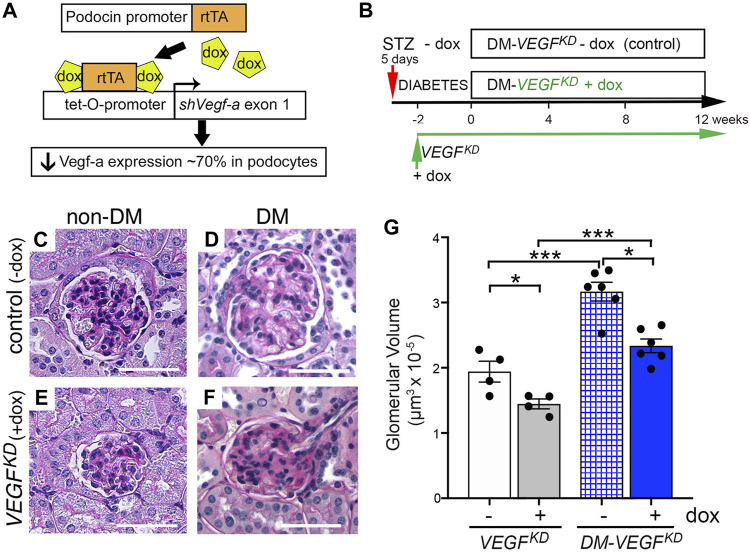
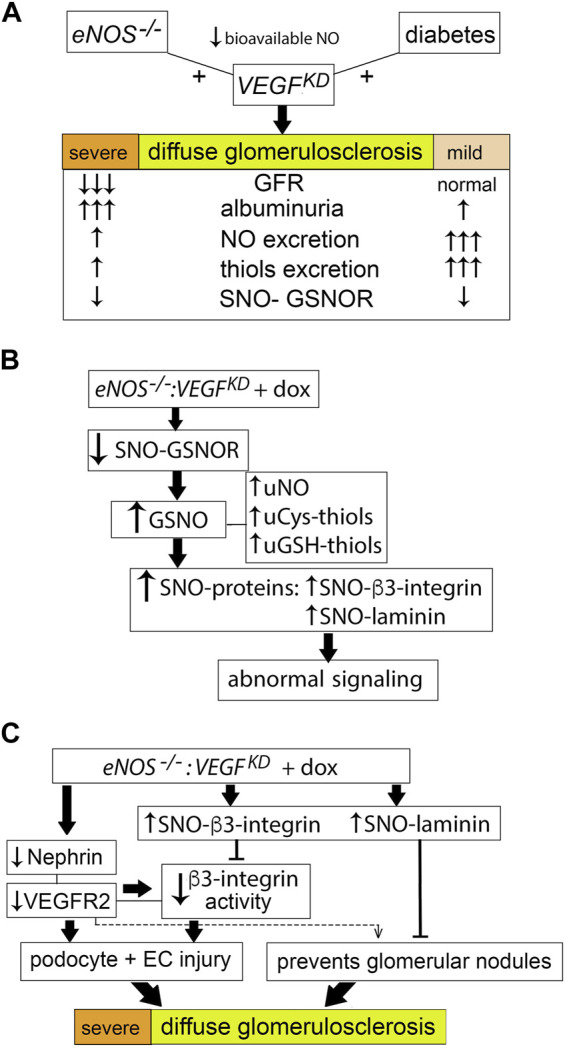
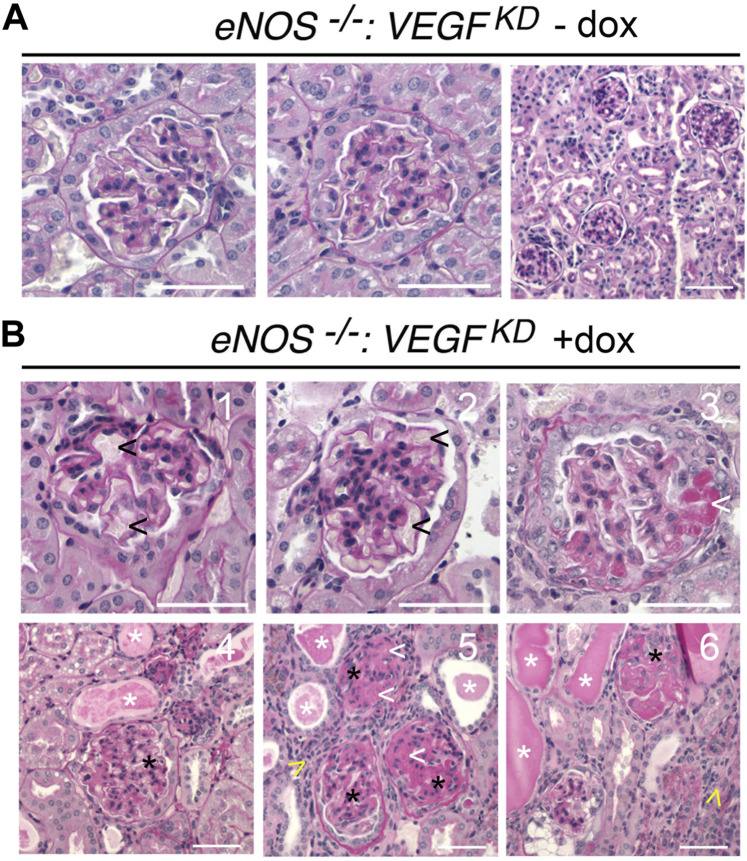
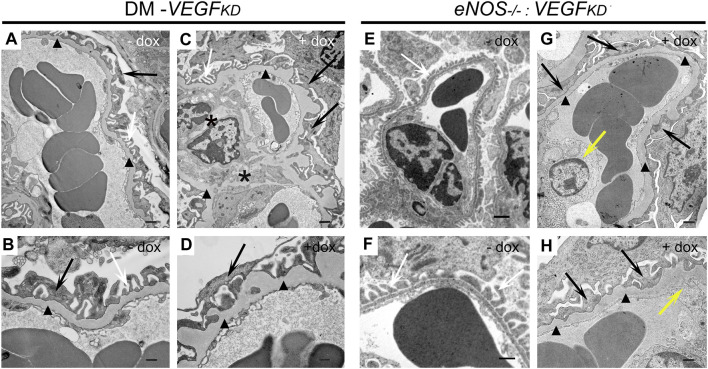
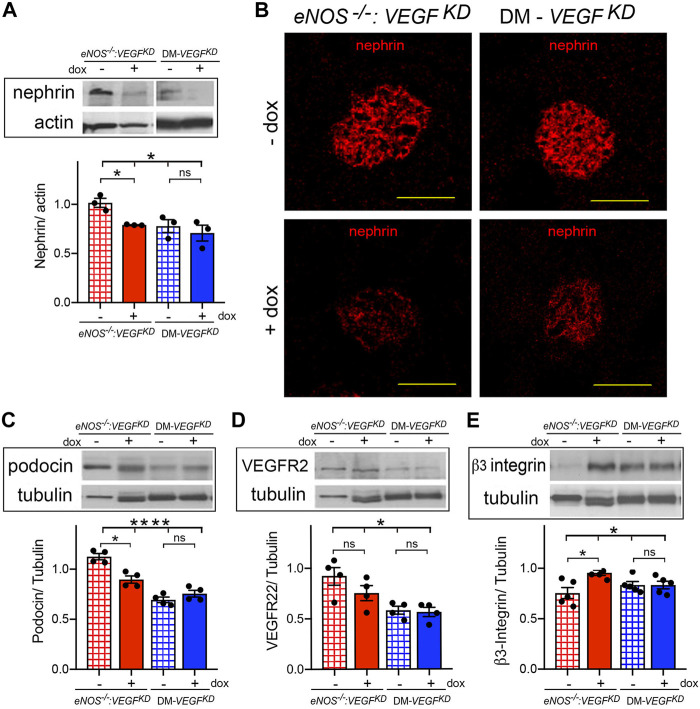
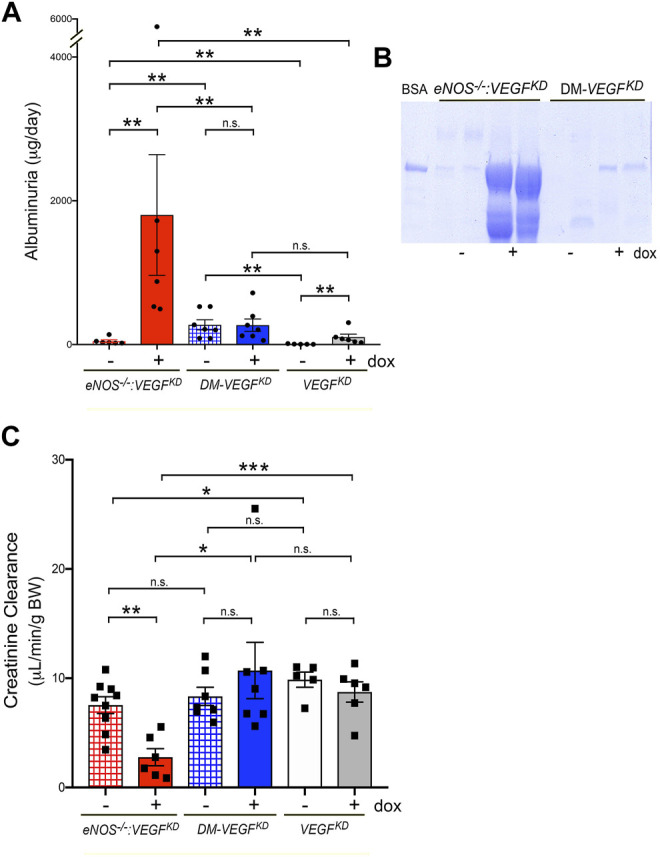
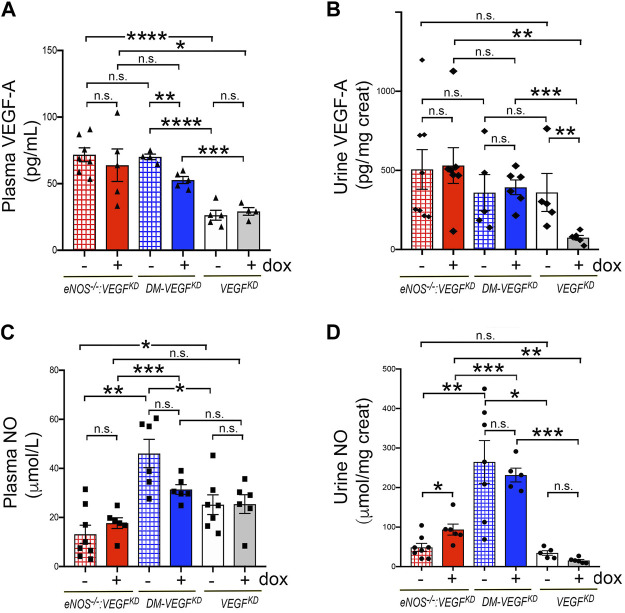
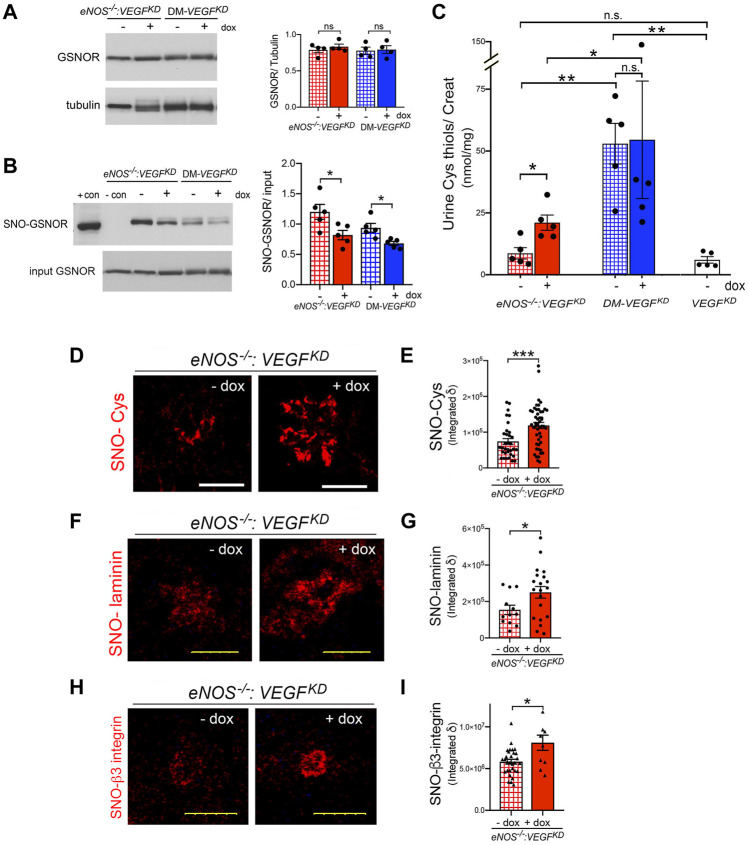
Vascular endothelial growth factor-a (VEGF-A) and nitric oxide (NO) are essential for glomerular filtration barrier homeostasis, and are dysregulated in diabetic kidney disease (DKD). While NO availability is consistently low in diabetes, both high and low VEGF-A have been reported in patients with DKD. Here we examined the effect of inducible podocyte knockdown ( ) in diabetic mice and in endothelial nitric oxide synthase knockout mice ( ). Diabetes was induced with streptozotocin using the Animal Models of Diabetic Complications Consortium (AMDCC) protocol. Induction of podocyte led to diffuse glomerulosclerosis, foot process effacement, and GBM thickening in both diabetic mice with intact and in non-diabetic mice. diabetic mice developed mild proteinuria and maintained normal glomerular filtration rate (GFR), associated with extremely high NO and thiol urinary excretion. In (+dox) mice severe diffuse glomerulosclerosis was associated with microaneurisms, arteriolar hyalinosis, massive proteinuria, and renal failure. Collectively, data indicate that combined podocyte and deficiency result in diffuse glomerulosclerosis in mice; compensatory NO and thiol generation prevents severe proteinuria and GFR loss in diabetic mice with intact , whereas induction in mice causes massive proteinuria and renal failure mimicking DKD in the absence of diabetes. Mechanistically, we identify -induced abnormal S-nitrosylation of specific proteins, including β3-integrin, laminin, and S-nitrosoglutathione reductase (GSNOR), as targetable molecular mechanisms involved in the development of advanced diffuse glomerulosclerosis and renal failure.
血管内皮生长因子-a(VEGF-A)和一氧化氮(NO)对于肾小球滤过屏障的稳态至关重要,且在糖尿病肾病(DKD)中失调。虽然糖尿病时NO的可用性持续降低,但DKD患者中VEGF-A既有升高的报道也有降低的报道。在此,我们研究了在糖尿病小鼠和内皮型一氧化氮合酶基因敲除小鼠中诱导足细胞敲低( )的影响。使用糖尿病并发症动物模型联盟(AMDCC)方案通过链脲佐菌素诱导糖尿病。在具有完整 的糖尿病小鼠和非糖尿病 小鼠中,诱导足细胞 均导致弥漫性肾小球硬化、足突消失和肾小球基底膜增厚。 糖尿病小鼠出现轻度蛋白尿并维持正常的肾小球滤过率(GFR),伴有极高的NO和硫醇尿排泄。在 (+多西环素)小鼠中,严重的弥漫性肾小球硬化与微动脉瘤、小动脉玻璃样变、大量蛋白尿和肾衰竭相关。总体而言,数据表明足细胞 和 缺乏共同导致小鼠弥漫性肾小球硬化;代偿性NO和硫醇生成可防止具有完整 的 糖尿病小鼠出现严重蛋白尿和GFR丧失,而在 小鼠中诱导 会导致大量蛋白尿和肾衰竭,在无糖尿病的情况下模拟DKD。从机制上讲,我们确定 诱导的特定蛋白质(包括β3整合素、层粘连蛋白和S-亚硝基谷胱甘肽还原酶(GSNOR))的异常S-亚硝基化是参与晚期弥漫性肾小球硬化和肾衰竭发展的可靶向分子机制。