• 文献检索
  • 文档翻译
  • 深度研究
  • 学术资讯
  • Suppr Zotero 插件Zotero 插件
  • 邀请有礼
  • 套餐&价格
  • 历史记录
应用&插件
Suppr Zotero 插件Zotero 插件浏览器插件Mac 客户端Windows 客户端微信小程序
定价
高级版会员购买积分包购买API积分包
服务
文献检索文档翻译深度研究API 文档MCP 服务
关于我们
关于 Suppr公司介绍联系我们用户协议隐私条款
关注我们

Suppr 超能文献

核心技术专利:CN118964589B侵权必究
粤ICP备2023148730 号-1Suppr @ 2026

文献检索

告别复杂PubMed语法,用中文像聊天一样搜索,搜遍4000万医学文献。AI智能推荐,让科研检索更轻松。

立即免费搜索

文件翻译

保留排版,准确专业,支持PDF/Word/PPT等文件格式,支持 12+语言互译。

免费翻译文档

深度研究

AI帮你快速写综述,25分钟生成高质量综述,智能提取关键信息,辅助科研写作。

立即免费体验

基于集成深度学习和物联网的 COVID-19 自动诊断框架。

Ensemble Deep Learning and Internet of Things-Based Automated COVID-19 Diagnosis Framework.

机构信息

Manipal Institute of Technology MAHE, Manipal, Karnataka 576104, India.

Department of IT, Mahaveer Institute of Science and Technology, Hyderabad, Telangana 500005, India.

出版信息

Contrast Media Mol Imaging. 2022 Feb 25;2022:7377502. doi: 10.1155/2022/7377502. eCollection 2022.

DOI:10.1155/2022/7377502
PMID:35280708
原文链接:https://pmc.ncbi.nlm.nih.gov/articles/PMC8896964/
Abstract

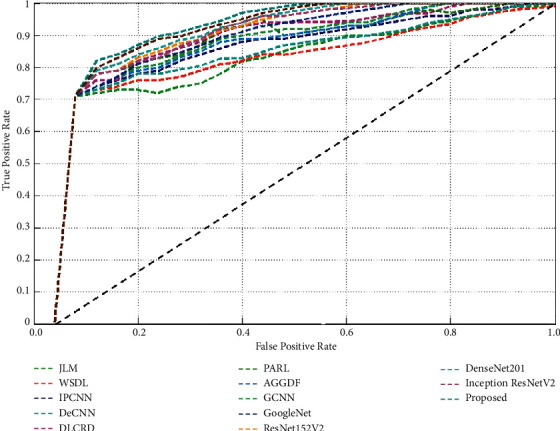
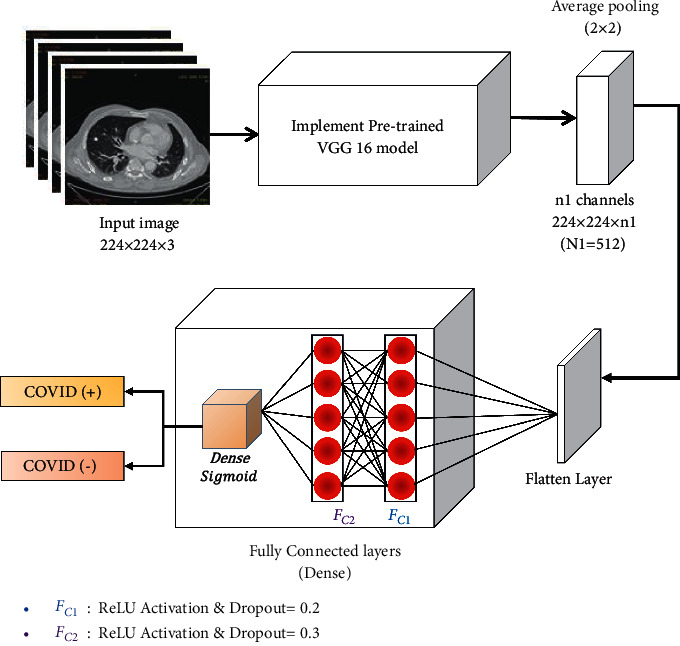
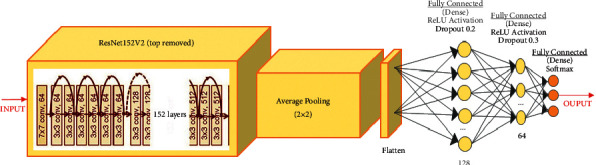
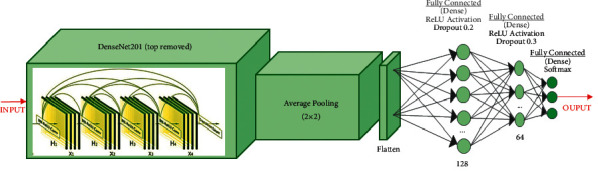
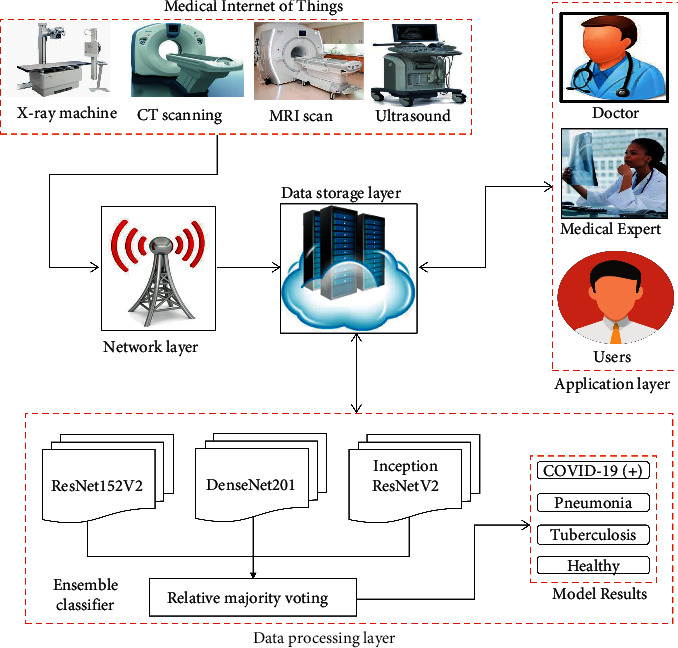
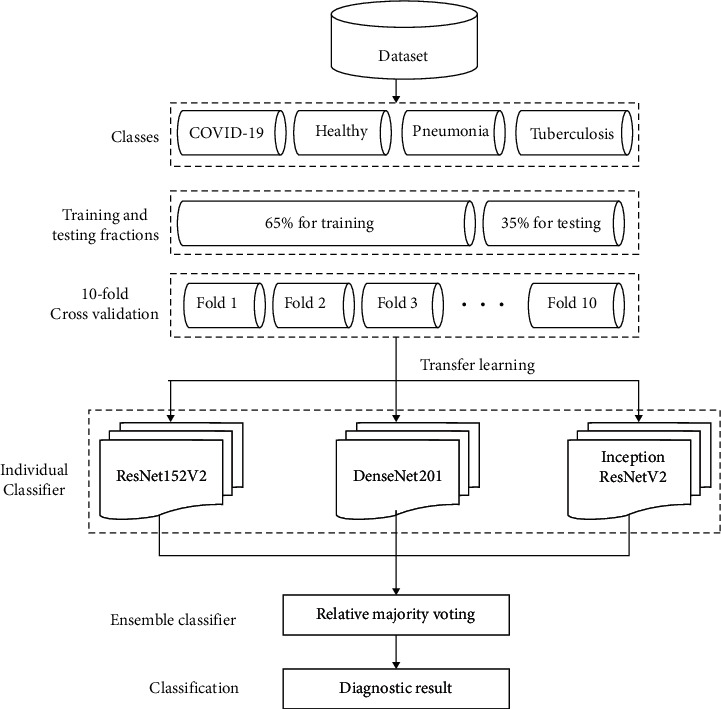
Coronavirus disease (COVID-19) is a viral infection caused by SARS-CoV-2. The modalities such as computed tomography (CT) have been successfully utilized for the early stage diagnosis of COVID-19 infected patients. Recently, many researchers have utilized deep learning models for the automated screening of COVID-19 suspected cases. An ensemble deep learning and Internet of Things (IoT) based framework is proposed for screening of COVID-19 suspected cases. Three well-known pretrained deep learning models are ensembled. The medical IoT devices are utilized to collect the CT scans, and automated diagnoses are performed on IoT servers. The proposed framework is compared with thirteen competitive models over a four-class dataset. Experimental results reveal that the proposed ensembled deep learning model yielded 98.98% accuracy. Moreover, the model outperforms all competitive models in terms of other performance metrics achieving 98.56% precision, 98.58% recall, 98.75% F-score, and 98.57% AUC. Therefore, the proposed framework can improve the acceleration of COVID-19 diagnosis.

摘要

冠状病毒病(COVID-19)是由 SARS-CoV-2 引起的病毒性感染。计算机断层扫描(CT)等方式已成功用于 COVID-19 感染患者的早期诊断。最近,许多研究人员利用深度学习模型对 COVID-19 疑似病例进行自动筛查。提出了一种基于集成深度学习和物联网(IoT)的框架,用于筛查 COVID-19 疑似病例。集成了三个著名的预训练深度学习模型。利用医疗 IoT 设备来收集 CT 扫描,并在 IoT 服务器上进行自动诊断。将所提出的框架与四个类别的数据集上的十三个竞争模型进行了比较。实验结果表明,所提出的集成深度学习模型的准确率达到 98.98%。此外,该模型在其他性能指标方面优于所有竞争模型,达到 98.56%的精度、98.58%的召回率、98.75%的 F 分数和 98.57%的 AUC。因此,所提出的框架可以加快 COVID-19 的诊断速度。
https://cdn.ncbi.nlm.nih.gov/pmc/blobs/40e1/8896964/7b15250ea4f0/CMMI2022-7377502.008.jpg
https://cdn.ncbi.nlm.nih.gov/pmc/blobs/40e1/8896964/ee0513a8cbf4/CMMI2022-7377502.001.jpg
https://cdn.ncbi.nlm.nih.gov/pmc/blobs/40e1/8896964/32ecf8521ef3/CMMI2022-7377502.002.jpg
https://cdn.ncbi.nlm.nih.gov/pmc/blobs/40e1/8896964/f1faf58c06ac/CMMI2022-7377502.003.jpg
https://cdn.ncbi.nlm.nih.gov/pmc/blobs/40e1/8896964/1b5a37c4c175/CMMI2022-7377502.004.jpg
https://cdn.ncbi.nlm.nih.gov/pmc/blobs/40e1/8896964/576bb59fdbc5/CMMI2022-7377502.005.jpg
https://cdn.ncbi.nlm.nih.gov/pmc/blobs/40e1/8896964/8b0b64f85f48/CMMI2022-7377502.006.jpg
https://cdn.ncbi.nlm.nih.gov/pmc/blobs/40e1/8896964/16a7509aadbd/CMMI2022-7377502.007.jpg
https://cdn.ncbi.nlm.nih.gov/pmc/blobs/40e1/8896964/7b15250ea4f0/CMMI2022-7377502.008.jpg
https://cdn.ncbi.nlm.nih.gov/pmc/blobs/40e1/8896964/ee0513a8cbf4/CMMI2022-7377502.001.jpg
https://cdn.ncbi.nlm.nih.gov/pmc/blobs/40e1/8896964/32ecf8521ef3/CMMI2022-7377502.002.jpg
https://cdn.ncbi.nlm.nih.gov/pmc/blobs/40e1/8896964/f1faf58c06ac/CMMI2022-7377502.003.jpg
https://cdn.ncbi.nlm.nih.gov/pmc/blobs/40e1/8896964/1b5a37c4c175/CMMI2022-7377502.004.jpg
https://cdn.ncbi.nlm.nih.gov/pmc/blobs/40e1/8896964/576bb59fdbc5/CMMI2022-7377502.005.jpg
https://cdn.ncbi.nlm.nih.gov/pmc/blobs/40e1/8896964/8b0b64f85f48/CMMI2022-7377502.006.jpg
https://cdn.ncbi.nlm.nih.gov/pmc/blobs/40e1/8896964/16a7509aadbd/CMMI2022-7377502.007.jpg
https://cdn.ncbi.nlm.nih.gov/pmc/blobs/40e1/8896964/7b15250ea4f0/CMMI2022-7377502.008.jpg

相似文献

1
Ensemble Deep Learning and Internet of Things-Based Automated COVID-19 Diagnosis Framework.基于集成深度学习和物联网的 COVID-19 自动诊断框架。
Contrast Media Mol Imaging. 2022 Feb 25;2022:7377502. doi: 10.1155/2022/7377502. eCollection 2022.
2
Artificial Intelligence and Medical Internet of Things Framework for Diagnosis of Coronavirus Suspected Cases.人工智能和医疗物联网框架用于冠状病毒疑似病例的诊断。
J Healthc Eng. 2021 May 28;2021:3277988. doi: 10.1155/2021/3277988. eCollection 2021.
3
Automated detection of COVID-19 using ensemble of transfer learning with deep convolutional neural network based on CT scans.基于 CT 扫描的深度学习卷积神经网络集成迁移学习的 COVID-19 自动检测。
Int J Comput Assist Radiol Surg. 2021 Jan;16(1):115-123. doi: 10.1007/s11548-020-02286-w. Epub 2020 Nov 16.
4
COV-MobNets: a mobile networks ensemble model for diagnosis of COVID-19 based on chest X-ray images.COV-MobNets:一种基于胸部 X 光图像的用于 COVID-19 诊断的移动网络集成模型。
BMC Med Imaging. 2023 Jun 15;23(1):83. doi: 10.1186/s12880-023-01039-w.
5
COVID-19 diagnosis using chest CT scans and deep convolutional neural networks evolved by IP-based sine-cosine algorithm.基于 IP 的正弦余弦算法进化的胸部 CT 扫描和深度卷积神经网络进行 COVID-19 诊断。
Med Biol Eng Comput. 2022 Oct;60(10):2931-2949. doi: 10.1007/s11517-022-02637-6. Epub 2022 Aug 12.
6
COVID-19 detection in CT and CXR images using deep learning models.使用深度学习模型进行 CT 和 CXR 图像中的 COVID-19 检测。
Biogerontology. 2022 Feb;23(1):65-84. doi: 10.1007/s10522-021-09946-7. Epub 2022 Jan 22.
7
Deep Learning Algorithm for COVID-19 Classification Using Chest X-Ray Images.基于胸部 X 光图像的 COVID-19 分类深度学习算法。
Comput Math Methods Med. 2021 Nov 9;2021:9269173. doi: 10.1155/2021/9269173. eCollection 2021.
8
An emerging network for COVID-19 CT-scan classification using an ensemble deep transfer learning model.利用集成深度迁移学习模型进行 COVID-19 CT 扫描分类的新兴网络。
Acta Trop. 2024 Sep;257:107277. doi: 10.1016/j.actatropica.2024.107277. Epub 2024 Jun 13.
9
Classification of the COVID-19 infected patients using DenseNet201 based deep transfer learning.基于 DenseNet201 的深度迁移学习对 COVID-19 感染患者进行分类。
J Biomol Struct Dyn. 2021 Sep;39(15):5682-5689. doi: 10.1080/07391102.2020.1788642. Epub 2020 Jul 3.
10
COVID-19 Image Segmentation Based on Deep Learning and Ensemble Learning.基于深度学习和集成学习的COVID-19图像分割
Stud Health Technol Inform. 2021 May 27;281:518-519. doi: 10.3233/SHTI210223.

引用本文的文献

1
Multi-modal deep learning methods for classification of chest diseases using different medical imaging and cough sounds.基于不同医学影像和咳嗽声的胸部疾病分类的多模态深度学习方法。
PLoS One. 2024 Mar 12;19(3):e0296352. doi: 10.1371/journal.pone.0296352. eCollection 2024.
2
A brief review and scientometric analysis on ensemble learning methods for handling COVID-19.关于处理新冠肺炎的集成学习方法的简要综述与科学计量分析
Heliyon. 2024 Feb 20;10(4):e26694. doi: 10.1016/j.heliyon.2024.e26694. eCollection 2024 Feb 29.
3
An Optimized Model Based on Deep Learning and Gated Recurrent Unit for COVID-19 Death Prediction.

本文引用的文献

1
An IoT-Based Deep Learning Framework for Early Assessment of Covid-19.一种基于物联网的用于新冠肺炎早期评估的深度学习框架。
IEEE Internet Things J. 2020 Oct 27;8(21):15855-15862. doi: 10.1109/JIOT.2020.3034074. eCollection 2021 Nov 1.
2
DL-CRC: Deep Learning-Based Chest Radiograph Classification for COVID-19 Detection: A Novel Approach.DL-CRC:基于深度学习的胸部X光片分类用于新冠病毒检测:一种新方法
IEEE Access. 2020 Sep 18;8:171575-171589. doi: 10.1109/ACCESS.2020.3025010. eCollection 2020.
3
Deep Convolutional Approaches for the Analysis of COVID-19 Using Chest X-Ray Images From Portable Devices.
基于深度学习和门控循环单元的COVID-19死亡预测优化模型
Biomimetics (Basel). 2023 Nov 17;8(7):552. doi: 10.3390/biomimetics8070552.
4
Detection of Pneumonia from Chest X-ray Images Utilizing MobileNet Model.利用MobileNet模型从胸部X光图像中检测肺炎
Healthcare (Basel). 2023 May 26;11(11):1561. doi: 10.3390/healthcare11111561.
5
Ensemble Deep Learning Derived from Transfer Learning for Classification of COVID-19 Patients on Hybrid Deep-Learning-Based Lung Segmentation: A Data Augmentation and Balancing Framework.基于迁移学习的集成深度学习用于基于混合深度学习的肺部分割对新冠肺炎患者进行分类:一种数据增强与平衡框架
Diagnostics (Basel). 2023 Jun 2;13(11):1954. doi: 10.3390/diagnostics13111954.
6
Current Technologies for Detection of COVID-19: Biosensors, Artificial Intelligence and Internet of Medical Things (IoMT): Review.用于检测 COVID-19 的当前技术:生物传感器、人工智能和医疗物联网 (IoMT):综述。
Sensors (Basel). 2022 Dec 30;23(1):426. doi: 10.3390/s23010426.
7
Combating Covid-19 using machine learning and deep learning: Applications, challenges, and future perspectives.利用机器学习和深度学习抗击新冠疫情:应用、挑战及未来展望
Array (N Y). 2023 Mar;17:100271. doi: 10.1016/j.array.2022.100271. Epub 2022 Dec 10.
8
COVID-19 classification using chest X-ray images based on fusion-assisted deep Bayesian optimization and Grad-CAM visualization.基于融合辅助深度贝叶斯优化和 Grad-CAM 可视化的胸部 X 射线图像 COVID-19 分类。
Front Public Health. 2022 Nov 4;10:1046296. doi: 10.3389/fpubh.2022.1046296. eCollection 2022.
9
Artificial Intelligence and Deep Learning Assisted Rapid Diagnosis of COVID-19 from Chest Radiographical Images: A Survey.人工智能和深度学习辅助 COVID-19 胸部影像学快速诊断:一项调查。
Contrast Media Mol Imaging. 2022 Oct 12;2022:1306664. doi: 10.1155/2022/1306664. eCollection 2022.
10
Comprehensive Survey of Machine Learning Systems for COVID-19 Detection.用于新冠病毒检测的机器学习系统综合调查
J Imaging. 2022 Sep 30;8(10):267. doi: 10.3390/jimaging8100267.
使用便携式设备获取的胸部X光图像分析新冠肺炎的深度卷积方法
IEEE Access. 2020 Oct 26;8:195594-195607. doi: 10.1109/ACCESS.2020.3033762. eCollection 2020.
4
Prediction of COVID-19 Using Genetic Deep Learning Convolutional Neural Network (GDCNN).使用基因深度学习卷积神经网络(GDCNN)预测新型冠状病毒肺炎
IEEE Access. 2020 Sep 21;8:177647-177666. doi: 10.1109/ACCESS.2020.3025164. eCollection 2020.
5
Densely connected convolutional networks-based COVID-19 screening model.基于密集连接卷积网络的新型冠状病毒肺炎筛查模型
Appl Intell (Dordr). 2021;51(5):3044-3051. doi: 10.1007/s10489-020-02149-6. Epub 2021 Feb 7.
6
COVID-Nets: deep CNN architectures for detecting COVID-19 using chest CT scans.COVID-Nets:用于使用胸部CT扫描检测新冠肺炎的深度卷积神经网络架构
PeerJ Comput Sci. 2021 Jul 29;7:e655. doi: 10.7717/peerj-cs.655. eCollection 2021.
7
Artificial Intelligence and COVID-19: Deep Learning Approaches for Diagnosis and Treatment.人工智能与新冠肺炎:用于诊断和治疗的深度学习方法
IEEE Access. 2020 Jun 12;8:109581-109595. doi: 10.1109/ACCESS.2020.3001973. eCollection 2020.
8
CovidGAN: Data Augmentation Using Auxiliary Classifier GAN for Improved Covid-19 Detection.CovidGAN:使用辅助分类器生成对抗网络进行数据增强以改进新冠病毒检测
IEEE Access. 2020 May 14;8:91916-91923. doi: 10.1109/ACCESS.2020.2994762. eCollection 2020.
9
Overview of current state of research on the application of artificial intelligence techniques for COVID-19.人工智能技术在COVID-19应用方面的研究现状综述
PeerJ Comput Sci. 2021 May 26;7:e564. doi: 10.7717/peerj-cs.564. eCollection 2021.
10
Artificial intelligence (AI) for medical imaging to combat coronavirus disease (COVID-19): a detailed review with direction for future research.用于抗击冠状病毒病(COVID-19)的医学成像人工智能:详细综述及未来研究方向
Artif Intell Rev. 2022;55(2):1409-1439. doi: 10.1007/s10462-021-09985-z. Epub 2021 Apr 15.