De Moura Joaquim, Garcia Lucia Ramos, Vidal Placido Francisco Lizancos, Cruz Milena, Lopez Laura Abelairas, Lopez Eva Castro, Novo Jorge, Ortega Marcos
Centro de Investigación CITICUniversidade da Coruña 15071 A Coruña Spain.
Grupo VARPAInstituto de Investigación Biomédica de A Coruña (INIBIC), Universidade da Coruña 15006 A Coruña Spain.
IEEE Access. 2020 Oct 26;8:195594-195607. doi: 10.1109/ACCESS.2020.3033762. eCollection 2020.
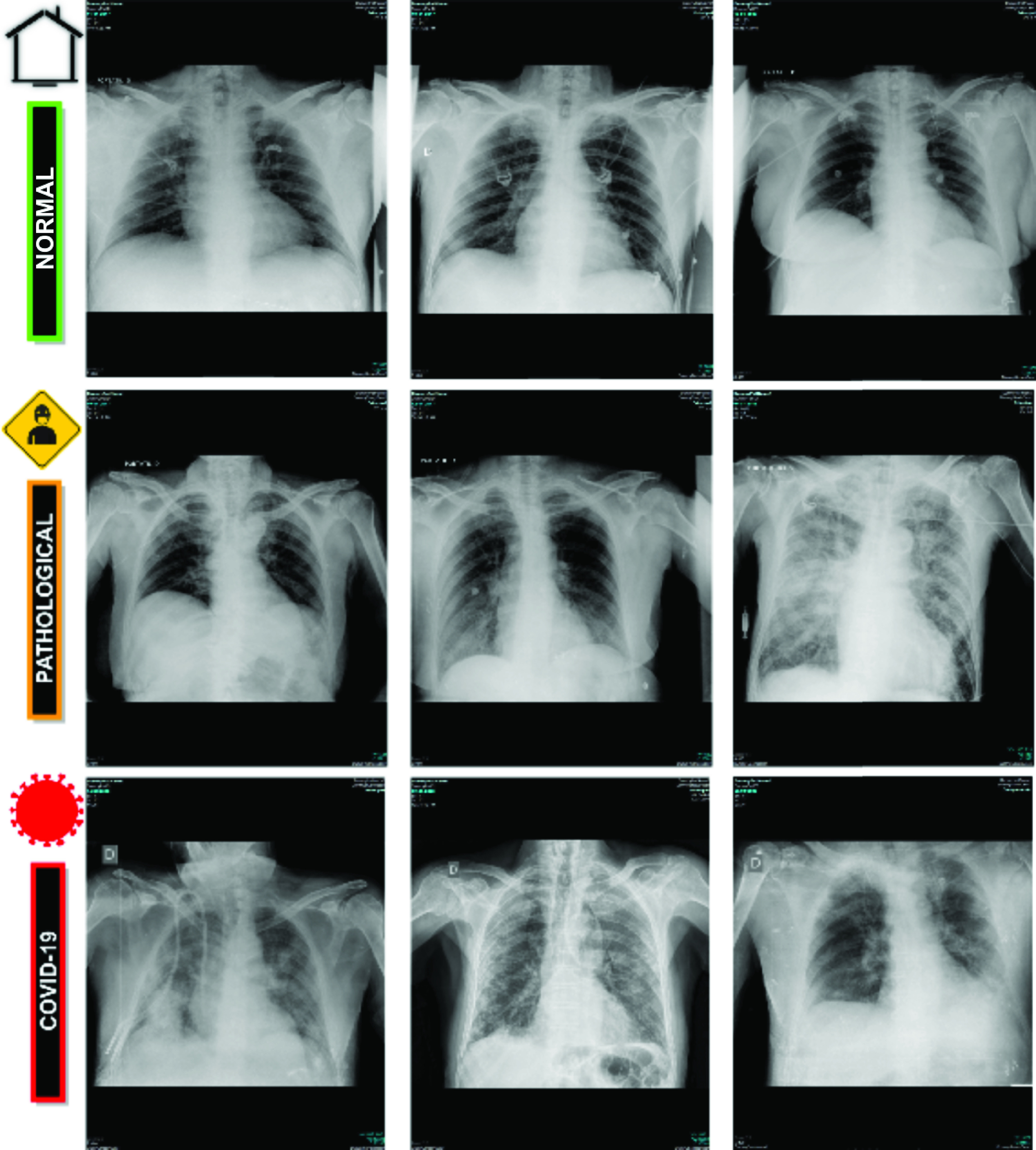
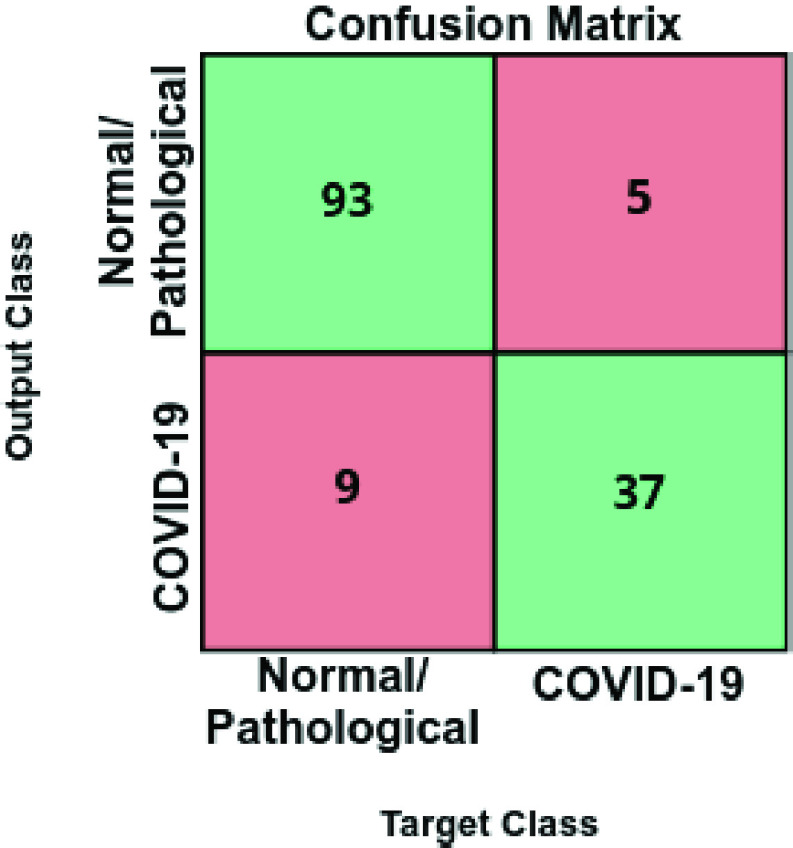
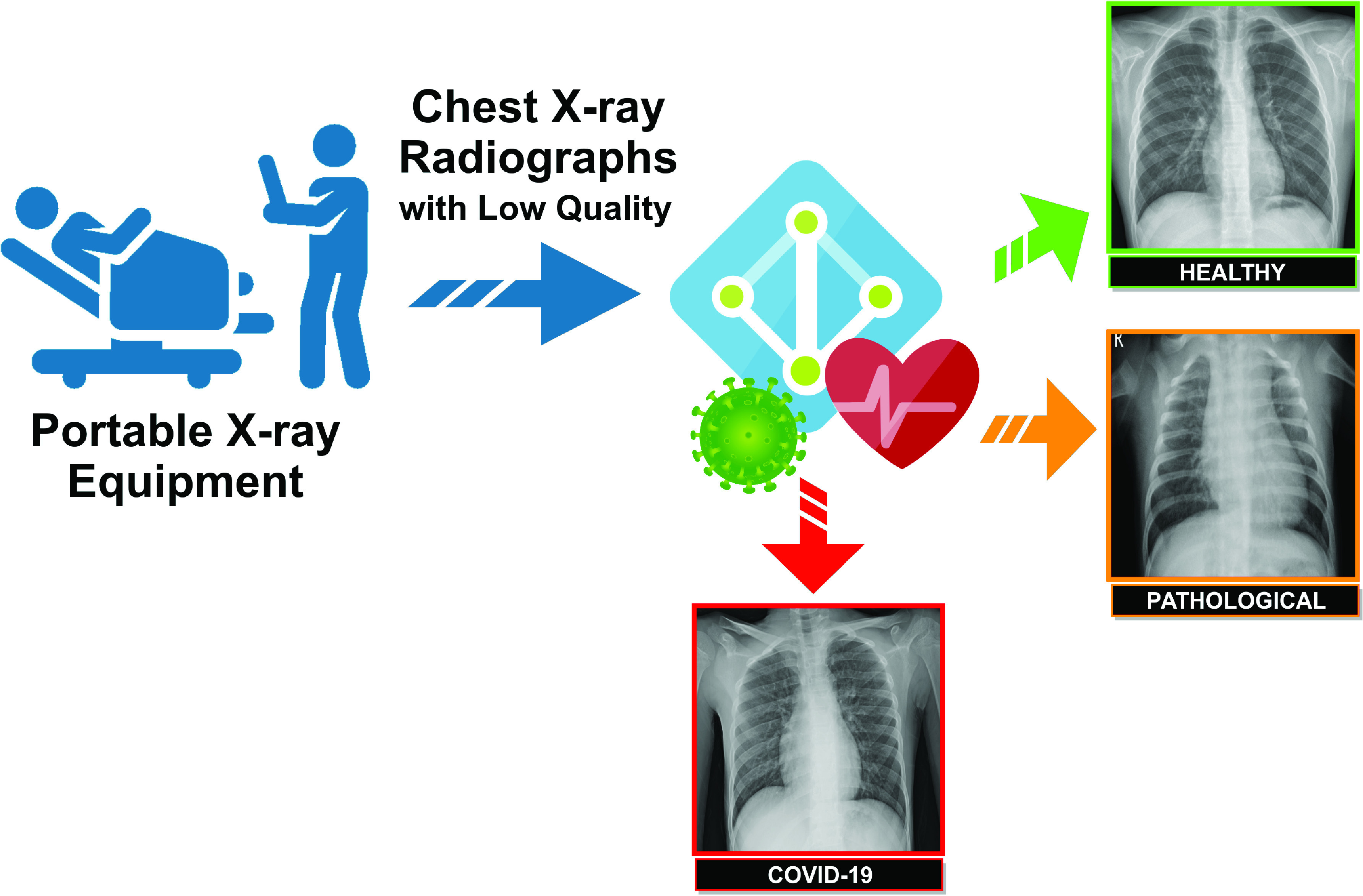
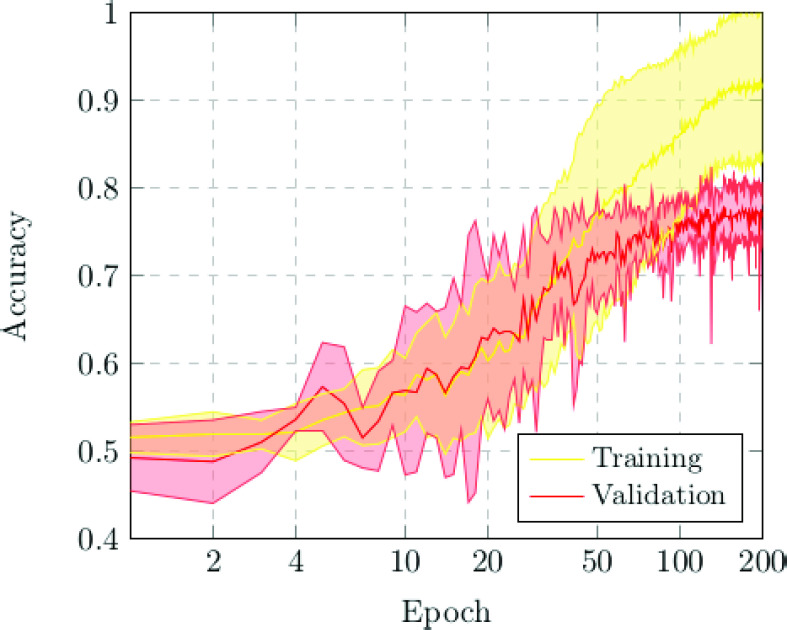
The recent human coronavirus disease (COVID-19) is a respiratory infection caused by severe acute respiratory syndrome coronavirus 2 (SARS-CoV-2). Given the effects of COVID-19 in pulmonary tissues, chest radiography imaging plays an important role in the screening, early detection, and monitoring of the suspected individuals. Hence, as the pandemic of COVID-19 progresses, there will be a greater reliance on the use of portable equipment for the acquisition of chest X-ray images due to its accessibility, widespread availability, and benefits regarding to infection control issues, minimizing the risk of cross-contamination. This work presents novel fully automatic approaches specifically tailored for the classification of chest X-ray images acquired by portable equipment into 3 different clinical categories: normal, pathological, and COVID-19. For this purpose, 3 complementary deep learning approaches based on a densely convolutional network architecture are herein presented. The joint response of all the approaches allows to enhance the differentiation between patients infected with COVID-19, patients with other diseases that manifest characteristics similar to COVID-19 and normal cases. The proposed approaches were validated over a dataset specifically retrieved for this research. Despite the poor quality of the chest X-ray images that is inherent to the nature of the portable equipment, the proposed approaches provided global accuracy values of 79.62%, 90.27% and 79.86%, respectively, allowing a reliable analysis of portable radiographs to facilitate the clinical decision-making process.
近期的人类冠状病毒病(COVID-19)是由严重急性呼吸综合征冠状病毒2(SARS-CoV-2)引起的呼吸道感染。鉴于COVID-19对肺部组织的影响,胸部X线成像在疑似个体的筛查、早期检测和监测中发挥着重要作用。因此,随着COVID-19大流行的发展,由于其可及性、广泛可用性以及在感染控制问题方面的优势,能够将交叉污染风险降至最低,对便携式设备获取胸部X线图像的依赖将会更大。这项工作提出了新颖的全自动方法,专门用于将便携式设备获取的胸部X线图像分类为3种不同的临床类别:正常、病理和COVID-19。为此,本文提出了3种基于密集卷积网络架构的互补深度学习方法。所有方法的联合响应能够增强感染COVID-19的患者、表现出与COVID-19相似特征的其他疾病患者以及正常病例之间的区分度。所提出的方法在专门为本研究检索的数据集上进行了验证。尽管便携式设备获取的胸部X线图像质量较差,但所提出的方法分别提供了79.62%、90.27%和79.86%的全局准确率值,从而能够对便携式X光片进行可靠分析,以促进临床决策过程。