Redie Dawit Kiros, Sirko Abdulhakim Edao, Demissie Tensaie Melkamu, Teferi Semagn Sisay, Shrivastava Vimal Kumar, Verma Om Prakash, Sharma Tarun Kumar
School of Electronics Engineering, Kalinga Institute of Industrial Technology (KIIT), Bhubaneswar, India.
Department of Instrumentation and Control Engineering, Dr. B R Ambedkar National Institute of Technology Jalandhar, Punjab, India.
Evol Intell. 2023;16(3):729-738. doi: 10.1007/s12065-021-00679-7. Epub 2022 Mar 9.
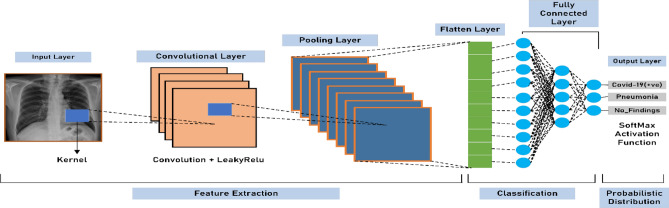
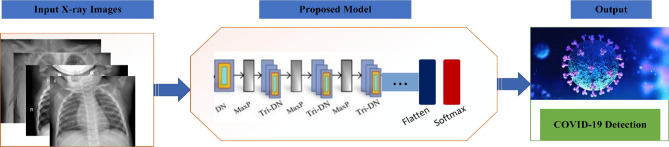
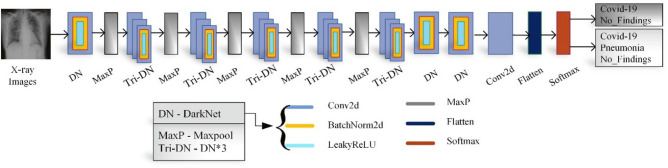
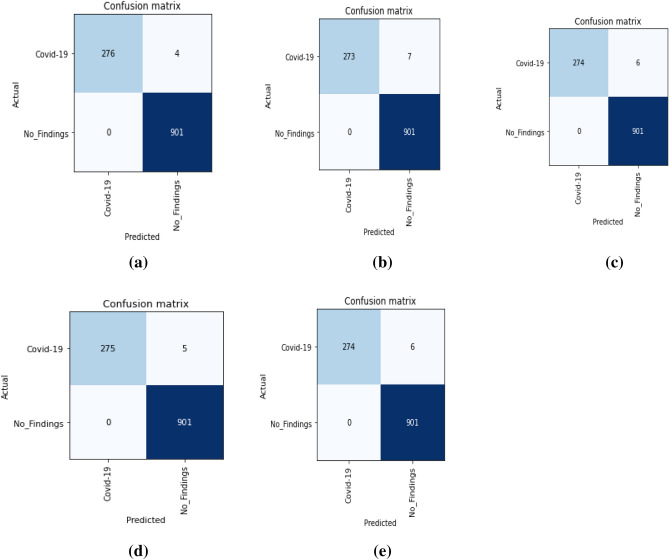
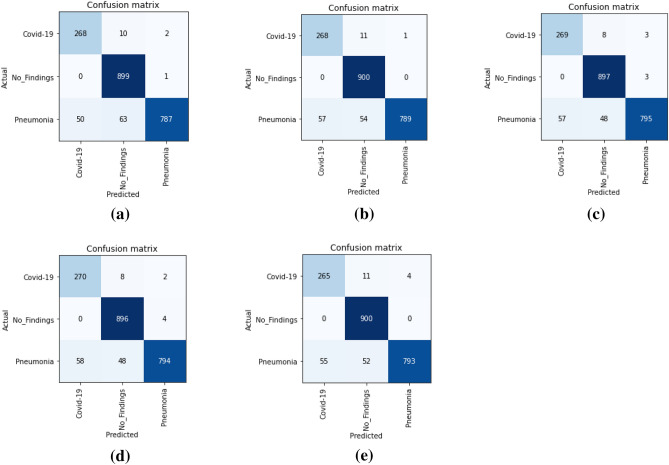
Coronavirus disease, also known as COVID-19, is an infectious disease caused by SARS-CoV-2. It has a direct impact on the upper and lower respiratory tract and threatened the health of many people around the world. The latest statistics show that the number of people diagnosed with COVID-19 is growing exponentially. Diagnosing positive cases of COVID-19 is important for preventing further spread of the disease. Currently, Coronavirus is a serious threat to scientists, medical experts and researchers around the world from its detection to its treatment. It is currently detected using reverse transcription polymerase chain reaction (RT-PCR) analysis at the most test centers around the world. Yet, knowing the reliability of a deep learning based medical diagnosis is important for doctors to build confidence in the technology and improve treatment. The goal of this study is to develop a model that automatically identifies COVID-19 by using chest X-ray images. To achieve this, we modified the DarkCovidNet model which is based on a convolutional neural network (CNN) and plotted the experimental results for two scenarios: binary classification (COVID-19 versus No-findings) and multi-class classification (COVID-19 versus pneumonia versus No-findings). The model is trained on more than 10 thousand X-ray images and achieved an average accuracy of 99.53% and 94.18% for binary and multi-class classification, respectively. Therefore, the proposed method demonstrates the effectiveness of COVID-19 detection using X-ray images. Our model can be used to test the patient via cloud and also be used in situations where RT-PCR tests and other options aren't available.
冠状病毒病,也称为COVID-19,是一种由严重急性呼吸综合征冠状病毒2(SARS-CoV-2)引起的传染病。它直接影响上、下呼吸道,并威胁着世界各地许多人的健康。最新统计数据显示,被诊断为COVID-19的人数呈指数级增长。诊断COVID-19阳性病例对于预防该疾病的进一步传播至关重要。目前,从冠状病毒的检测到治疗,它对世界各地的科学家、医学专家和研究人员都是一个严重威胁。目前,世界上大多数检测中心都使用逆转录聚合酶链反应(RT-PCR)分析来进行检测。然而,了解基于深度学习的医学诊断的可靠性对于医生建立对该技术的信心并改善治疗效果非常重要。本研究的目标是开发一种通过使用胸部X光图像自动识别COVID-19的模型。为实现这一目标,我们修改了基于卷积神经网络(CNN)的DarkCovidNet模型,并绘制了两种情况下的实验结果:二元分类(COVID-19与无异常)和多分类(COVID-19与肺炎与无异常)。该模型在一万多张X光图像上进行了训练,二元分类和多分类的平均准确率分别达到了99.53%和94.18%。因此,所提出的方法证明了使用X光图像检测COVID-19的有效性。我们的模型可用于通过云端对患者进行检测,也可用于无法进行RT-PCR检测和其他检测的情况。