Ding Jia-Han, Xiao Yi, Zhao Shen, Xu Ying, Xiao Yu-Ling, Shao Zhi-Ming, Jiang Yi-Zhou, Di Gen-Hong
Key Laboratory of Breast Cancer in Shanghai, Department of Breast Surgery, Fudan University Shanghai Cancer Center, Department of Oncology, Shanghai Medical College, Fudan University, Shanghai 200032, P.R. China.
Precision Cancer Medicine Center, Fudan University Shanghai Cancer Center, Shanghai 200032, P.R. China.
Mol Ther Oncolytics. 2022 Feb 17;24:624-635. doi: 10.1016/j.omto.2022.02.003. eCollection 2022 Mar 17.
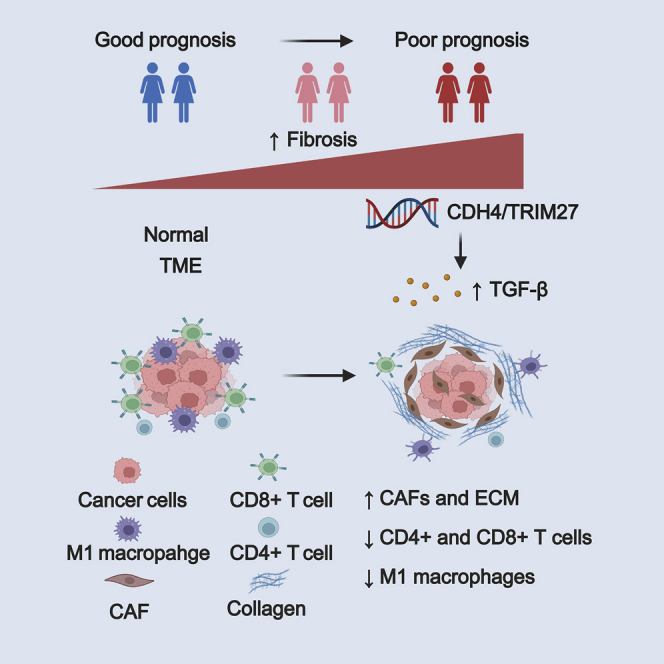
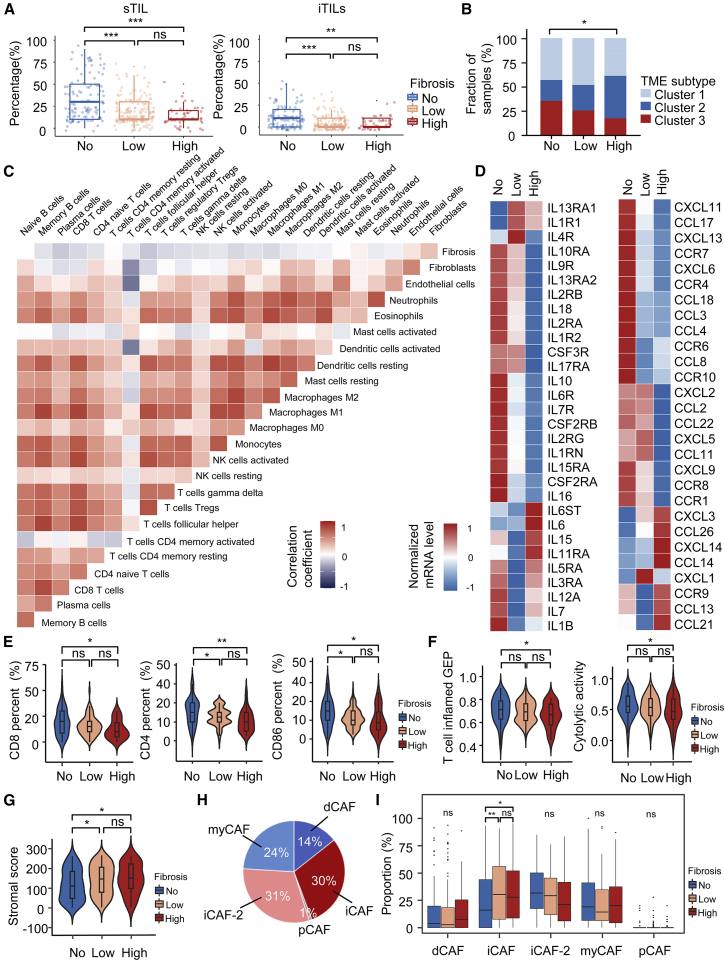
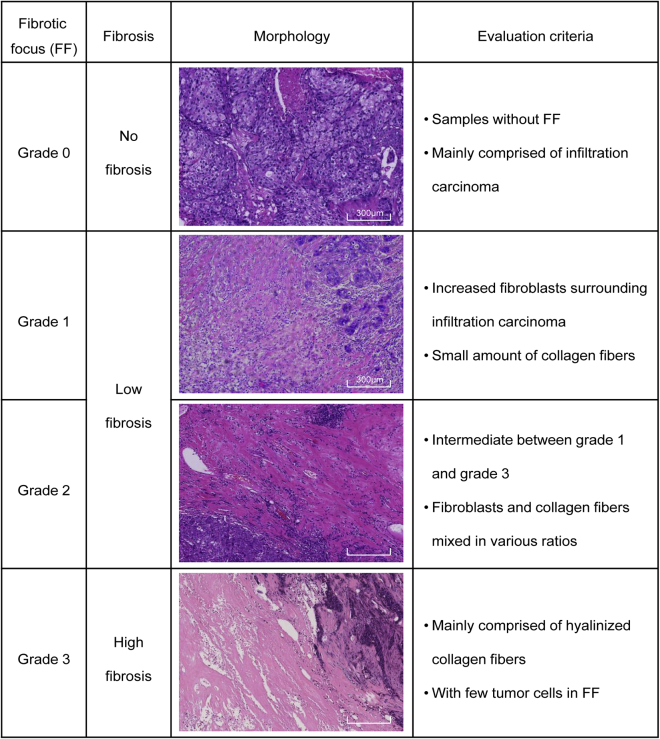
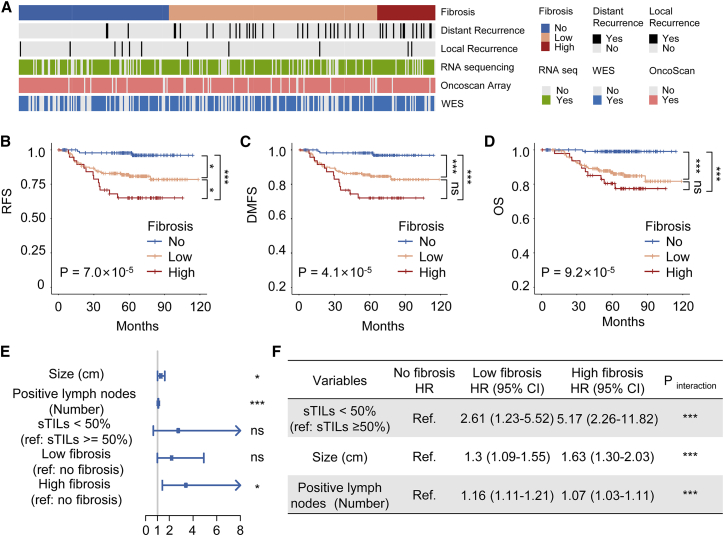
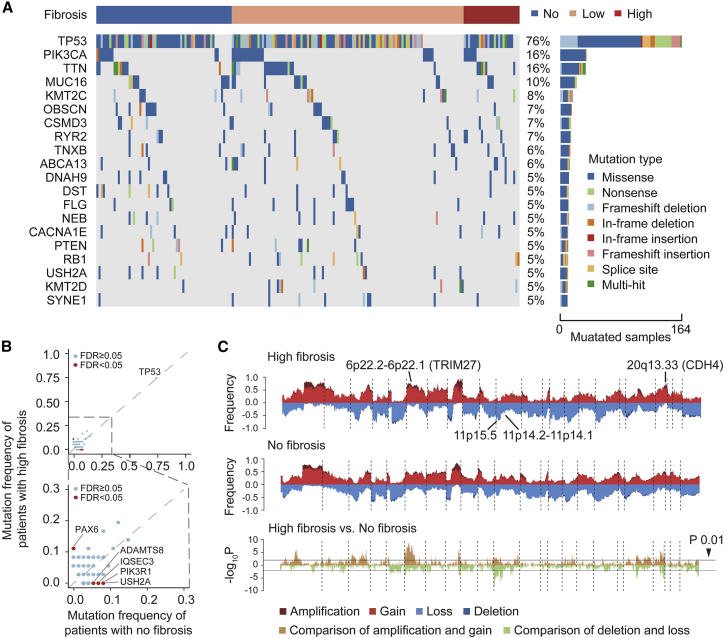
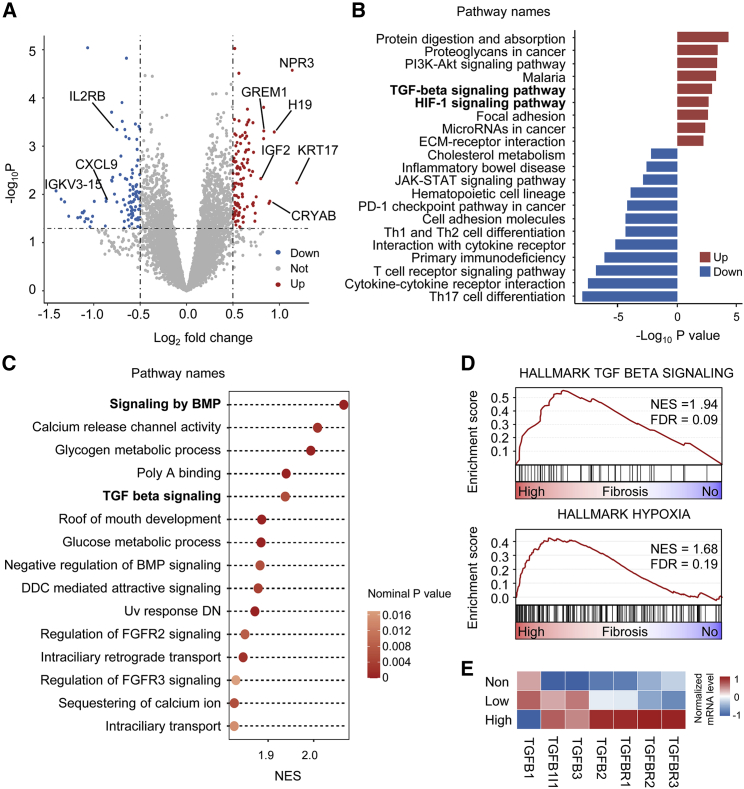
Triple-negative breast cancer (TNBC) is an aggressive type of breast cancer. High fibrosis, marked by increased collagen fibers, is widespread in TNBC and correlated with tumor progression. However, the molecular features of fibrosis and why it results in a poor prognosis remain poorly understood. Based on multiomics datasets of TNBC, we evaluated the pathological fibrosis grade of 344 samples for further analysis. Genomic, transcriptomic, and immune changes were analyzed among different subgroups of fibrosis. High fibrosis was an independent adverse prognosis predictor and had interactions with low stromal tumor-infiltrating lymphocytes. Genomic analysis identified copy number gains of 6p22.2-6p22.1 () and 20q13.33 () as genomic hallmarks of tumors with high fibrosis. Transcriptome analysis revealed the transforming growth factor-beta pathway and hypoxia pathway were key pro-oncogenic pathways in tumors with high fibrosis. Moreover, we systematically evaluate the relationship between fibrosis and different kinds of immune and stromal cells. Tumors with high fibrosis were characterized by an immunosuppressive tumor microenvironment with limited immune cell infiltration and increased fibroblasts. This study proposes new insight into the genomic and transcriptomic alterations potentially driving fibrosis. Moreover, fibrosis is related to an immunosuppressive tumor microenvironment that contributes to the poor prognosis.
三阴性乳腺癌(TNBC)是一种侵袭性乳腺癌。以胶原纤维增加为特征的高纤维化在TNBC中广泛存在,并与肿瘤进展相关。然而,纤维化的分子特征以及它导致预后不良的原因仍知之甚少。基于TNBC的多组学数据集,我们评估了344个样本的病理纤维化等级以进行进一步分析。在不同纤维化亚组中分析了基因组、转录组和免疫变化。高纤维化是一个独立的不良预后预测指标,并且与低基质肿瘤浸润淋巴细胞存在相互作用。基因组分析确定6p22.2 - 6p22.1()和20q13.33()的拷贝数增加是高纤维化肿瘤的基因组特征。转录组分析显示转化生长因子-β途径和缺氧途径是高纤维化肿瘤中的关键促癌途径。此外,我们系统地评估了纤维化与不同类型免疫细胞和基质细胞之间的关系。高纤维化肿瘤的特征是免疫抑制性肿瘤微环境,免疫细胞浸润有限且成纤维细胞增加。本研究为潜在驱动纤维化的基因组和转录组改变提出了新的见解。此外,纤维化与导致预后不良的免疫抑制性肿瘤微环境有关。