School of Nursing, Midwifery and Public Health, University of Canberra, Bruce, Australian Capital Territory, Australia.
University of Canberra, Bruce, Australian Capital Territory, Australia.
J Clin Nurs. 2023 Jan;32(1-2):174-190. doi: 10.1111/jocn.16285. Epub 2022 Mar 14.
To evaluate acceptability, efficiency, and quality of a new digital care management system in a residential aged care home (RACH).
Improving care quality and efficiency in RACH, while simultaneously upgrading data management, is a priority for communities and governments.
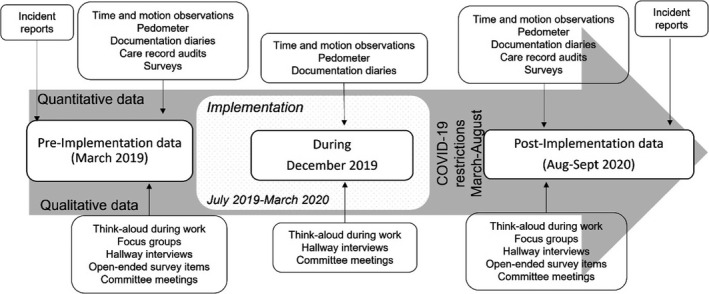
Participatory action research with mixed methods data collection was employed to evaluate a digital care management system implemented at a 169-bed RACH. This paper reports qualitative findings of the 2-year evaluation.
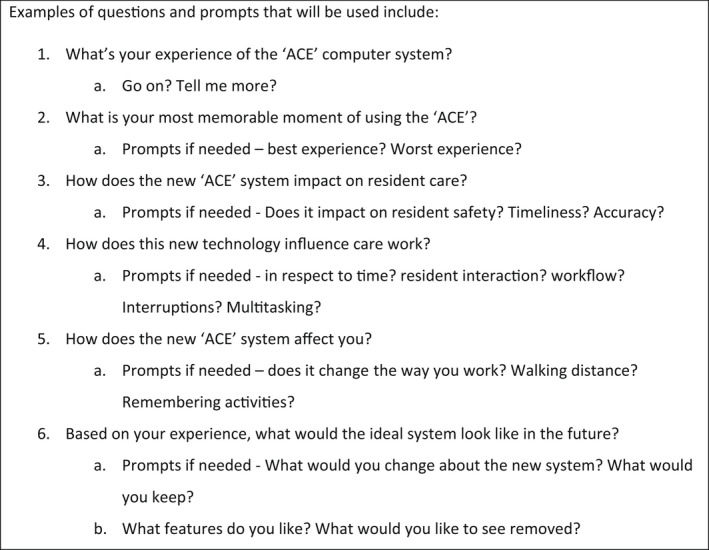
Qualitative data were collected using focus groups with residents, visitors, nurses, managers, care workers, and consultants; resident/visitor and staff hallway interviews and responses to open-ended questions in online staff surveys. Data were analysed thematically under the four predetermined study objectives. Reporting adhered to COREQ guidelines.
325 data captures from 88 participants, over seven data sources were coded. Findings indicate that the system was acceptable to both residents and staff due to perceptions of time-saving and improved quality of care. Increased efficiency was perceived through timeliness as well as reduced time spent retrieving and documenting information. Quality of care was improved through care scheduling individualised to resident needs, with reminders to avoid missed care. Relatives were reassured and activities were scheduled to loved one's preferences. The co-design implementation process was successful through commitment to quality from leadership teams and prioritising the focus on the holistic needs of the residents.
A strong emphasis on co-design with care staff in developing and implementing the digital care system contributed to a system that supported nursing and care work, facilitated reporting and documentation, and improved resident care and well-being including identification of missed care.
Nurses, carers, administrators, and advocates can support the co-design creation of information systems that suit the workflow of an organisation and keep the focus on individualised models of care provision.
评估一个新的数字护理管理系统在养老院中的可接受性、效率和质量。
提高养老院的护理质量和效率,同时升级数据管理,是社区和政府的优先事项。
采用参与式行动研究和混合方法数据收集来评估在一个 169 张床位的养老院实施的数字护理管理系统。本文报告了为期两年的评估中定性研究的结果。
使用焦点小组与居民、访客、护士、经理、护理人员和顾问;居民/访客和工作人员走廊访谈以及在线员工调查中的开放式问题的回复收集定性数据。根据四个预定的研究目标对数据进行主题分析。报告遵循 COREQ 指南。
从七个数据源中对 88 名参与者的 325 个数据点进行了编码。研究结果表明,该系统受到居民和工作人员的欢迎,因为他们认为该系统可以节省时间并提高护理质量。通过及时性以及减少检索和记录信息的时间来提高效率。通过根据居民的需求个性化安排护理计划,并提供提醒以避免遗漏护理,提高了护理质量。亲属得到了安抚,并且根据他们的喜好安排了活动。通过领导层团队对质量的承诺以及对居民整体需求的关注,成功实施了共同设计的实施过程。
在开发和实施数字护理系统时,与护理人员密切合作,强调共同设计,有助于建立一个支持护理和护理工作、促进报告和文档记录以及改善居民护理和幸福感的系统,包括识别遗漏的护理。
护士、护理人员、管理人员和倡导者可以支持共同设计创建适合组织工作流程的信息系统,并始终关注个性化的护理提供模式。