Wilson College of Textiles, North Carolina State University, Raleigh, NC, 27606, USA.
Adv Healthc Mater. 2022 Jun;11(12):e2200045. doi: 10.1002/adhm.202200045. Epub 2022 Mar 27.
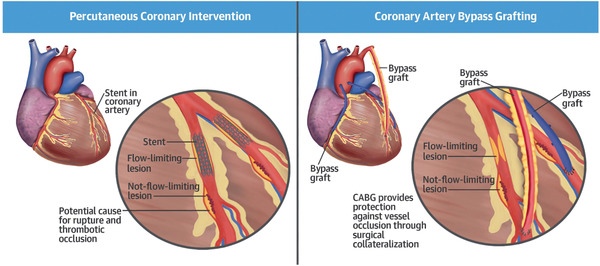
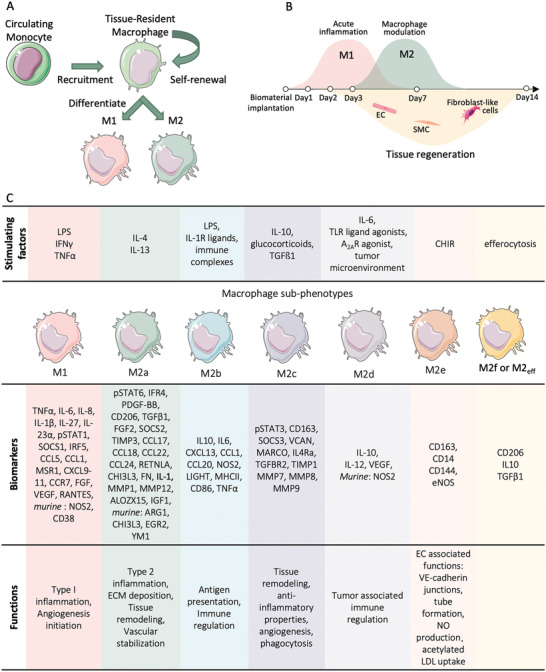
Cardiovascular disease leads to the highest morbidity worldwide. There is an urgent need to solve the lack of a viable arterial graft for patients requiring coronary artery bypass surgery. The current gold standard is to use the patient's own blood vessel, such as a saphenous vein graft. However, some patients do not have appropriate vessels to use because of systemic disease or secondary surgery. On the other hand, there is no commercially available synthetic vascular graft available on the market for small diameter (<6 mm) blood vessels like coronary, carotid, and peripheral popliteal arteries. Tissue-engineered vascular grafts (TEVGs) are studied in recent decades as a promising alternative to synthetic arterial prostheses. Yet only a few studies have proceeded to a clinical trial. Recent studies have uncovered that the host immune response can be directed toward increasing the success of a TEVG by shedding light on ways to modulate the macrophage response and improve the tissue regeneration outcome. In this review, the basic concepts of vascular tissue engineering and immunoengineering are considered. The state-of-art of TEVGs is summarized and the role of macrophages in TEVG regeneration is analyzed. Current immunomodulatory strategies based on biomaterials are also discussed.
心血管疾病是全球发病率最高的疾病。对于需要进行冠状动脉旁路移植术的患者,迫切需要解决缺乏可行的动脉移植物的问题。目前的金标准是使用患者自身的血管,如大隐静脉移植物。然而,由于全身性疾病或二次手术,有些患者没有合适的血管可供使用。另一方面,对于像冠状动脉、颈动脉和外周腘动脉这样的小直径(<6mm)血管,市场上没有可商业获得的合成血管移植物。组织工程血管移植物(TEVG)作为合成动脉假体的一种有前途的替代品,在最近几十年得到了研究。然而,只有少数研究进展到临床试验阶段。最近的研究揭示了宿主免疫反应可以通过阐明调节巨噬细胞反应和改善组织再生结果的方法来提高 TEVG 的成功率。在这篇综述中,考虑了血管组织工程和免疫工程的基本概念。总结了 TEVG 的最新进展,并分析了巨噬细胞在 TEVG 再生中的作用。还讨论了基于生物材料的当前免疫调节策略。