Tokyo Bay Rehabilitation Hospital, Chiba, Japan.
Graduate School of Human Sciences, Waseda University, Saitama, Japan.
PLoS One. 2022 Mar 17;17(3):e0265214. doi: 10.1371/journal.pone.0265214. eCollection 2022.
This study aimed to develop the Motivation in stroke patients for rehabilitation scale (MORE scale), following the Consensus-based standards for the selection of health measurement instruments (COSMIN).
Study participants included rehabilitation professionals working at the convalescent rehabilitation hospital and stroke patients admitted to the hospital. The original MORE scale was developed from an item pool, which was created through discussions of nine rehabilitation professionals. After the content validity of the scale was verified using the Delphi method with 61 rehabilitation professionals and 22 stroke patients, the scale's validity and reliability were examined for 201 stroke patients. The construct validity of the scale was investigated using exploratory factor analysis (EFA), confirmatory factor analysis (CFA), and item response theory analysis. Cronbach's alpha confirmed its internal consistency. Regarding convergent, discriminant, and criterion validity, Spearman's rho was calculated between the MORE scale and the Apathy Scale (AS), Self-rating Depression Scale (SDS), and Visual Analogue Scale (VAS), which rates the subjective feelings of motivation.
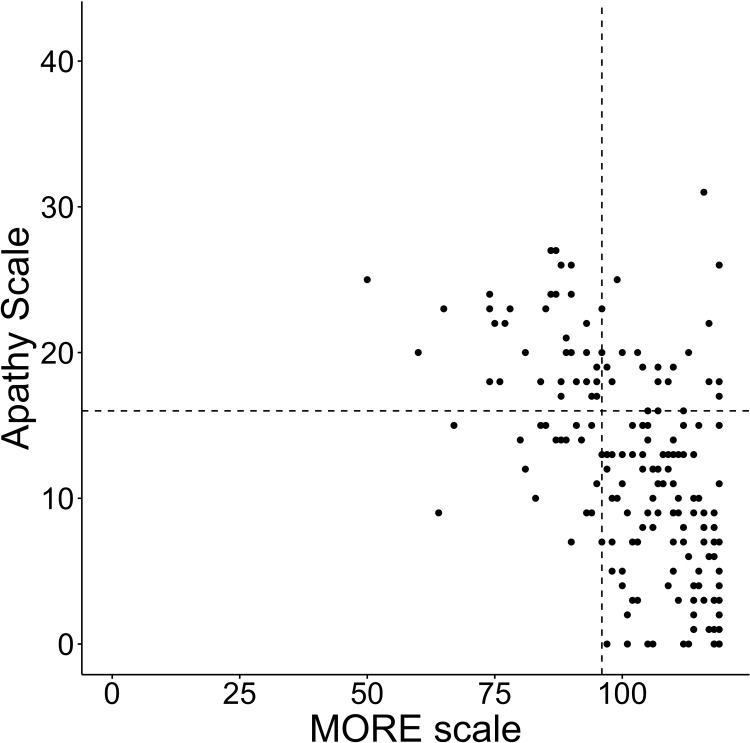
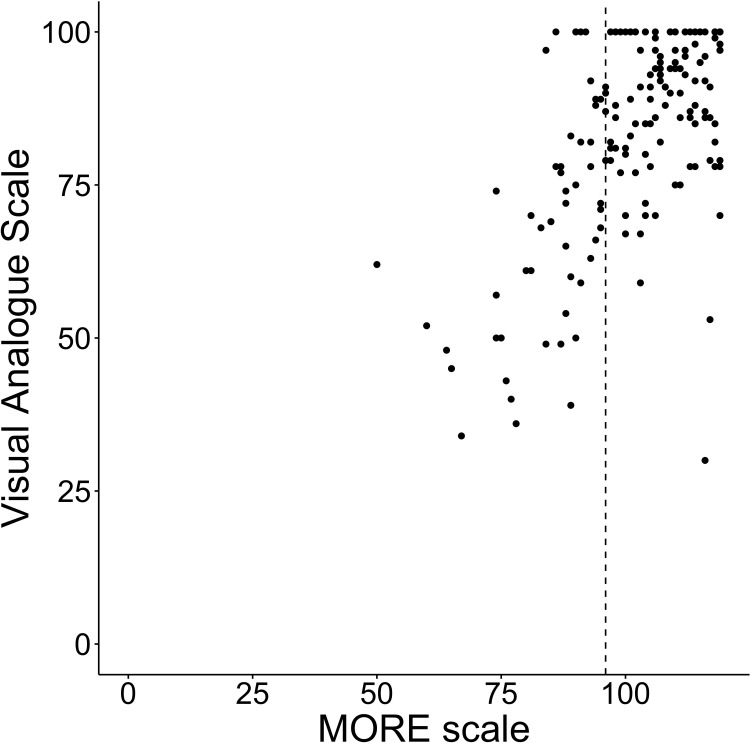
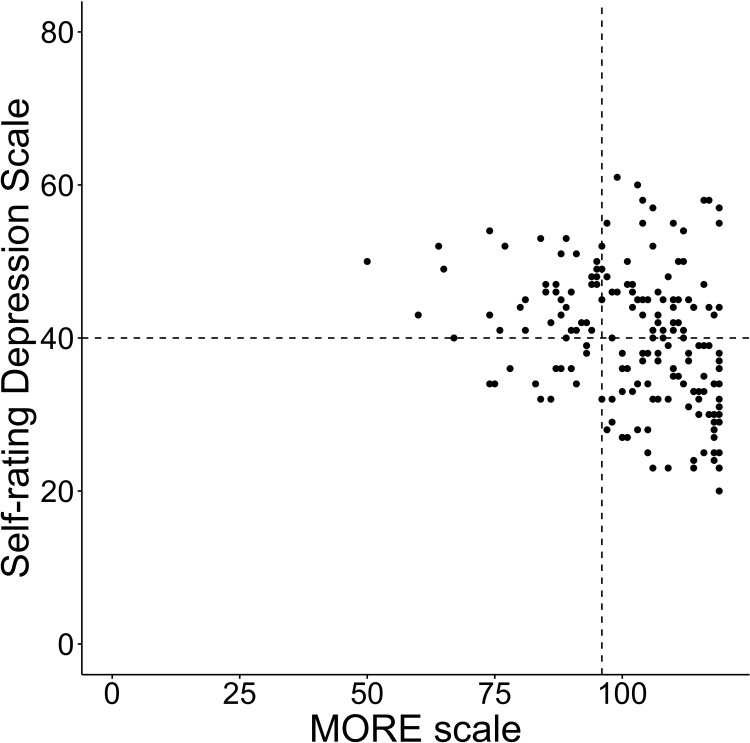
Using the Delphi method, 17 items were incorporated into the MORE scale. According to EFA and CFA, a one-factor model was suggested. All MORE scale items demonstrated satisfactory item response, with item slopes ranging from 0.811 to 2.142, and item difficulty parameters ranging from -3.203 to 0.522. Cronbach's alpha was 0.948. Regarding test-retest reliability, a moderate correlation was found between scores at the beginning and one month after hospitalization (rho = 0.612. p < 0.001). The MORE scale showed significant correlation with AS (rho = -0.536, p < 0.001), SDS (rho = -0.347, p < 0.001), and VAS (rho = 0.536, p < 0.001), confirming the convergent, discriminant, and criterion validity, respectively.
The MORE scale was verified as a valid and reliable scale for evaluating stroke patients' motivation for rehabilitation.
本研究旨在遵循共识基础的健康测量仪器选择标准(COSMIN),开发用于评估脑卒中患者康复动机的量表(MORE 量表)。
研究参与者包括在康复医院工作的康复专业人员和住院的脑卒中患者。原始 MORE 量表由一个项目池发展而来,该项目池是通过与 9 名康复专业人员的讨论创建的。在使用德尔菲法对 61 名康复专业人员和 22 名脑卒中患者进行量表内容有效性验证后,对 201 名脑卒中患者进行了量表的有效性和信度检验。使用探索性因子分析(EFA)、验证性因子分析(CFA)和项目反应理论分析对量表的建构效度进行了研究。Cronbach's alpha 验证了其内部一致性。为了检验量表的聚合效度、区分效度和效标效度,计算了 MORE 量表与淡漠量表(AS)、自评抑郁量表(SDS)和视觉模拟量表(VAS)之间的 Spearman's rho 相关系数,这三个量表都用于评估患者的动机主观感受。
通过德尔菲法,17 个项目被纳入 MORE 量表。根据 EFA 和 CFA,建议采用单因素模型。所有 MORE 量表项目的项目反应均令人满意,项目斜率范围为 0.811 至 2.142,项目难度参数范围为-3.203 至 0.522。Cronbach's alpha 为 0.948。在测试重测信度方面,住院初和住院一个月后得分之间存在中度相关性(rho = 0.612,p < 0.001)。MORE 量表与 AS(rho = -0.536,p < 0.001)、SDS(rho = -0.347,p < 0.001)和 VAS(rho = 0.536,p < 0.001)之间存在显著相关性,分别证实了聚合效度、区分效度和效标效度。
MORE 量表被验证为评估脑卒中患者康复动机的有效且可靠的量表。