Ojo Oluwafemi Adeleke, Oni Abosede Itunuoluwa, Grant Susan, Amanze Jennifer, Ojo Adebola Busola, Taiwo Odunayo Anthonia, Maimako Rotdelmwa Filibus, Evbuomwan Ikponmwosa Owen, Iyobhebhe Matthew, Nwonuma Charles Obiora, Osemwegie Omorefosa, Agboola Anthonia Oluyemi, Akintayo Christopher, Asogwa Nnaemeka Tobechukwu, Aljarba Nada H, Alkahtani Saad, Mostafa-Hedeab Gomaa, Batiha Gaber El-Saber, Adeyemi Oluyomi Stephen
Department of Biochemistry, Landmark University, Omu-Aran, Nigeria.
Department of Biochemistry, Ekiti State University, Ado-Ekiti, Nigeria.
Front Pharmacol. 2022 Mar 2;13:845196. doi: 10.3389/fphar.2022.845196. eCollection 2022.
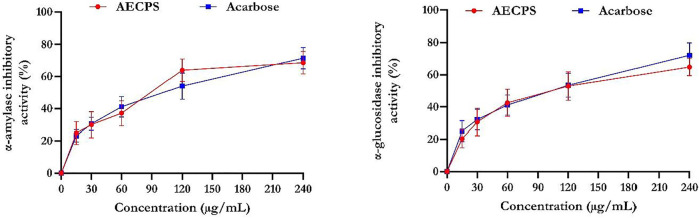
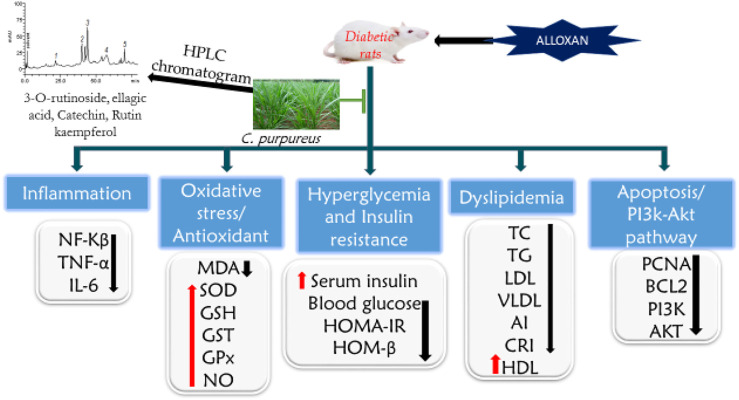
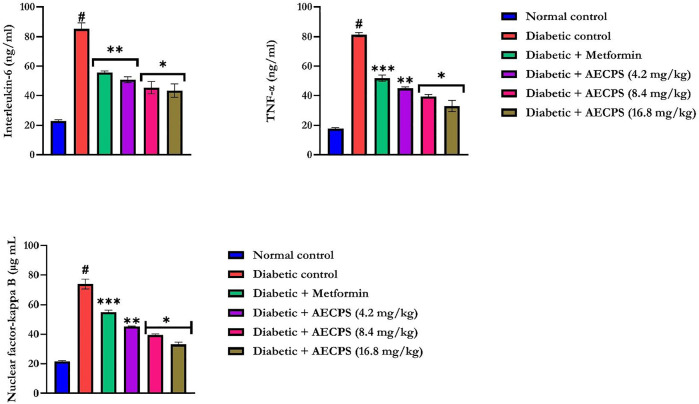
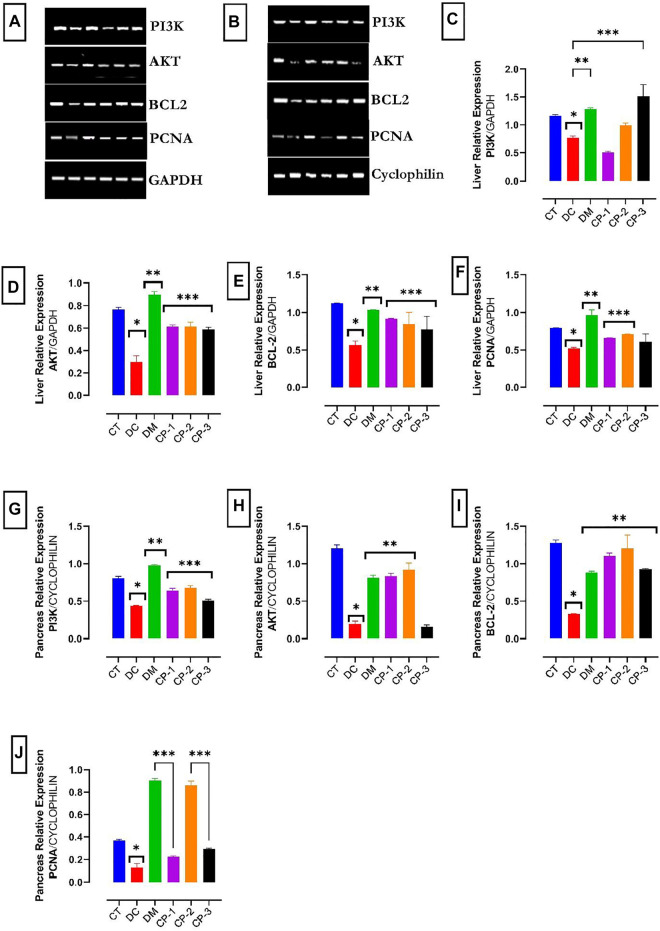
The management of diabetes over the years has involved the use of herbal plants, which are now attracting interest. We assessed the antidiabetic properties of aqueous extract of shoots (AECPS) and the mechanism of action on pancreatic -cell dysfunction. This study was conducted using Thirty-six 36) male Wistar rats. The animals were divided into six equal groups ( = 6) and treatment was performed over 14 days. To induce diabetes in the rats, a single dose of 65 mg/kg body weight of alloxan was administered intraperitoneal along with 5% glucose. HPLC analysis was carried out to identified potential compounds in the extract. tests α-amylase, and α-glucosidase were analyzed. Body weight and fasting blood glucose (FBG) were measured. Biochemical parameters, such as serum insulin, liver glycogen, hexokinase, glucose-6-phosphate (G6P), fructose-1,6-bisphosphatase (F-1,6-BP), interleukin-6 (IL-6), tumor necrosis factor-alpha (TNF-α), and nuclear factor kappa B (NF-ĸB), were analyzed. Additionally, mRNA expressions of phosphatidylinositol 3-kinase/protein kinase B (PI3K/AKT), B-cell lymphoma 2 (Bcl-2), and proliferating cell nuclear antigen (PCNA) were each evaluated. This study showed inhibitory potency of extract (AECPS) as compared with the positive controls. AECPS showed a gradual decrease in alloxan-induced increases in FBG, total cholesterol (TC), triglycerides (TG), low density lipoprotein (LDL-c), G6P, F-1,6-BP, malondialdehyde (MDA), IL-6, TNF-α, and NF-ĸB and increased alloxan-induced decreases in liver glycogen, hexokinase, and high density lipoprotein (HDL-c). The diabetic control group exhibited pancreatic dysfunction as evidenced by the reduction in serum insulin, homeostasis model assessment of -cell function (HOMA-), expressions of PI3K/AKT, Bcl-2, and PCNA combined with an elevation in homeostatic model assessment of insulin resistance (HOMA-IR). High performance liquid chromatography (HPLC) revealed 3-O-rutinoside, ellagic acid, catechin, rutin, and kaempferol in AECPS. AECPS showed efficient ameliorative actions against alloxan-induced pancreatic dysfunction, oxidative stress suppression as well as, inflammation, and apoptosis via the activation of PI3K/AKT signaling pathways.
多年来,糖尿病的管理涉及使用草药植物,这些草药如今正引起人们的关注。我们评估了茎尖水提取物(AECPS)的抗糖尿病特性及其对胰腺β细胞功能障碍的作用机制。本研究使用36只雄性Wistar大鼠进行。将动物分成六个相等的组(每组n = 6),并进行为期14天的治疗。为了诱导大鼠患糖尿病,腹腔注射单剂量65mg/kg体重的四氧嘧啶,并同时注射5%的葡萄糖。进行高效液相色谱(HPLC)分析以鉴定提取物中的潜在化合物。分析α-淀粉酶和α-葡萄糖苷酶活性。测量体重和空腹血糖(FBG)。分析生化参数,如血清胰岛素、肝糖原、己糖激酶、葡萄糖-6-磷酸(G6P)、果糖-1,6-二磷酸酶(F-1,6-BP)、白细胞介素-6(IL-6)、肿瘤坏死因子-α(TNF-α)和核因子κB(NF-κB)。此外,分别评估磷脂酰肌醇3-激酶/蛋白激酶B(PI3K/AKT)、B细胞淋巴瘤2(Bcl-2)和增殖细胞核抗原(PCNA)的mRNA表达。本研究表明,与阳性对照相比,提取物(AECPS)具有抑制作用。AECPS显示,四氧嘧啶诱导的FBG、总胆固醇(TC)、甘油三酯(TG)、低密度脂蛋白(LDL-c)、G6P、F-1,6-BP、丙二醛(MDA)、IL-6、TNF-α和NF-κB升高逐渐降低,四氧嘧啶诱导的肝糖原、己糖激酶和高密度脂蛋白(HDL-c)降低有所增加。糖尿病对照组表现出胰腺功能障碍,血清胰岛素降低、β细胞功能的稳态模型评估(HOMA-β)、PI3K/AKT、Bcl-2和PCNA表达降低,同时胰岛素抵抗的稳态模型评估(HOMA-IR)升高,证明了这一点。高效液相色谱(HPLC)显示AECPS中含有3-O-芸香糖苷、鞣花酸、儿茶素、芦丁和山奈酚。AECPS通过激活PI3K/AKT信号通路,对四氧嘧啶诱导的胰腺功能障碍、氧化应激抑制以及炎症和细胞凋亡显示出有效的改善作用。