Cheng Pengzhen, Cao Tianqing, Zhao Xueyi, Lu Weiguang, Miao Sheng, Ning Fenru, Wang Dong, Gao Yi, Wang Long, Pei Guoxian, Yang Liu
Department of Orthopedics, Xijing Hospital, Fourth Military Medical University, Xi'an, 710032, China.
College of Life Sciences, Northwest University, Xi'an, 710069, China.
Bioact Mater. 2021 Oct 27;12:185-197. doi: 10.1016/j.bioactmat.2021.10.021. eCollection 2022 Jun.
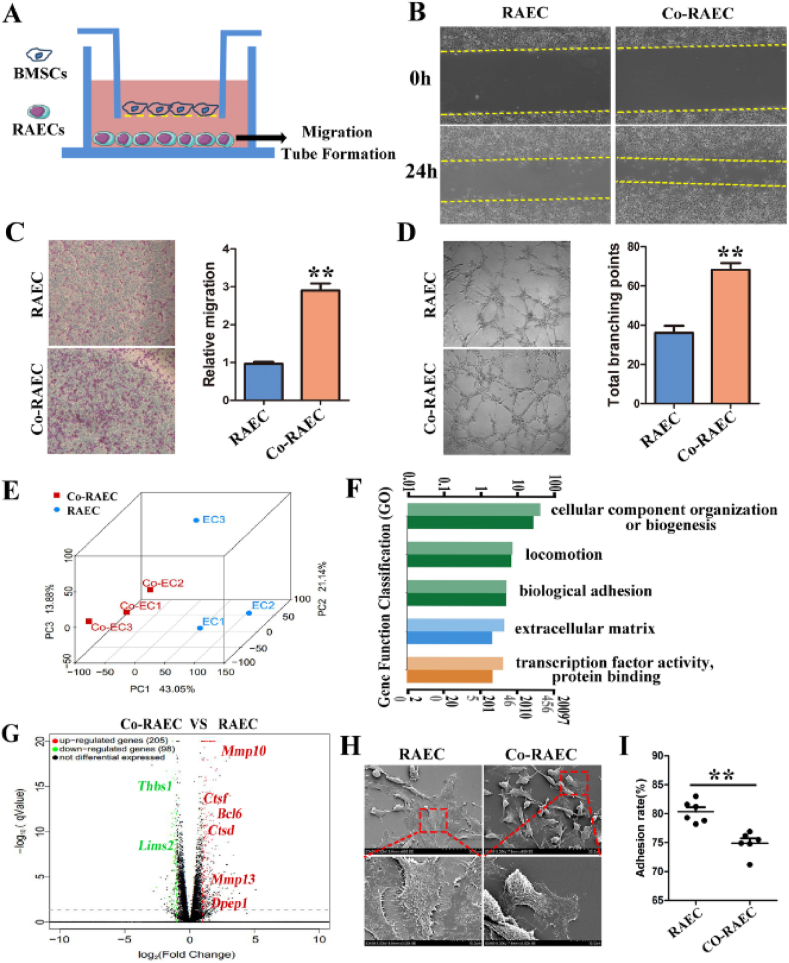
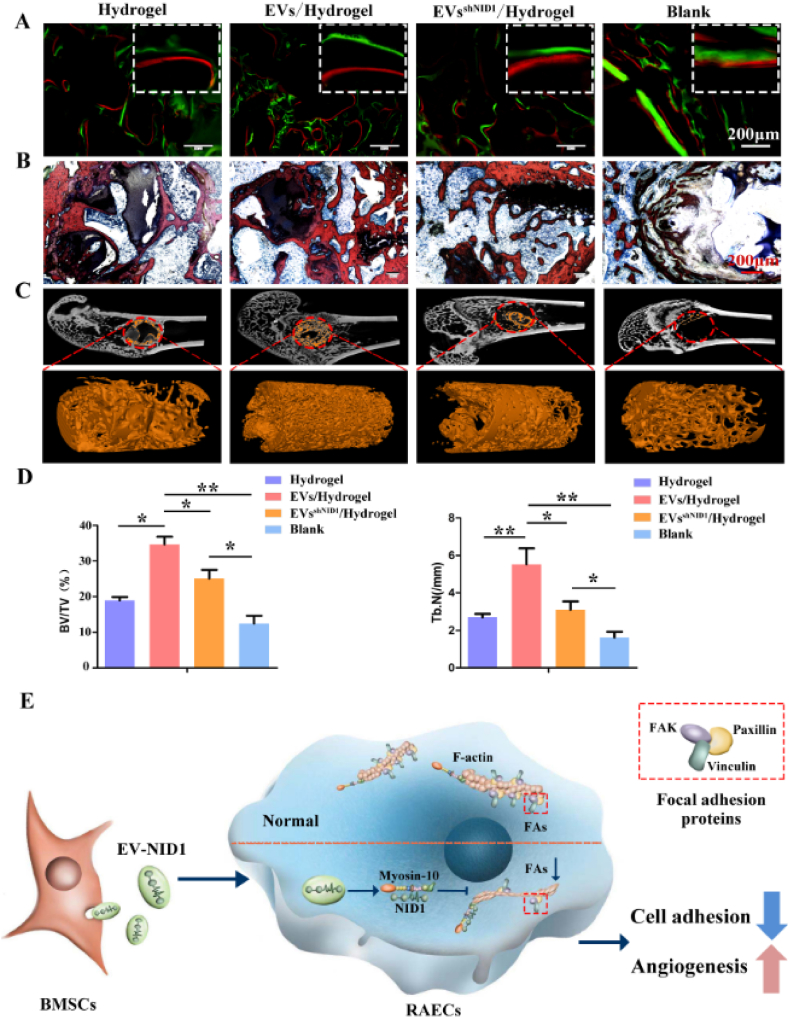
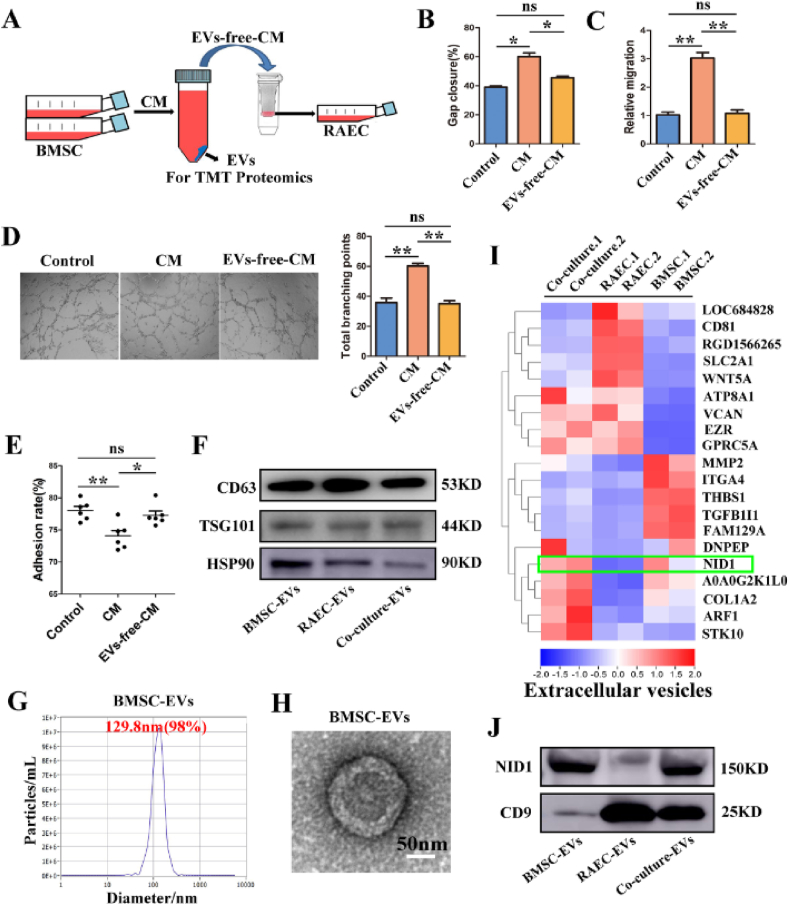
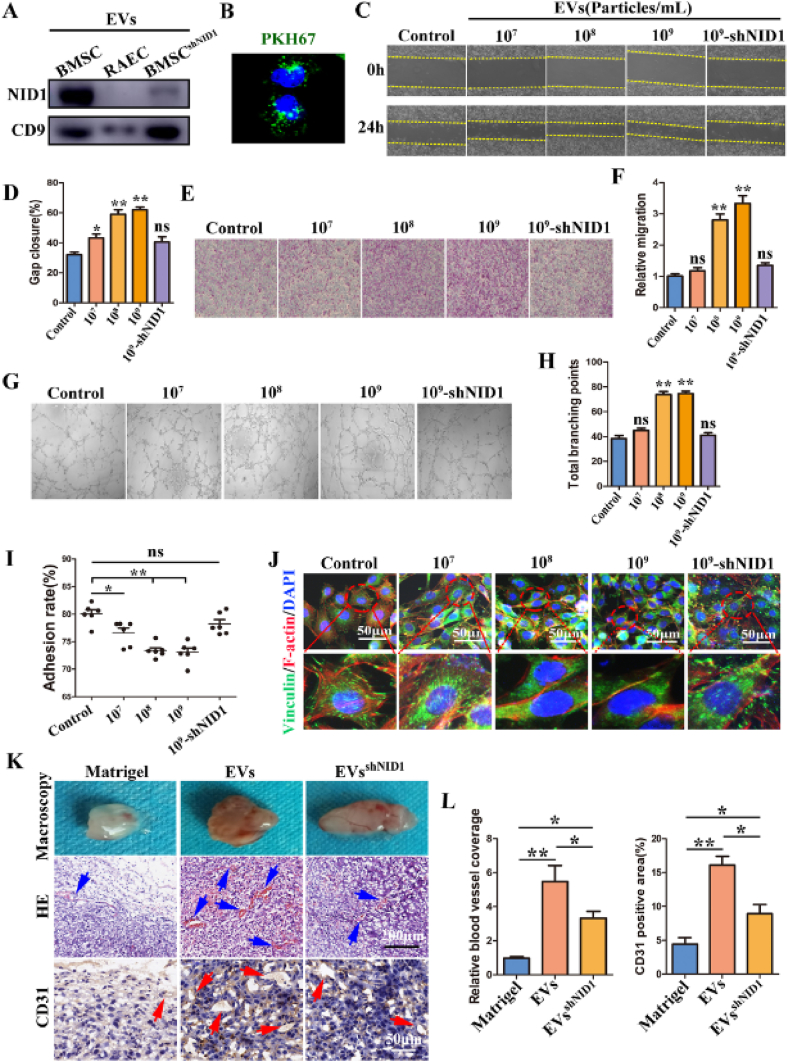
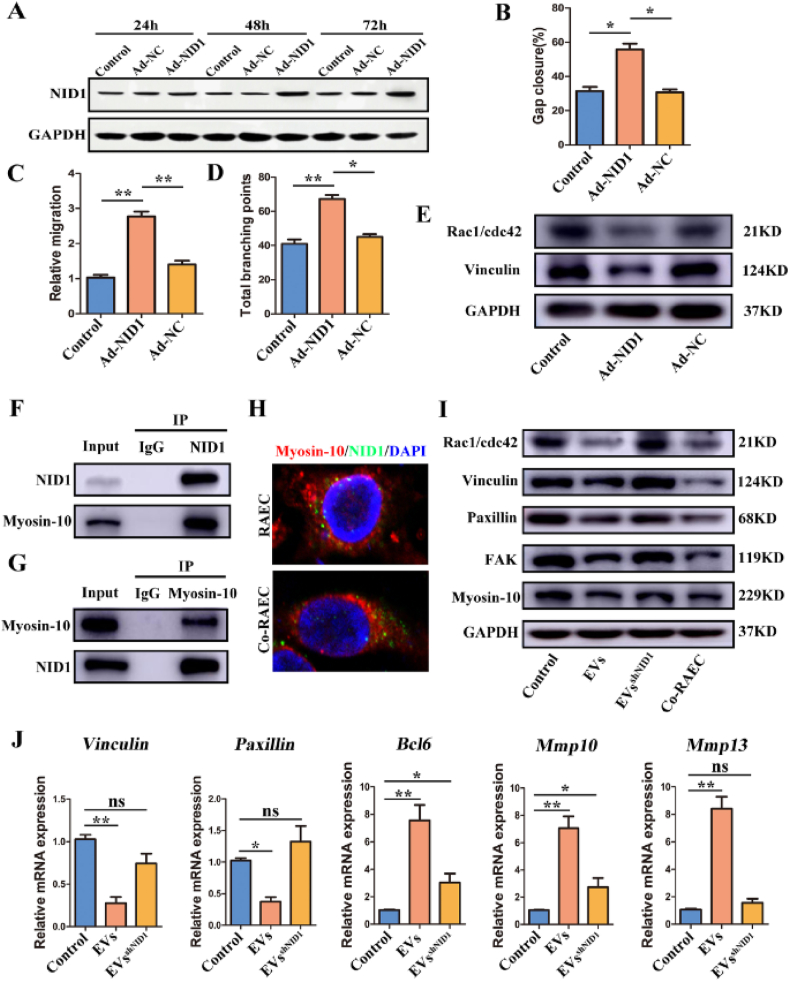
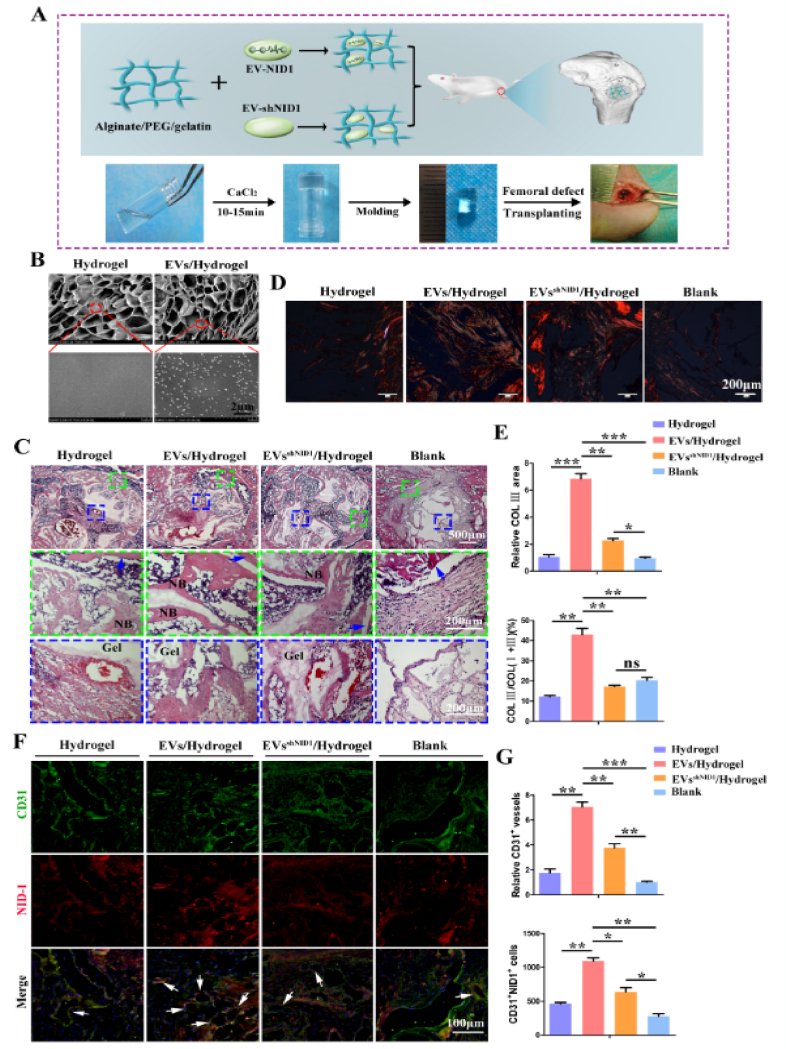
The technique bottleneck of repairing large bone defects with tissue engineered bone is the vascularization of tissue engineered grafts. Although some studies have shown that extracellular vesicles (EVs) derived from bone marrow mesenchymal stem cells (BMSCs) promote bone healing and repair by accelerating angiogenesis, the effector molecules and the mechanism remain unclear, which fail to provide ideas for the future research and development of cell-free interventions. Here, we found that Nidogen1-enriched EV (EV-NID1) derived from BMSCs interferes with the formation and assembly of focal adhesions (FAs) by targeting myosin-10, thereby reducing the adhesion strength of rat arterial endothelial cells (RAECs) to the extracellular matrix (ECM), and enhancing the migration and angiogenesis potential of RAECs. Moreover, by delivery with composite hydrogel, EV-NID1 is demonstrated to promote angiogenesis and bone regeneration in rat femoral defects. This study identifies the intracellular binding target of EV-NID1 and further elucidates a novel approach and mechanism, thereby providing a cell-free construction strategy with precise targets for the development of vascularized tissue engineering products.
组织工程骨修复大骨缺损的技术瓶颈是组织工程移植物的血管化。尽管一些研究表明,源自骨髓间充质干细胞(BMSC)的细胞外囊泡(EV)通过加速血管生成促进骨愈合和修复,但其效应分子和机制仍不清楚,这无法为无细胞干预的未来研发提供思路。在此,我们发现源自BMSC的富含巢蛋白1的EV(EV-NID1)通过靶向肌球蛋白-10干扰粘着斑(FA)的形成和组装,从而降低大鼠动脉内皮细胞(RAEC)与细胞外基质(ECM)间的粘附强度,并增强RAEC的迁移和血管生成潜力。此外,通过复合水凝胶递送,EV-NID1被证明可促进大鼠股骨缺损处的血管生成和骨再生。本研究确定了EV-NID1的细胞内结合靶点,并进一步阐明了一种新方法和机制,从而为血管化组织工程产品的开发提供了一种具有精确靶点的无细胞构建策略。