Tang Xiang, Hu Yue, Zhong Xiaoni, Xu Hongmei
Children's Hosptital of Chongqing Medical University, Chongqing, China.
Ministry of Education Key Laboratory of Child Development and Disorders, National Clinical Research Center for Child Health and Disorders, China International Science and Technology Cooperation Base of Child Development and Critical Disorders, Chongqing Key Laboratory of Child Infection and Immunity, Chongqing, China.
Front Pediatr. 2022 Mar 3;10:826600. doi: 10.3389/fped.2022.826600. eCollection 2022.
To investigate the epidemiology of human adenovirus (HAdV), human astrovirus (HAstV), and sapovirus (SaV), children with acute diarrhea in Chongqing, China from 2017 to 2019 were enrolled. Improved surveillance could provide better guidance for diarrhea prevention.
Between 2017 and 2019, fecal specimens were collected from children <14 years of age presenting with acute diarrhea for treatment at the outpatient department of the Children's Hospital, Chongqing Medical University. Human HAdV in the fecal specimens was detected by PCR, while RT-PCR was adopted for the detection of HAstV and SaV.
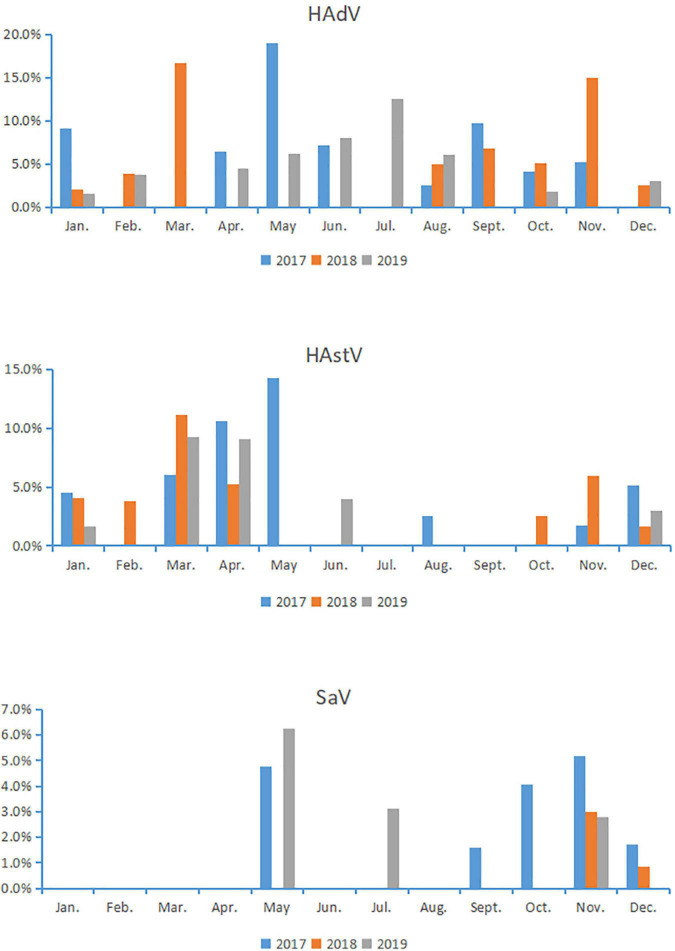
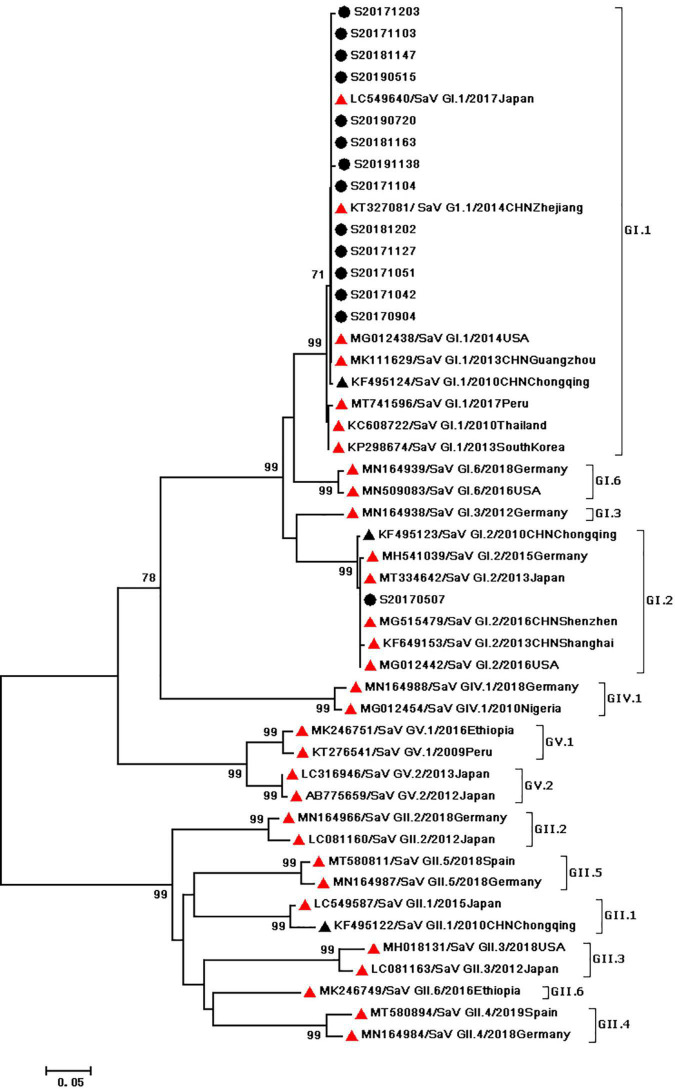
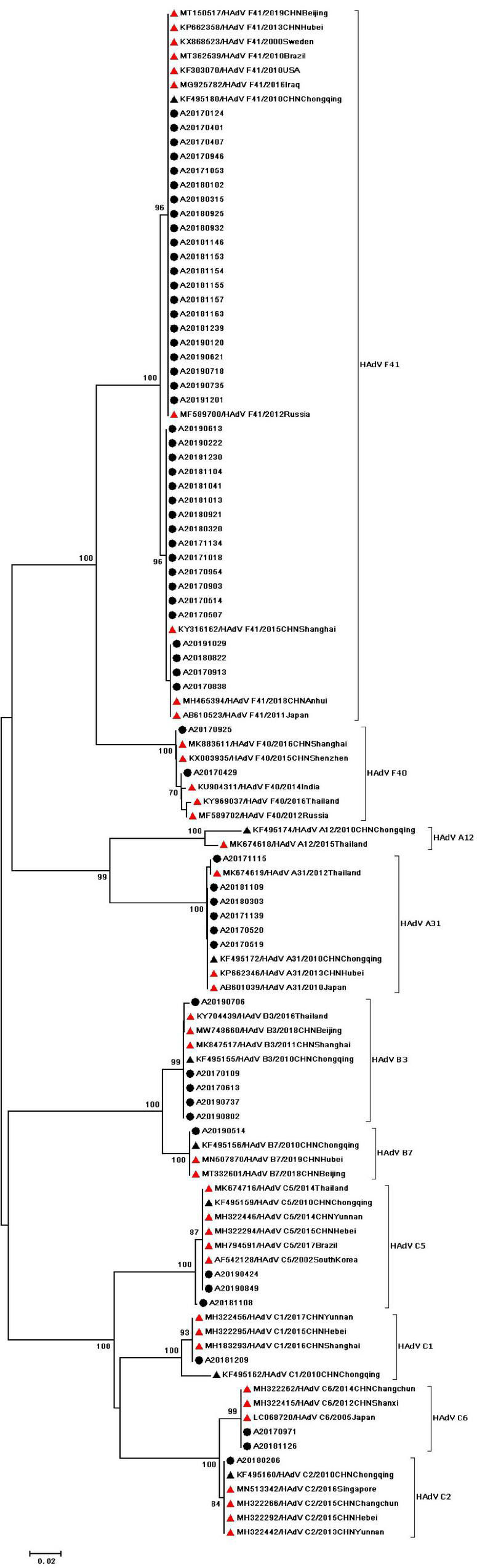
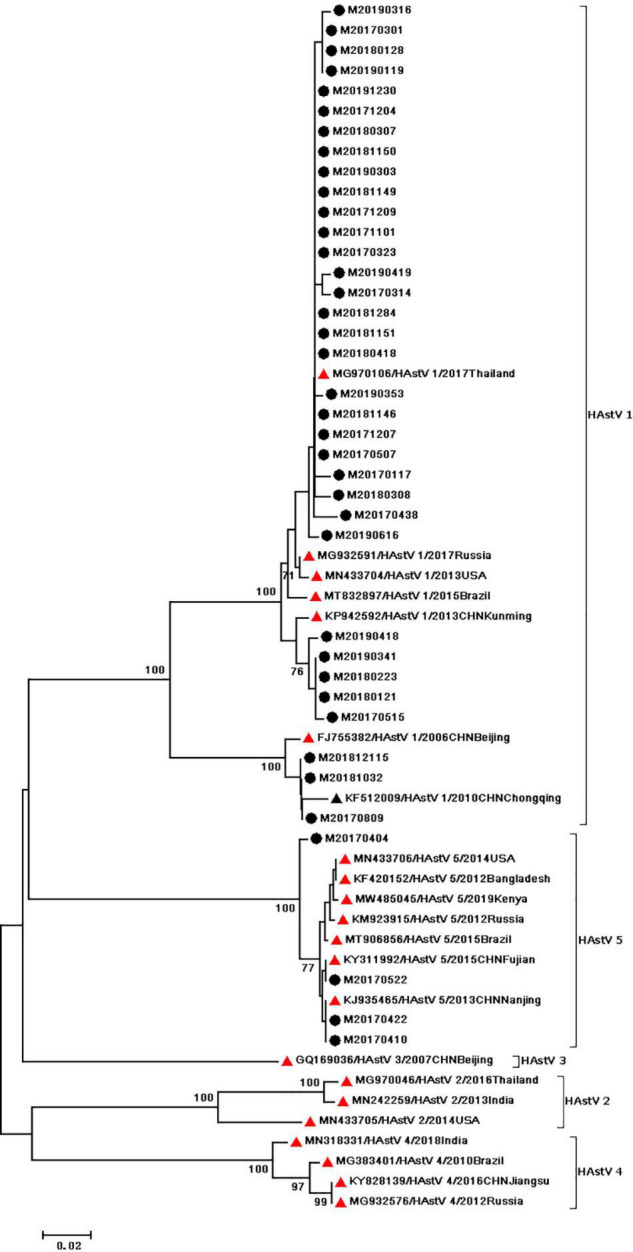
A total of 1,352 fecal specimens were screened in this study. The detection rate of HAdV was 4.44% (60/1352), HAstV was 2.81% (38/1352), and SaV was 1.04% (14/1352). The prevalence of enteric viruses in males was not significantly different to females ( > 0.05). We found 96.67% (58/60) of the HAdV-positive cases, 92.11% (35/38) of the HAstV-positive cases, and 100% (14/14) of the SaV-positive cases among the children under 4 years old. HAdV cases were identified throughout the year, while the infection of HAstV peaked from March to May every year. By contrast, SaV was detected in May, July, and from September to December. In total, 41 strains of HAdV-F were identified, including F41 (39/60) and F40 (2/60). Furthermore, A31, B3, B7, C1, C2, C5, and C6 were also detected in the study. In addition, we detected two genotypes of HAstV, HAstV-1 (34/38) and HAstV-5 (4/38), and two genotypes of SaV, GI0.1 (13/14), GI0.2 (1/14).
The enteric viruses HAdV, HAstV, and SaV contribute to the overall burden of diarrhea in Chongqing, especially in children <4 years of age. Two genotypes were identified for HAstV (HAstV-1 and HAstV-5) and SaV (GI.1 and GI.2) with an additional nine genotypes detected in HAdV cases. While the F41 HAdV strain was predominant, HAdV-A31 was also detected in 10% of cases. The study results along with continuous surveillance of enteric viruses will aid in the design and implementation of future enteric vaccines and diarrhea mitigation strategies.
为调查人类腺病毒(HAdV)、人类星状病毒(HAstV)和札如病毒(SaV)的流行病学情况,招募了2017年至2019年期间在中国重庆患有急性腹泻的儿童。加强监测可为腹泻预防提供更好的指导。
2017年至2019年期间,从重庆医科大学附属儿童医院门诊接受治疗的14岁以下急性腹泻儿童中采集粪便标本。采用聚合酶链反应(PCR)检测粪便标本中的人HAdV,而采用逆转录聚合酶链反应(RT-PCR)检测HAstV和SaV。
本研究共筛查了1352份粪便标本。HAdV的检出率为4.44%(60/1352),HAstV为2.81%(38/1352),SaV为1.04%(14/1352)。肠道病毒在男性中的患病率与女性无显著差异(P>0.05)。我们发现4岁以下儿童中,HAdV阳性病例占96.67%(58/60),HAstV阳性病例占92.11%(35/38),SaV阳性病例占100%(14/14)。HAdV病例全年均有发现,而HAstV感染每年3月至5月达到高峰。相比之下,SaV在5月、7月以及9月至12月被检测到。共鉴定出41株HAdV-F,包括F41(39/60)和F40(2/60)。此外,本研究中还检测到A31、B3、B7、C1、C2、C5和C6型。此外,我们检测到两种HAstV基因型,即HAstV-1(34/38)和HAstV-5(4/38),以及两种SaV基因型,即GI0.1(13/14)、GI0.2(1/14)。
肠道病毒HAdV、HAstV和SaV是重庆腹泻总体负担的一部分,尤其是在4岁以下儿童中。鉴定出了两种HAstV基因型(HAstV-1和HAstV-5)和两种SaV基因型(GI.1和GI.2),在HAdV病例中还检测到另外9种基因型。虽然F41型HAdV毒株占主导,但10%的病例中也检测到了HAdV-A31型。研究结果以及对肠道病毒的持续监测将有助于未来肠道疫苗的设计和实施以及腹泻缓解策略的制定。