Jiang Xiulin, Yuan Yixiao, Tang Lin, Wang Juan, Zhang Dahang, Duan Lincan
The Department of Thoracic Surgery, The Third Affiliated Hospital of Kunming Medical University (Yunnan Tumor Hospital), Kunming, China.
Key Laboratory of Animal Models and Human Disease Mechanisms of Chinese Academy of Sciences, Kunming Institute of Zoology, Kunming, China.
Front Mol Biosci. 2022 Mar 7;8:793732. doi: 10.3389/fmolb.2021.793732. eCollection 2021.
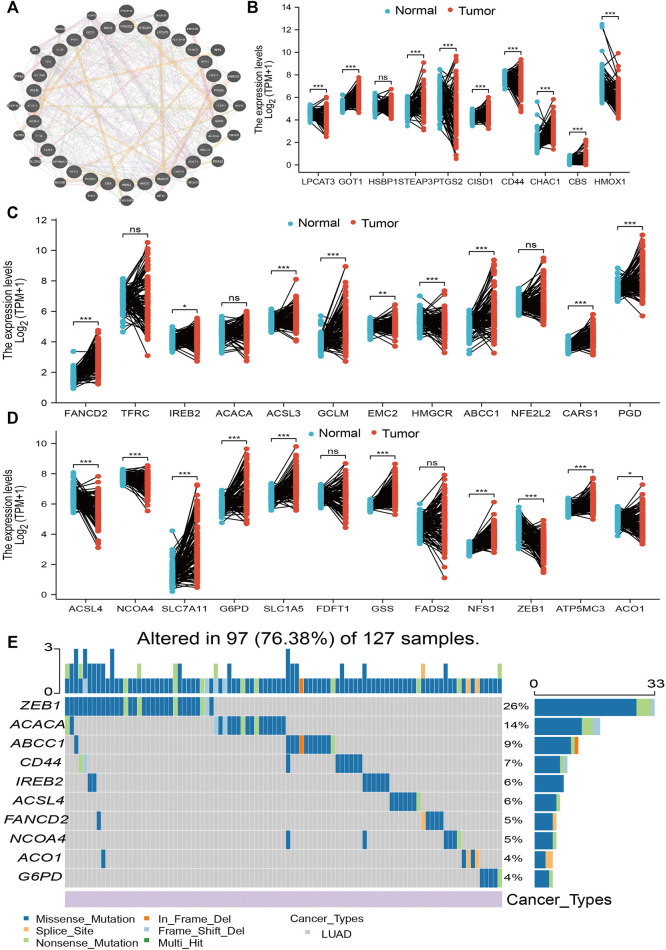
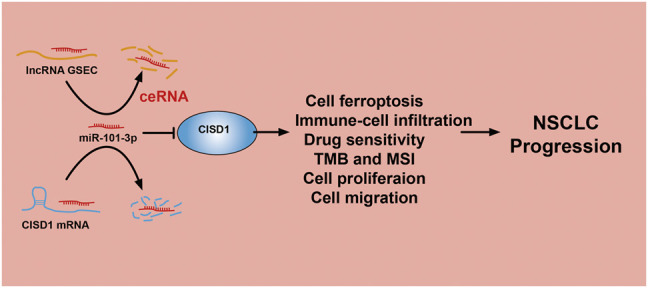
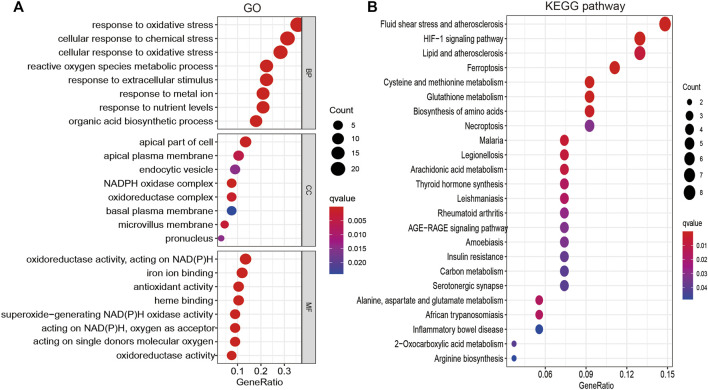
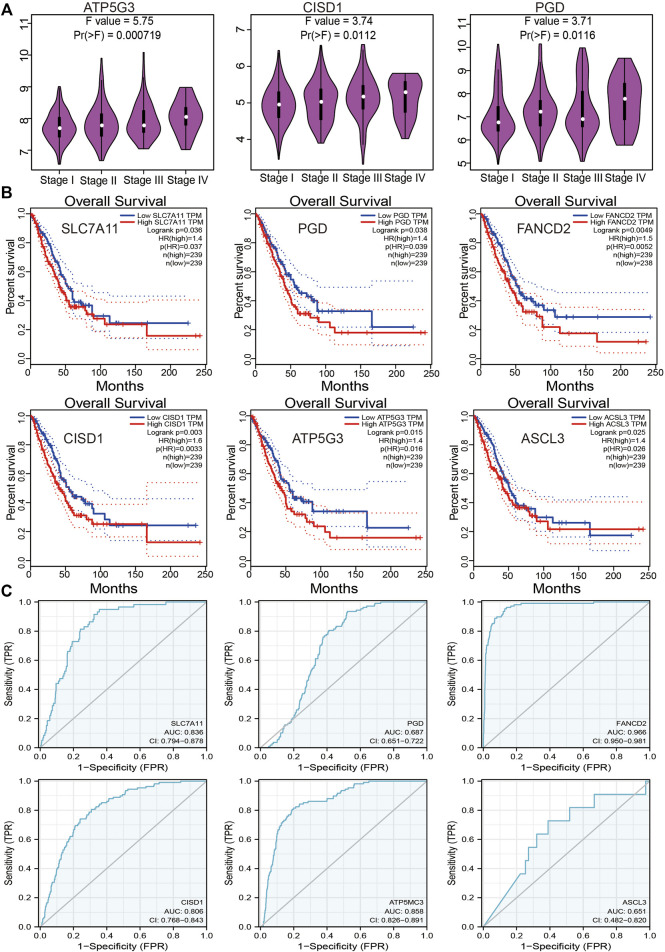
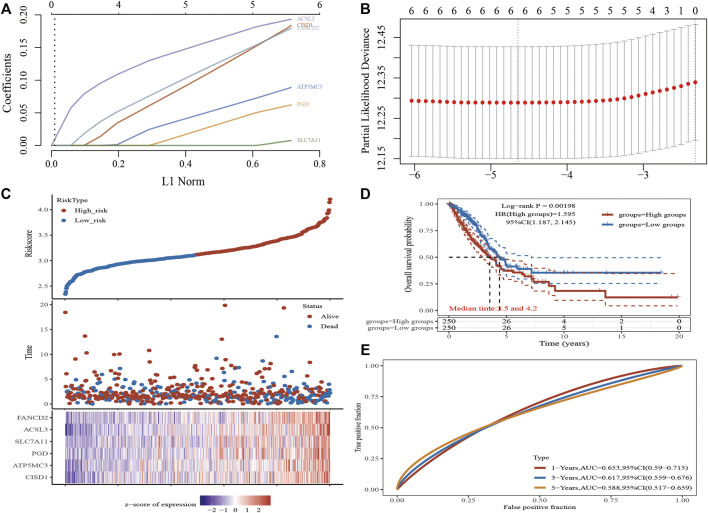
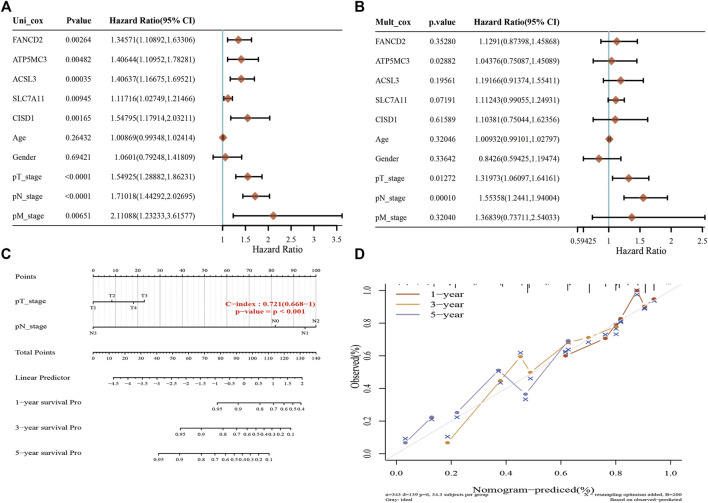
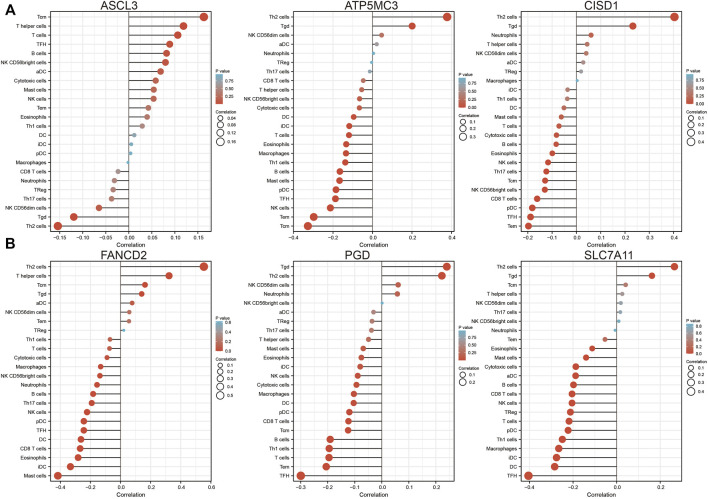
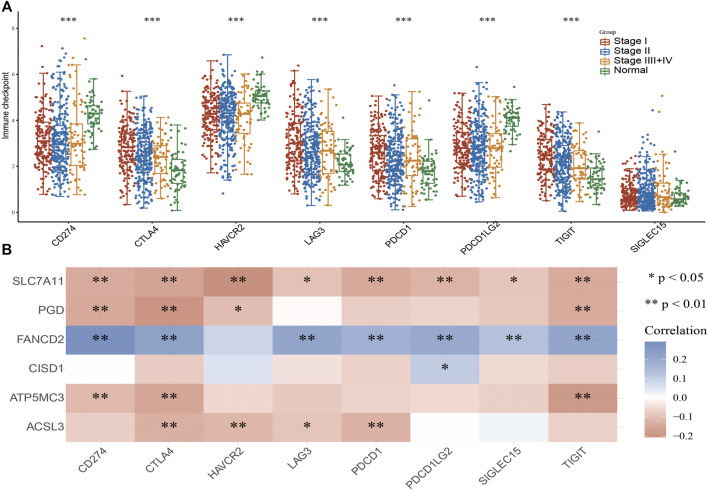
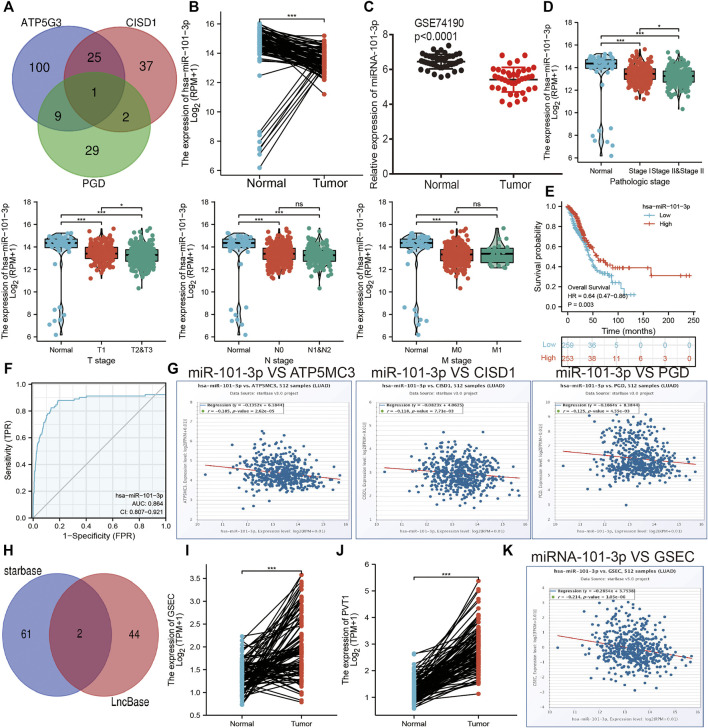
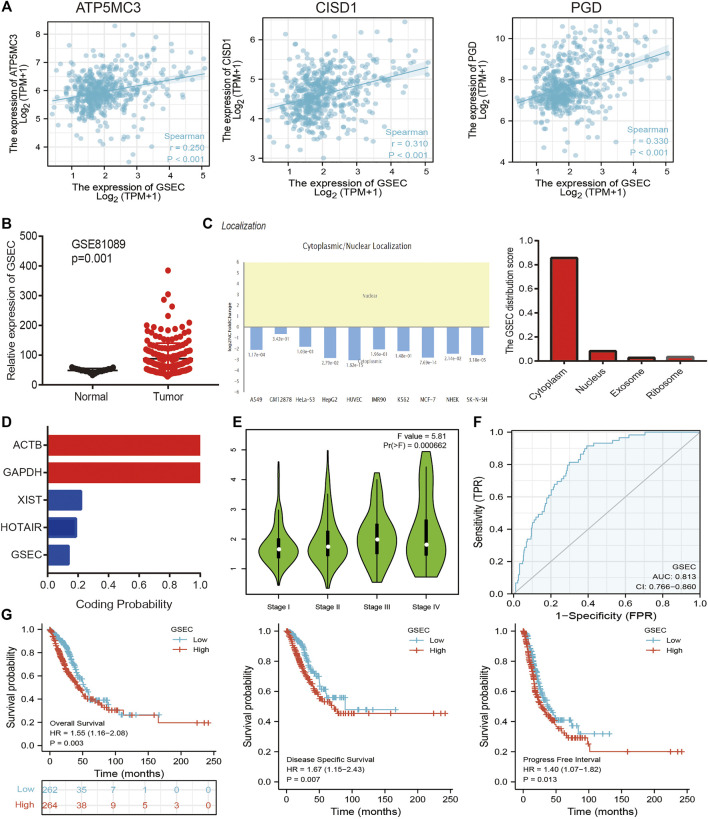
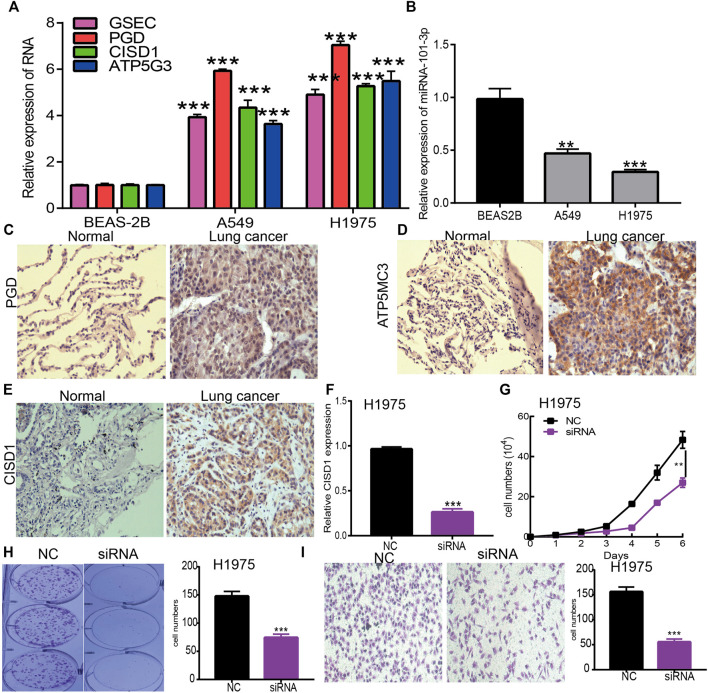
Lung adenocarcinoma (LUAD) is the most common type of lung cancer, accounting for approximately 85% of pulmonary malignancies. Emerging evidence has demonstrated that ferroptosis plays a central role in both immunities as well as tumor proliferation. However, the clinical significance, immunological function, and upstream modulatory mechanism of ferroptosis-related genes in LUAD remain unclear. Here, we utilized various bioinformatics data to identify differentially expressed (DEGs) and prognosis-related ferroptosis (FRGs) genes in LUAD. Based upon identified DEGs, FRG, and ceRNA modulatory networks were constructed. Pearson's correlation analysis was used to evaluate the correlation between FRGs and the tumor mutational burden, microsatellite instability, tumor-infiltrating immunity, cellular checkpoint control, and drug sensitivity in LUAD. A loss-of-function analysis was performed to verify the function of CISD1 in LUAD progression. Our findings revealed that certain FRGs (CISD1, ATP5MC3, PGD, SLC7A11, ACSL3, and FANCD2) are significantly upregulated in LUAD and that their elevated expression is associated with both advanced tumor stage and unfavorable prognosis. Furthermore, Kyoto Encyclopedia of Genes and Genomes (KEGG) enrichment results revealed these FRGs to be primarily involved in ferroptosis and glutathione metabolism in LUAD. We constructed a prognostic FRG-based model capable of accurately predicting LUAD patient overall survival with high specificity. The upstream lncRNA GSEC/miRNA-101-3p regulatory axis involving CISD1, ATP5MC3, and PGD was identified to be relevant in tumor progression. We also found GSEC, CISD1, ATP5MC3, and PGD to be upregulated, with miRNA-101-3p downregulated, in the setting of LUAD. Immunohistochemical analysis revealed CISD1, ATP5MC3, and PGD overexpression in LUAD tissue samples; CISD1 knockdown was noted to significantly inhibit LUAD proliferation and migration. In summary, this study characterizes relevant functional roles of the lncRNA GSEC/miR-101-3p axis in the setting of LUAD and suggests diagnostic and therapeutic biomarkers potentially useful in the clinical management of this illness.
肺腺癌(LUAD)是肺癌最常见的类型,约占肺部恶性肿瘤的85%。新出现的证据表明,铁死亡在免疫和肿瘤增殖中都起着核心作用。然而,LUAD中与铁死亡相关基因的临床意义、免疫功能及上游调控机制仍不清楚。在此,我们利用各种生物信息学数据来鉴定LUAD中差异表达(DEG)和与预后相关的铁死亡(FRG)基因。基于鉴定出的DEG构建了FRG和ceRNA调控网络。采用Pearson相关分析评估FRG与LUAD中肿瘤突变负荷、微卫星不稳定性、肿瘤浸润免疫、细胞检查点控制及药物敏感性之间的相关性。进行功能缺失分析以验证CISD1在LUAD进展中的作用。我们的研究结果显示,某些FRG(CISD1、ATP5MC3、PGD、SLC7A11、ACSL3和FANCD2)在LUAD中显著上调,其表达升高与肿瘤晚期和不良预后相关。此外,京都基因与基因组百科全书(KEGG)富集结果显示,这些FRG主要参与LUAD中的铁死亡和谷胱甘肽代谢。我们构建了一个基于FRG的预后模型,能够以高特异性准确预测LUAD患者的总生存期。鉴定出涉及CISD1、ATP5MC3和PGD的上游lncRNA GSEC/miRNA - 101 - 3p调控轴与肿瘤进展相关。我们还发现,在LUAD中,GSEC、CISD1、ATP5MC3和PGD上调,而miRNA - 101 - 3p下调。免疫组织化学分析显示LUAD组织样本中CISD1、ATP5MC3和PGD过表达;CISD1敲低可显著抑制LUAD的增殖和迁移。总之,本研究描述了lncRNA GSEC/miR - 101 - 3p轴在LUAD中的相关功能作用,并提出了可能对该疾病临床管理有用的诊断和治疗生物标志物。