Department of Early Phase Cancer Trials Center «CLIP2», CHU Timone, Assistance Publique Hôpitaux de Marseille, Aix-Marseille University, 13005 Marseille, France.
Dermatology and Skin Cancer Department, Aix Marseille University, APHM, CRCM Inserm U1068, CNRS U7258, CHU Timone, 13005 Marseille, France.
Curr Oncol. 2022 Mar 10;29(3):1902-1918. doi: 10.3390/curroncol29030155.
Cancer therapies targeting actionable molecular alterations (AMA) have developed, but the clinical routine impact of high-throughput molecular profiling remains unclear. We present a monocentric experience of molecular profiling based on liquid biopsy in patients with cancer.
Patients included had solid cancer and underwent cfDNA genomic profiling with FoudationOne Liquid CDx (F1LCDx) test, analyzing 324 genes. Primary endpoint was to describe patients with an AMA for whom clinical decisions were impacted by F1LCDx test results.
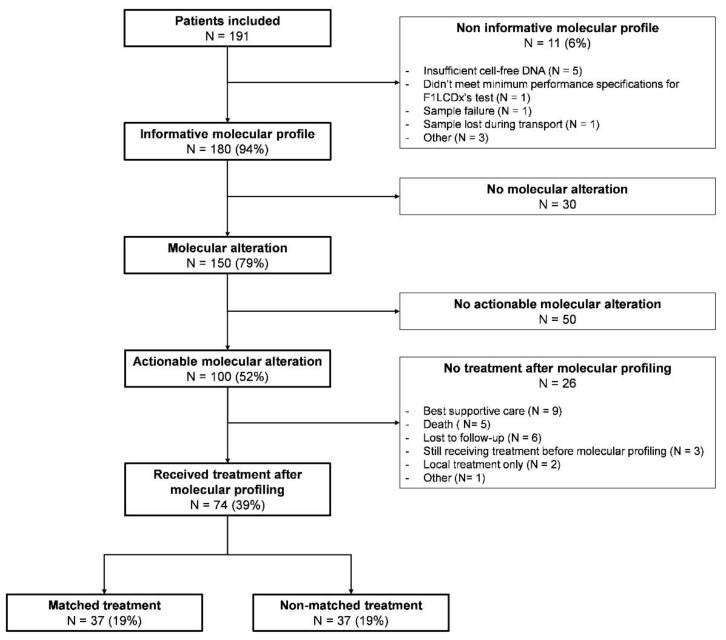
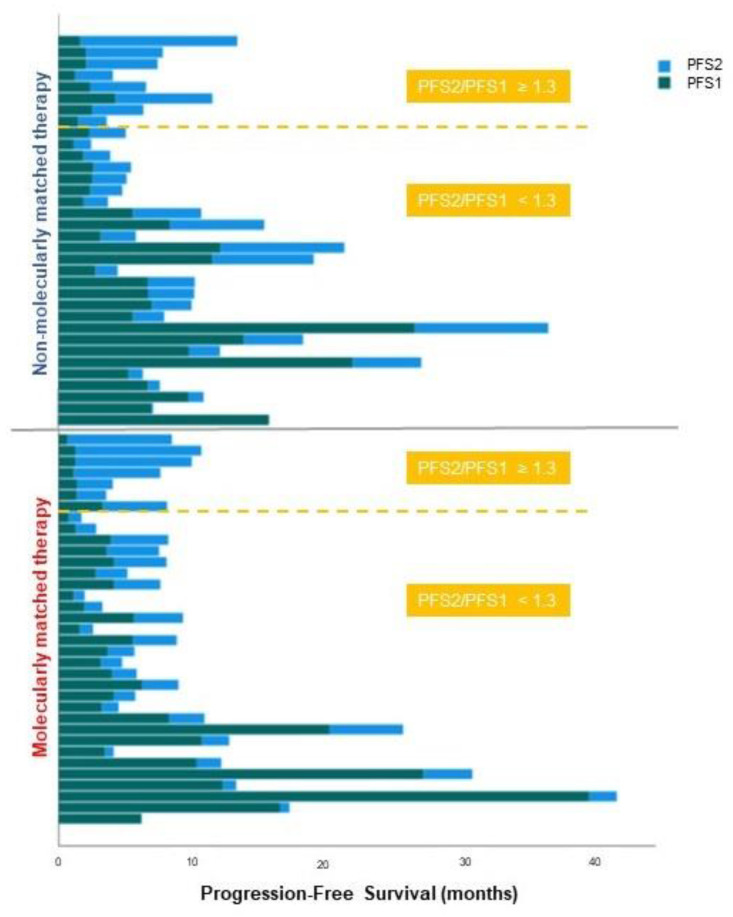
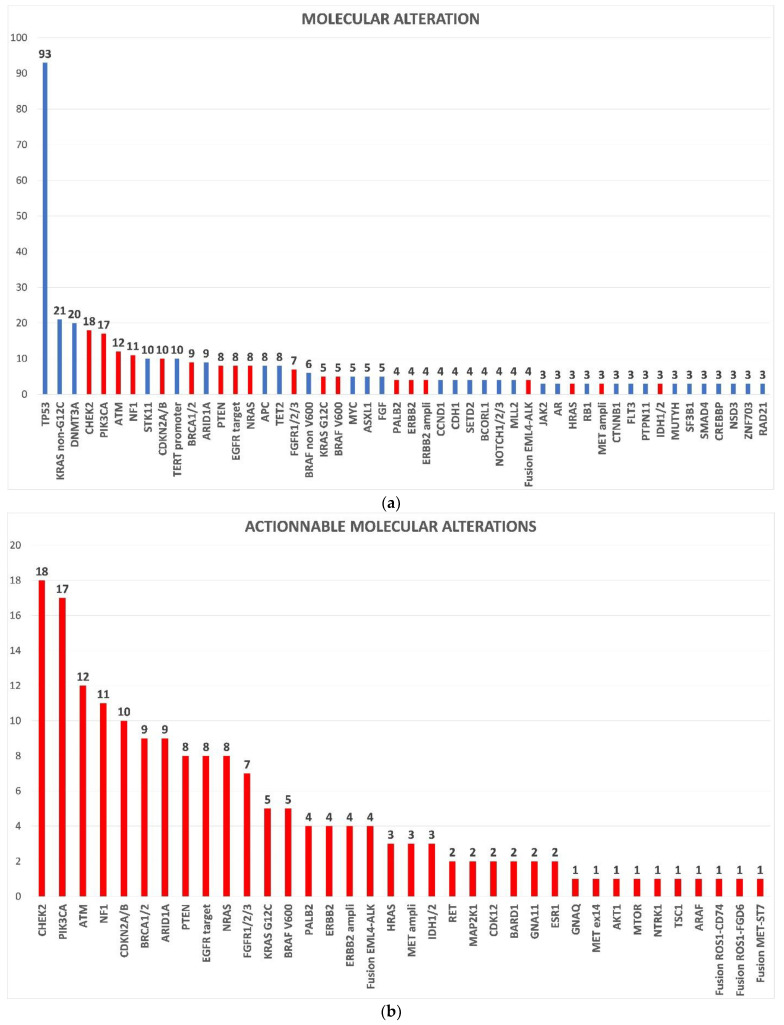
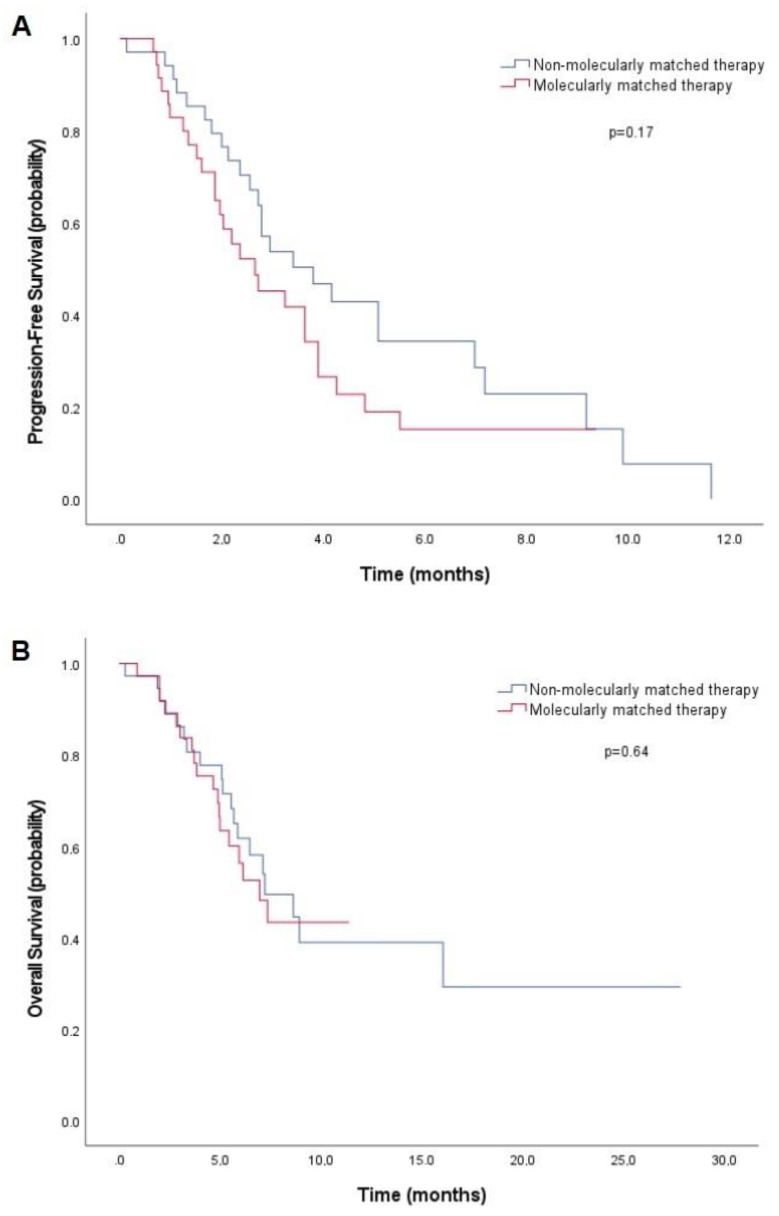
191 patients were included, mostly with lung cancer (46%). An AMA was found in 52%. The most common molecular alterations were: TP53 (52%), KRAS (14%) and DNMT3 (11%). The most common AMA were: CHEK2 (10%), PIK3CA (9%), ATM (7%). There was no difference in progression-free survival (2.66 months vs. 3.81 months, = 0.17), overall survival (5.3 months vs. 7.1 months, = 0.64), or PFS2/PFS1 ratio ≥ 1.3 (20% vs. 24%, = 0.72) between patients receiving a molecularly matched therapy (MMT) or a non-MMT, respectively. Patients with a MMT had an overall response rate of 19% and a disease control of 32%.
Routine cfDNA molecular profiling is feasible and can lead to the access of targeted therapies. However, no notable benefit in patient's outcomes was shown in this unselected pan-cancer study.
针对可操作的分子改变(AMA)的癌症疗法已经发展起来,但高通量分子分析在临床常规中的影响尚不清楚。我们报告了一项基于液体活检的分子分析在癌症患者中的单中心经验。
纳入的患者患有实体瘤,并接受了基于液体活检的 cfDNA 基因组分析,使用 FoundationOne Liquid CDx(F1LCDx)检测,分析了 324 个基因。主要终点是描述 AMA 的患者,其临床决策受到 F1LCDx 检测结果的影响。
共纳入 191 例患者,主要为肺癌(46%)。发现 AMA 占 52%。最常见的分子改变是:TP53(52%)、KRAS(14%)和 DNMT3(11%)。最常见的 AMA 是:CHEK2(10%)、PIK3CA(9%)、ATM(7%)。无进展生存期(2.66 个月与 3.81 个月, = 0.17)、总生存期(5.3 个月与 7.1 个月, = 0.64)或 PFS2/PFS1 比值≥1.3(20%与 24%, = 0.72)在接受分子匹配治疗(MMT)或非 MMT 的患者之间无差异。接受 MMT 的患者总缓解率为 19%,疾病控制率为 32%。
常规 cfDNA 分子分析是可行的,可以获得靶向治疗。然而,在这项未选择的泛癌研究中,患者的结局没有显示出明显的获益。