Li Xiang, Bao Yangyang, Jia Kangni, Zhang Ning, Lin Changjian, Wei Yue, Xie Yun, Luo Qingzhi, Ling Tianyou, Chen Kang, Pan Wenqi, Wu Liqun, Jin Qi
Department of Cardiovascular Medicine, Ruijin Hospital, Shanghai Jiao Tong University School of Medicine, Shanghai 200001, China.
J Cardiovasc Dev Dis. 2022 Mar 17;9(3):88. doi: 10.3390/jcdd9030088.
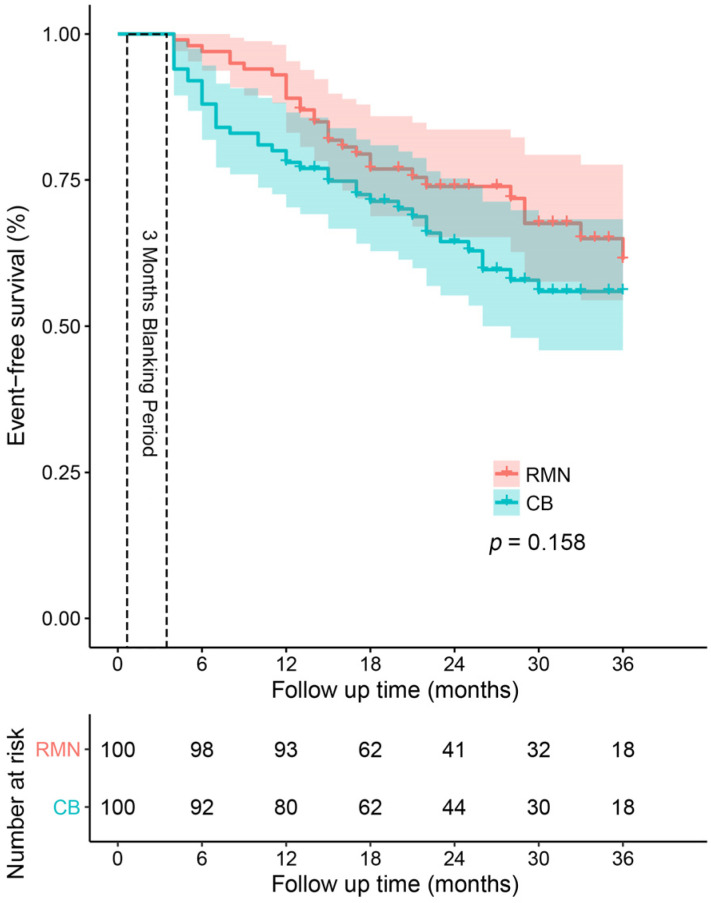
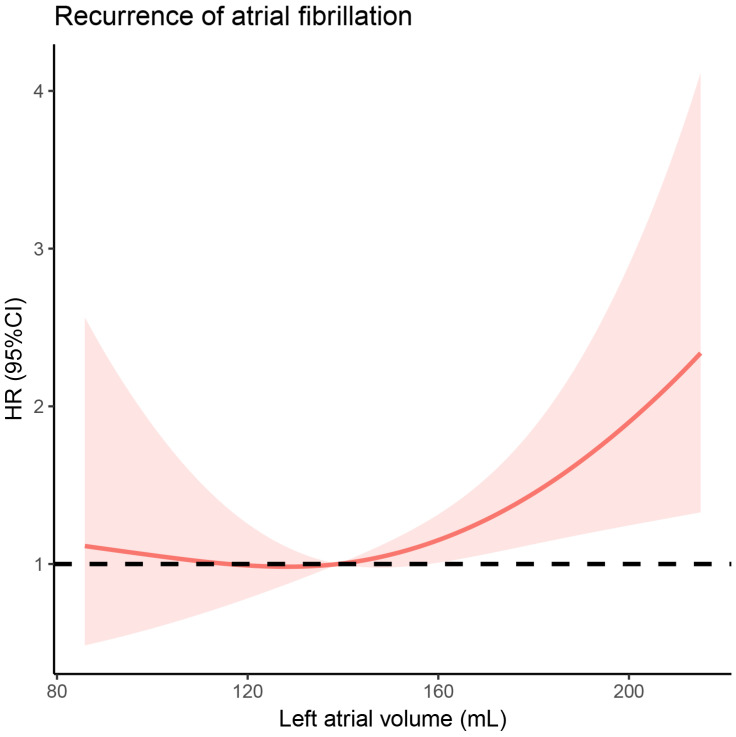
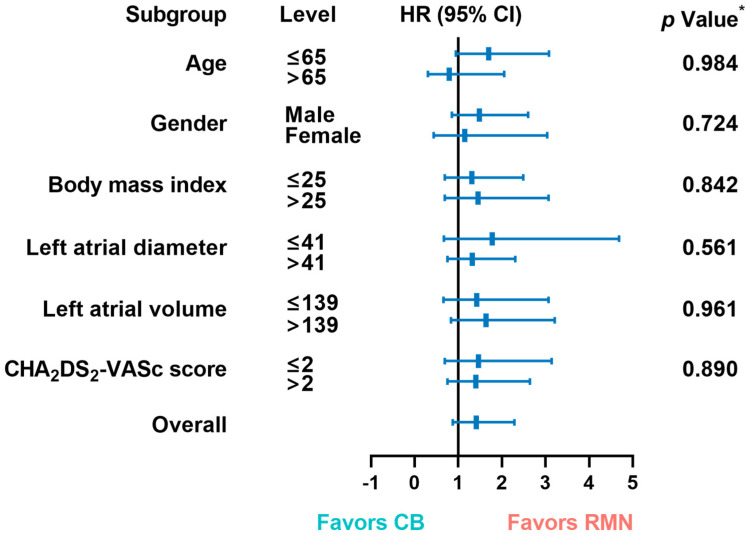
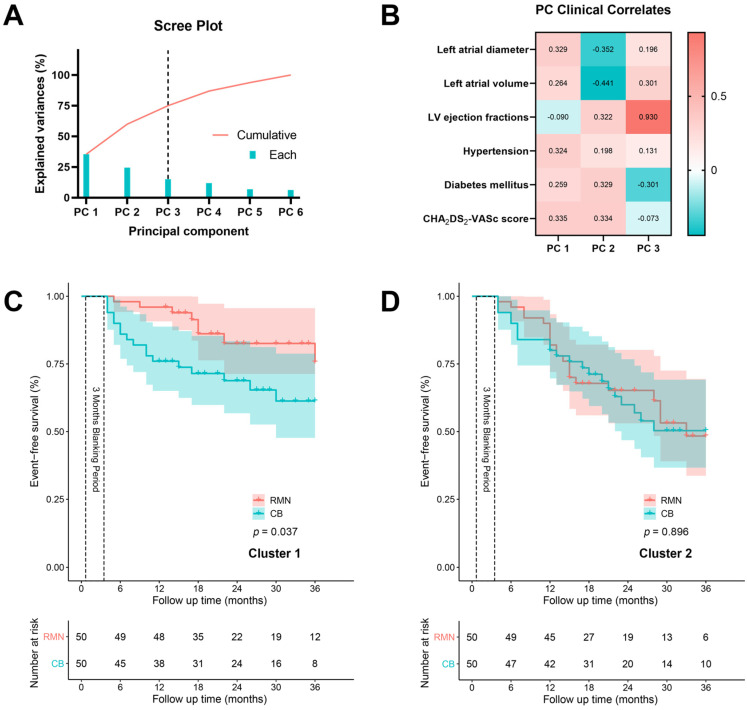
Introduction: Currently, numerous ablation techniques are available for atrial fibrillation (AF), in addition to manual radio frequency ablation. The aim of this prospective, non-randomized concurrent controlled trial was to compare the mid-term efficacy and procedural outcomes of persistent AF (PerAF) using cryoballoon (CB) and robotic magnetic navigation (RMN). Methods: Two hundred PerAF patients were assigned, in a 1:1 ratio, to undergo catheter ablation using RMN (RMN group) or CB (CB group). The primary endpoint was freedom from AF recurrence following a 3-month period after the index ablation. The secondary endpoint was peri-procedural outcomes, including the total procedure time, left atrial procedure time, fluoroscopy time, and fluoroscopy dose. The Two-step cluster analysis was used to determine the efficacy of RMN and CB between the different groups. The Cox proportional hazard model and restricted cubic spline were used to determine predictors for AF recurrence. Results: At the mean follow-up of 28.1 ± 9.7 months, the primary endpoint was achieved in 71 PerAF patients in the RMN group and in 62 PerAF patients in the CB group (71% vs. 62%, p = 0.158). Compared with CB, RMN-guided ablation led to a longer procedure time (p < 0.001), but with less radiation (p < 0.001). Cluster analysis returned two clusters of patients and RMN was favorable for one cluster (p = 0.037), in which more patients presented with diabetes mellitus and smaller left atria. Conclusions: For patients with PerAF, CB is generally equivalent to RMN-guided ablation with regard to overall efficacy. RMN-guided ablation could be favorable in specific patient populations presenting with diabetes mellitus and smaller left atria.
目前,除了手动射频消融外,还有多种消融技术可用于治疗心房颤动(AF)。这项前瞻性、非随机同期对照试验的目的是比较使用冷冻球囊(CB)和机器人磁导航(RMN)治疗持续性房颤(PerAF)的中期疗效和手术结果。方法:200例PerAF患者按1:1比例分配,分别接受RMN导管消融(RMN组)或CB导管消融(CB组)。主要终点是首次消融后3个月无房颤复发。次要终点是围手术期结果,包括总手术时间、左心房手术时间、透视时间和透视剂量。采用两步聚类分析确定不同组间RMN和CB的疗效。采用Cox比例风险模型和受限立方样条确定房颤复发的预测因素。结果:在平均随访28.1±9.7个月时,RMN组71例PerAF患者和CB组62例PerAF患者达到主要终点(71%对62%,p = 0.158)。与CB相比,RMN引导下的消融手术时间更长(p < 0.001),但辐射更少(p < 0.001)。聚类分析将患者分为两组,RMN对其中一组有利(p = 0.037),这组患者中糖尿病患者更多,左心房更小。结论:对于PerAF患者,CB在总体疗效上通常与RMN引导下的消融相当。RMN引导下的消融在患有糖尿病且左心房较小的特定患者群体中可能更有利。