Fujii Junichi, Homma Takujiro, Osaki Tsukasa
Department of Biochemistry and Molecular Biology, Graduate School of Medical Science, Yamagata University, Yamagata 990-9585, Japan.
Antioxidants (Basel). 2022 Mar 4;11(3):501. doi: 10.3390/antiox11030501.
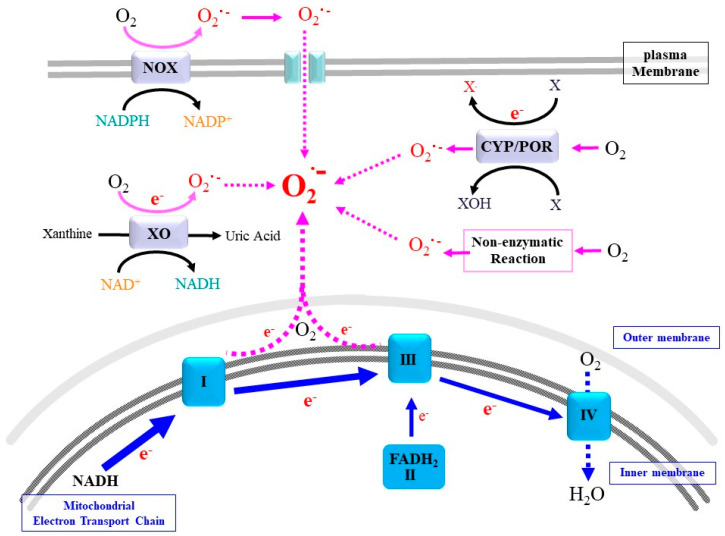
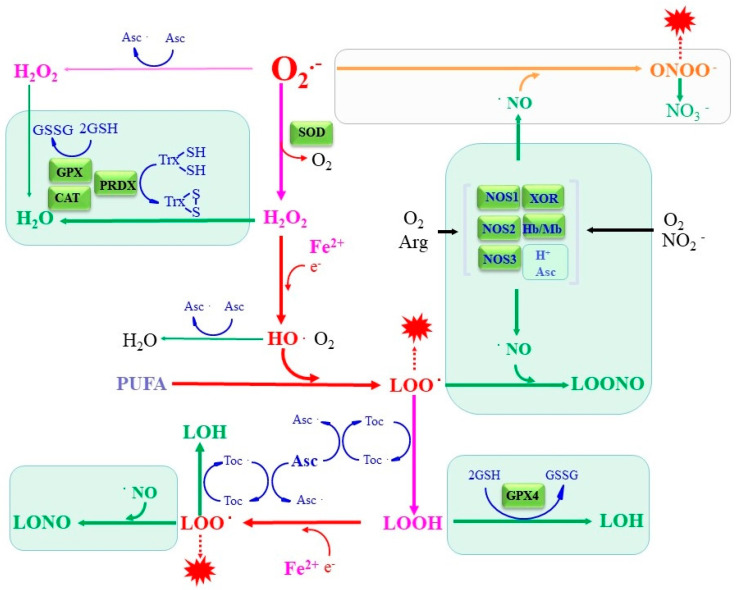
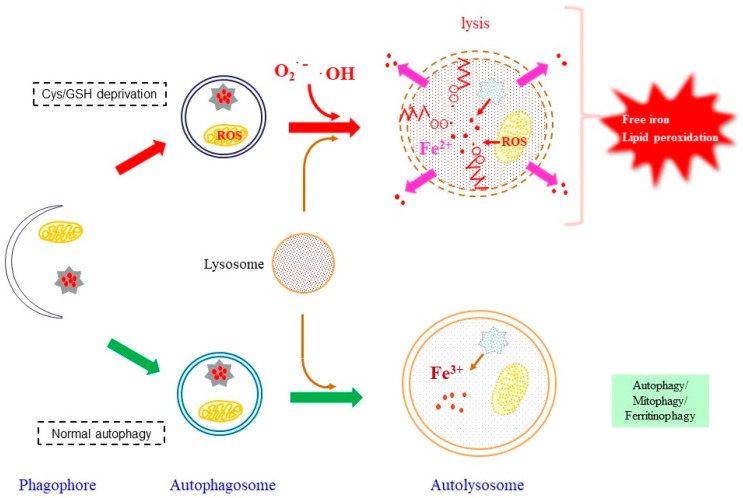
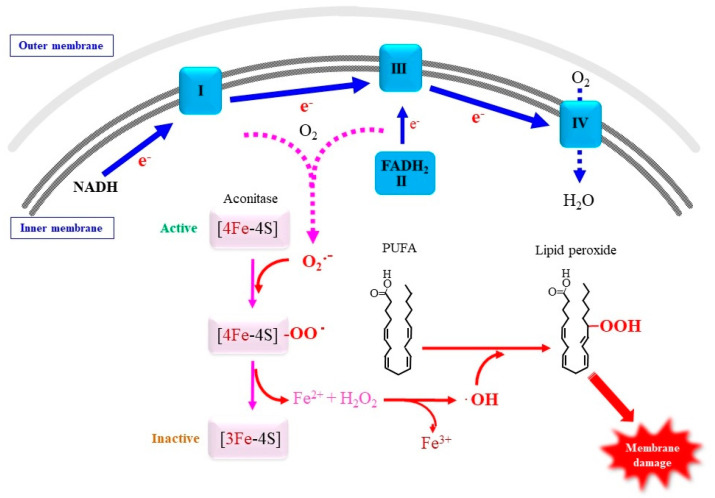
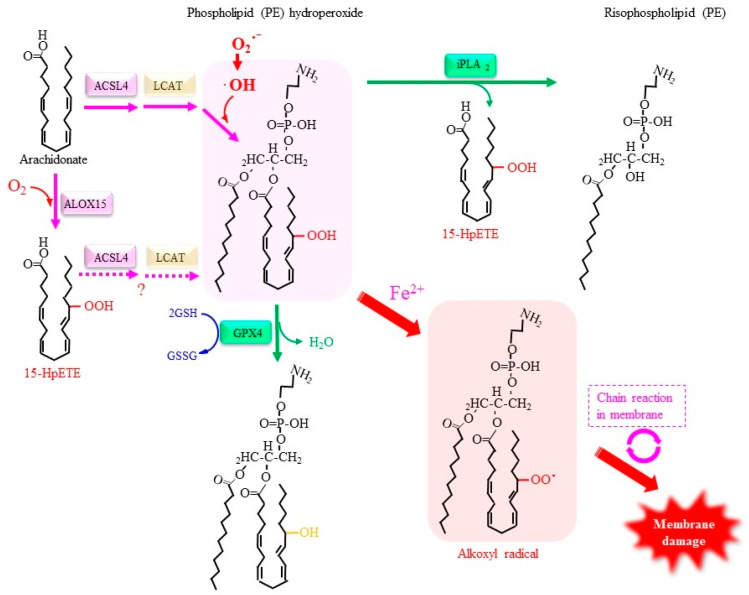
Superoxide is a primary oxygen radical that is produced when an oxygen molecule receives one electron. Superoxide dismutase (SOD) plays a primary role in the cellular defense against an oxidative insult by ROS. However, the resulting hydrogen peroxide is still reactive and, in the presence of free ferrous iron, may produce hydroxyl radicals and exacerbate diseases. Polyunsaturated fatty acids are the preferred target of hydroxyl radicals. Ferroptosis, a type of necrotic cell death induced by lipid peroxides in the presence of free iron, has attracted considerable interest because of its role in the pathogenesis of many diseases. Radical electrons, namely those released from mitochondrial electron transfer complexes, and those produced by enzymatic reactions, such as lipoxygenases, appear to cause lipid peroxidation. While GPX4 is the most potent anti-ferroptotic enzyme that is known to reduce lipid peroxides to alcohols, other antioxidative enzymes are also indirectly involved in protection against ferroptosis. Moreover, several low molecular weight compounds that include α-tocopherol, ascorbate, and nitric oxide also efficiently neutralize radical electrons, thereby suppressing ferroptosis. The removal of radical electrons in the early stages is of primary importance in protecting against ferroptosis and other diseases that are related to oxidative stress.
超氧阴离子是一种主要的氧自由基,当一个氧分子获得一个电子时就会产生。超氧化物歧化酶(SOD)在细胞抵御ROS氧化损伤中起主要作用。然而,产生的过氧化氢仍然具有反应活性,并且在游离亚铁离子存在的情况下,可能会产生羟基自由基并加重疾病。多不饱和脂肪酸是羟基自由基的首选靶标。铁死亡是一种在游离铁存在下由脂质过氧化物诱导的坏死性细胞死亡,由于其在许多疾病发病机制中的作用而引起了相当大的关注。自由基电子,即从线粒体电子传递复合物释放的电子以及由脂氧合酶等酶促反应产生的电子,似乎会导致脂质过氧化。虽然谷胱甘肽过氧化物酶4(GPX4)是已知的最有效的抗铁死亡酶,可将脂质过氧化物还原为醇类,但其他抗氧化酶也间接参与了对铁死亡的保护。此外,几种低分子量化合物,包括α-生育酚、抗坏血酸和一氧化氮,也能有效中和自由基电子,从而抑制铁死亡。在早期阶段清除自由基电子对于预防铁死亡和其他与氧化应激相关的疾病至关重要。