Tain You-Lin, Hsu Chien-Ning
Department of Pediatrics, Kaohsiung Chang Gung Memorial Hospital and Chang Gung University College of Medicine, Kaohsiung 833, Taiwan.
Institute for Translational Research in Biomedicine, Kaohsiung Chang Gung Memorial Hospital and Chang Gung University College of Medicine, Kaohsiung 833, Taiwan.
Antioxidants (Basel). 2022 Mar 7;11(3):511. doi: 10.3390/antiox11030511.
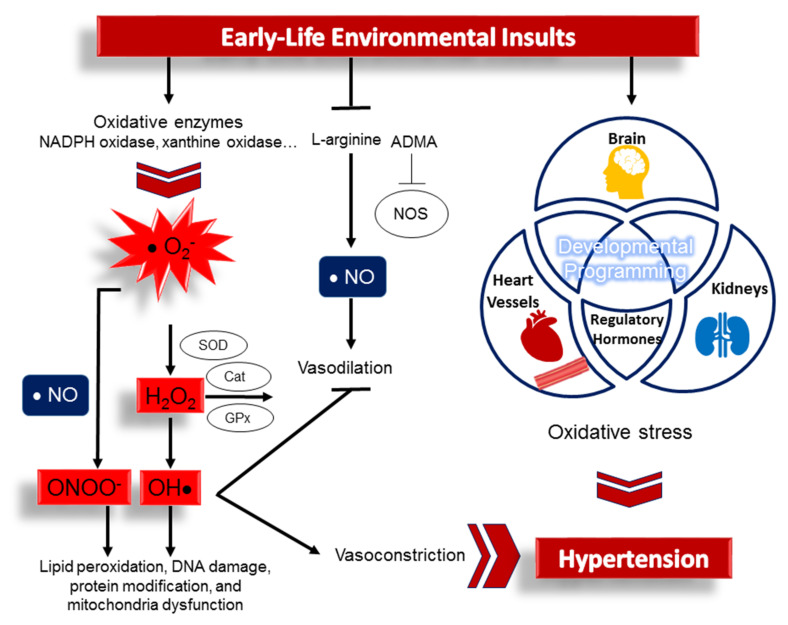
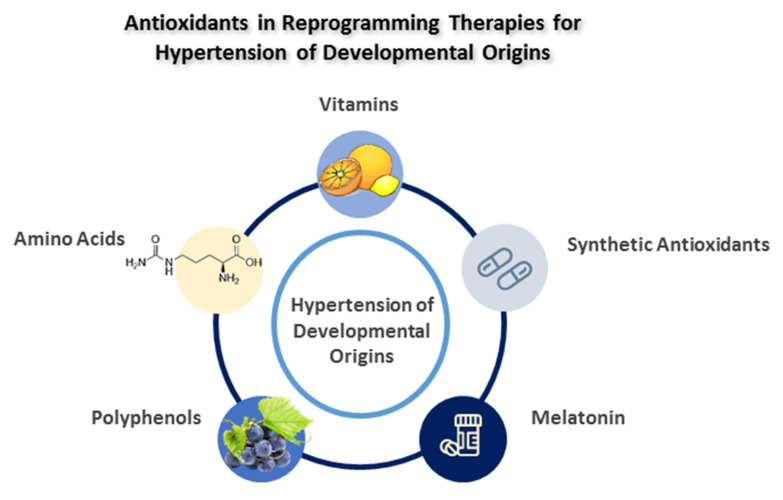
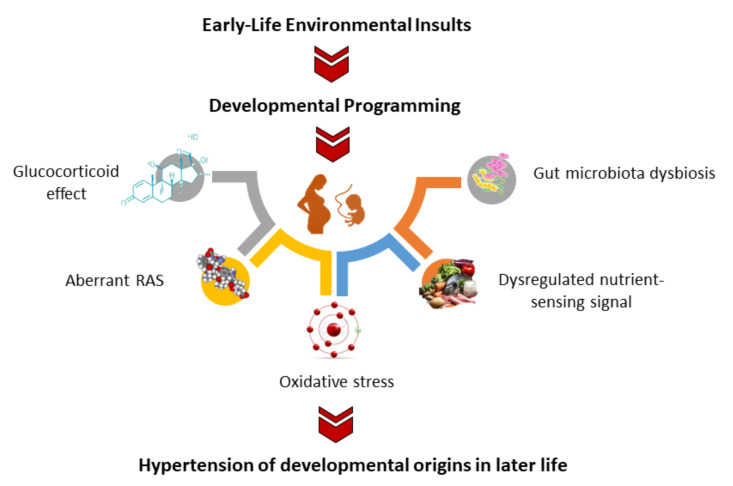
Hypertension remains the leading cause of disease burden worldwide. Hypertension can originate in the early stages of life. A growing body of evidence suggests that oxidative stress, which is characterized as a reactive oxygen species (ROS)/nitric oxide (NO) disequilibrium, has a pivotal role in the hypertension of developmental origins. Results from animal studies support the idea that early-life oxidative stress causes developmental programming in prime blood pressure (BP)-controlled organs such as the brain, kidneys, heart, and blood vessels, leading to hypertension in adult offspring. Conversely, perinatal use of antioxidants can counteract oxidative stress and therefore lower BP. This review discusses the interaction between oxidative stress and developmental programming in hypertension. It will also discuss evidence from animal models, how oxidative stress connects with other core mechanisms, and the potential of antioxidant therapy as a novel preventive strategy to prevent the hypertension of developmental origins.
高血压仍然是全球疾病负担的主要原因。高血压可能起源于生命早期。越来越多的证据表明,以活性氧(ROS)/一氧化氮(NO)失衡为特征的氧化应激在发育起源性高血压中起关键作用。动物研究结果支持这样的观点,即生命早期的氧化应激会导致大脑、肾脏、心脏和血管等主要血压(BP)控制器官的发育编程,从而导致成年后代患高血压。相反,围产期使用抗氧化剂可以抵消氧化应激,从而降低血压。本文综述了氧化应激与高血压发育编程之间的相互作用。还将讨论动物模型的证据、氧化应激如何与其他核心机制联系,以及抗氧化剂治疗作为预防发育起源性高血压的新型预防策略的潜力。