Nitsch Andreas, Strakeljahn Silas, Jacoby Josephine M, Sieb Konrad F, Mustea Alexander, Bekeschus Sander, Ekkernkamp Axel, Stope Matthias B, Haralambiev Lyubomir
Center for Orthopaedics, Trauma Surgery and Rehabilitation Medicine, University Medicine Greifswald, Ferdinand-Sauerbruch-Straße, 17475 Greifswald, Germany.
Department of Gynecology and Gynecological Oncology, University Hospital Bonn, Venusberg-Campus 1, 53127 Bonn, Germany.
Biomedicines. 2022 Mar 17;10(3):688. doi: 10.3390/biomedicines10030688.
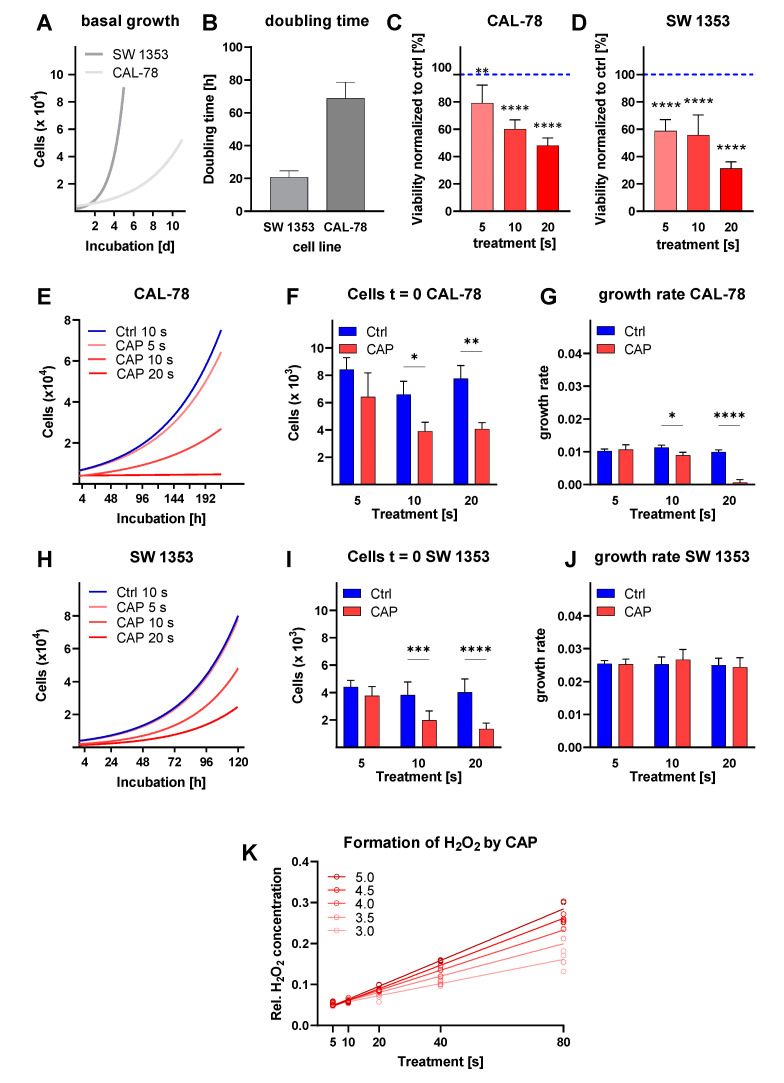
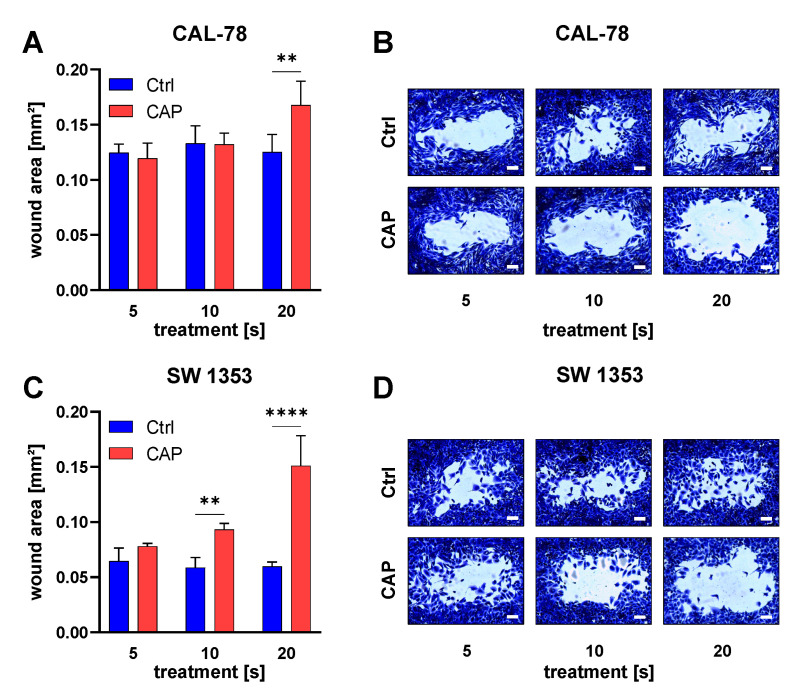
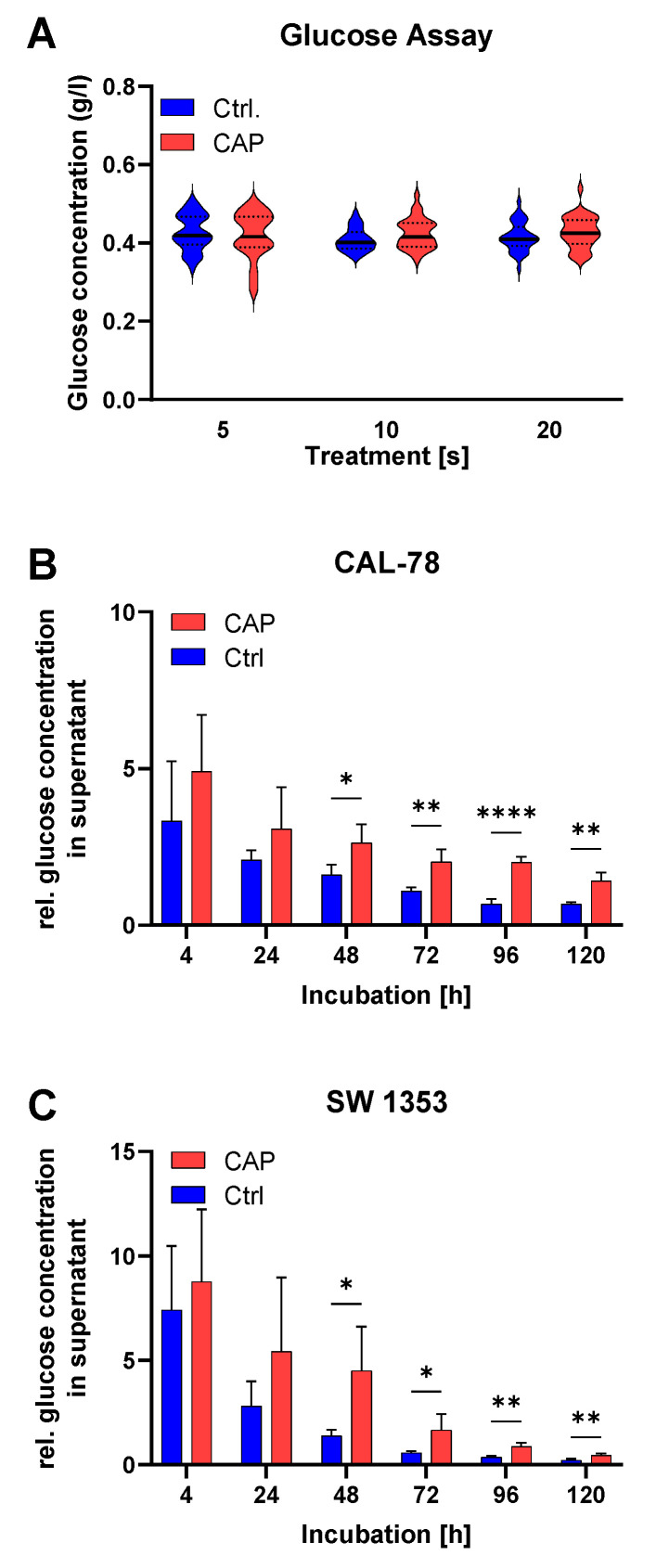
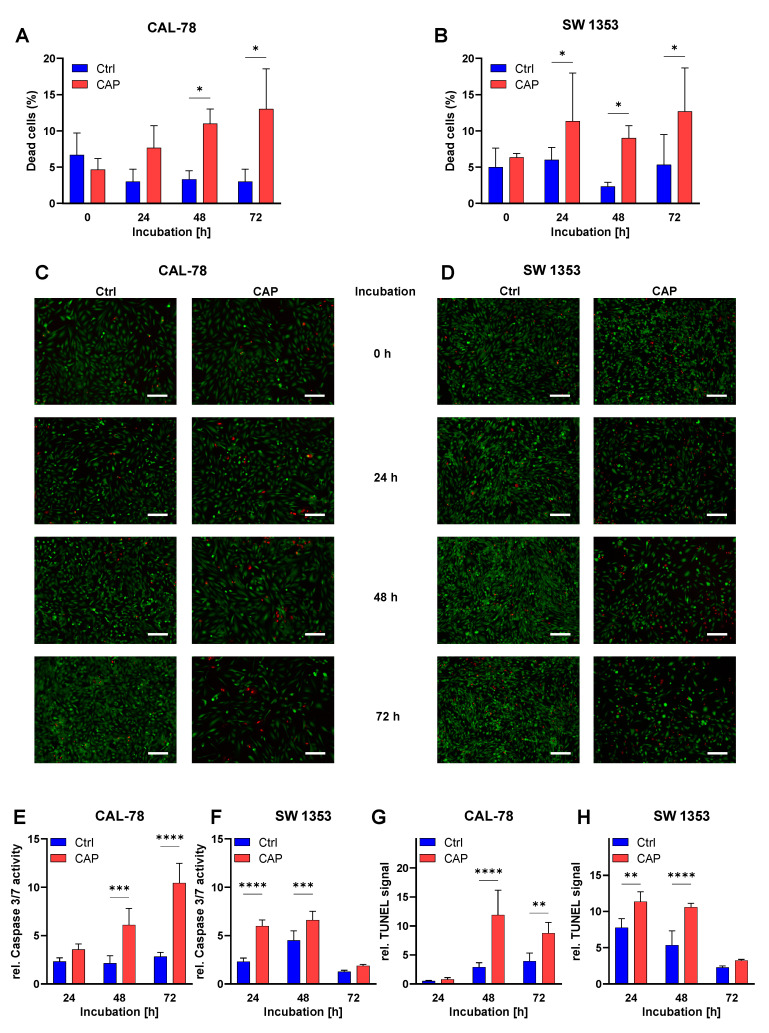
(1) Background: Chondrosarcoma (CS) is a malignant primary bone tumor with a cartilaginous origin. Its slow cell division and severely restricted vascularization are responsible for its poor responsiveness to chemotherapy and radiotherapy. The decisive factor for the prognosis of CS patients is the only adequate therapy-surgical resection. Cold atmospheric pressure plasma (CAP) is emerging as a new option in anti-cancer therapy. Its effect on chondrosarcomas has been poorly investigated. (2) Methods: Two CS cell lines-SW 1353 and CAL 78-were used. Various assays, such as cell growth kinetics, glucose uptake, and metabolic activity assay, along with two different apoptosis assays were performed after CAP treatment. A radius cell migration assay was used to examine cell motility. (3) Results: Both cell lines showed different growth behavior, which was taken into account when using the assays. After CAP treatment, a reduction in metabolic activity was observed in both cell lines. The immediate effect of CAP showed a reduction in cell numbers and in influence on this cell line's growth rate. The measurement of the glucose concentration in the cell culture medium showed an increase after CAP treatment. Live-dead cell imaging shows an increase in the proportion of dead cells over the incubation time for both cell lines. There was a significant increase in apoptotic signals after 48 h and 72 h for both cell lines in both assays. The migration assay showed that CAP treatment inhibited the motility of chondrosarcoma cells. The effects in all experiments were related to the duration of CAP exposure. (4) Conclusions: The CAP treatment of CS cells inhibits their growth, motility, and metabolism by initiating apoptotic processes.
(1) 背景:软骨肉瘤(CS)是一种起源于软骨的原发性恶性骨肿瘤。其细胞分裂缓慢且血管化严重受限,导致其对化疗和放疗反应不佳。CS患者预后的决定性因素是唯一充分的治疗方法——手术切除。冷大气压等离子体(CAP)正在成为抗癌治疗的一种新选择。其对软骨肉瘤的影响研究较少。(2) 方法:使用两种CS细胞系——SW 1353和CAL 78。在CAP处理后,进行了各种检测,如细胞生长动力学、葡萄糖摄取和代谢活性检测,以及两种不同的凋亡检测。采用半径细胞迁移检测来检查细胞运动性。(3) 结果:两种细胞系表现出不同的生长行为,在使用检测方法时已考虑到这一点。CAP处理后,两种细胞系的代谢活性均降低。CAP的即时作用表现为细胞数量减少以及对该细胞系生长速率的影响。细胞培养基中葡萄糖浓度的测量显示,CAP处理后有所增加。活死细胞成像显示,两种细胞系在孵育期间死细胞比例均增加。在两种检测中,两种细胞系在48小时和72小时后凋亡信号均显著增加。迁移检测表明,CAP处理抑制了软骨肉瘤细胞的运动性。所有实验中的效应均与CAP暴露持续时间有关。(4) 结论:CAP处理CS细胞可通过启动凋亡过程抑制其生长、运动性和代谢。