Smesam Hasan Najah, Qazmooz Hasan Abbas, Khayoon Sinan Qayes, Almulla Abbas F, Al-Hakeim Hussein Kadhem, Maes Michael
Department of Chemistry, College of Science, University of Kufa, Kufa 540011, Iraq.
Department of Ecology, College of Science, University of Kufa, Kufa 540011, Iraq.
J Pers Med. 2022 Mar 16;12(3):476. doi: 10.3390/jpm12030476.
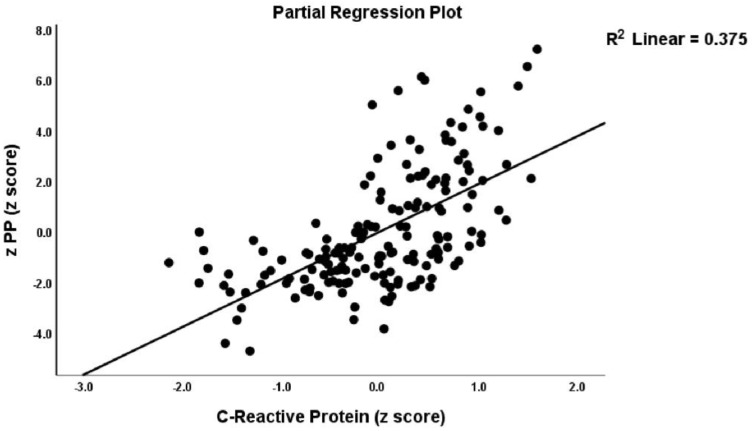
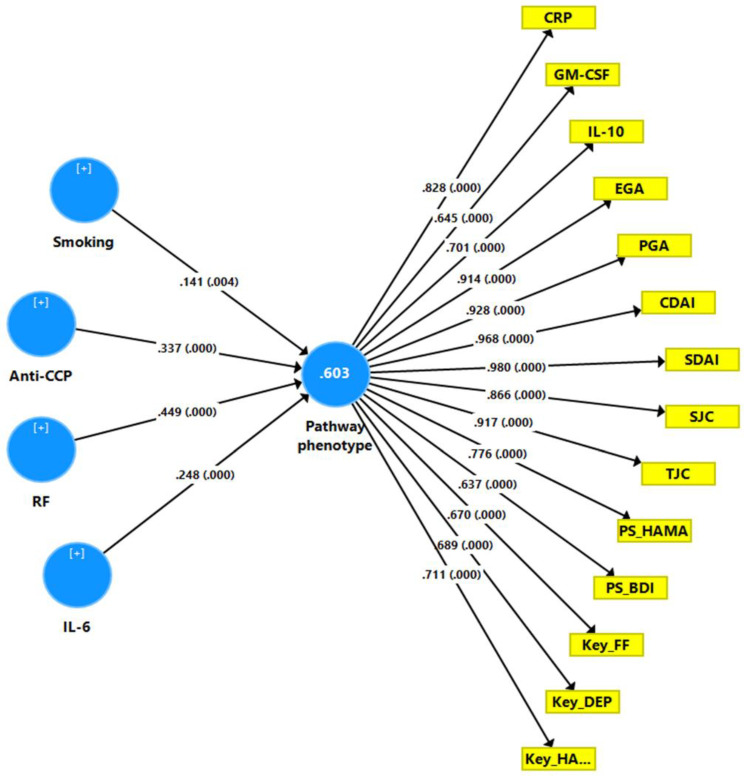
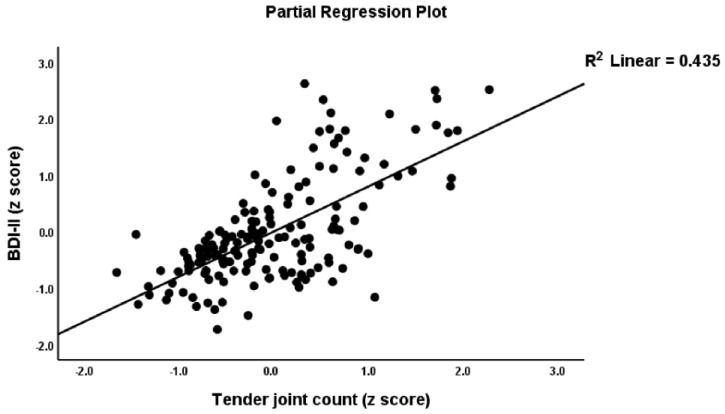
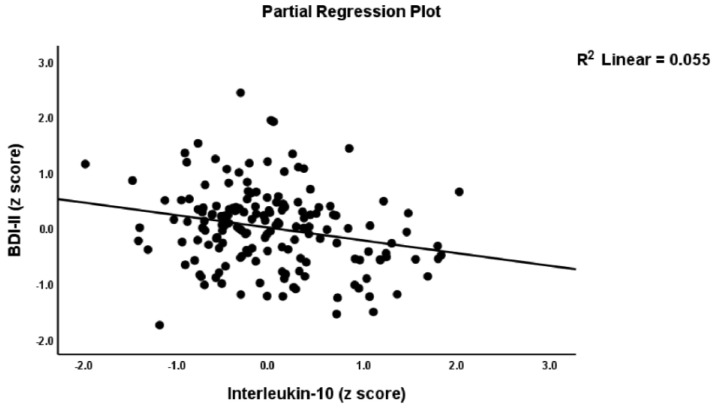
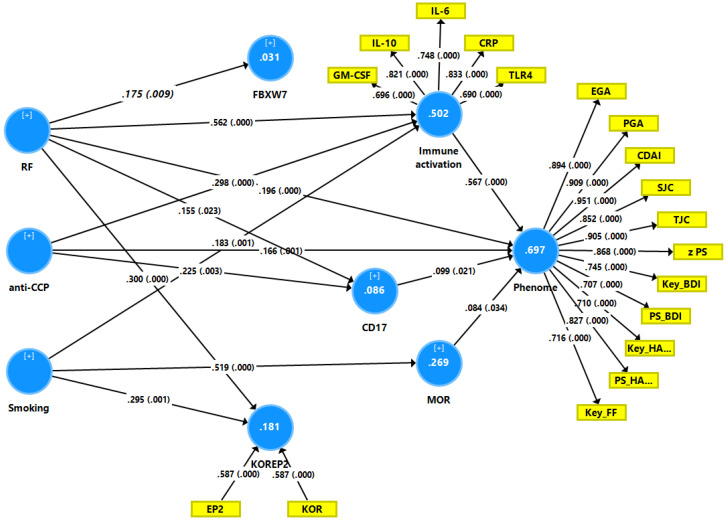
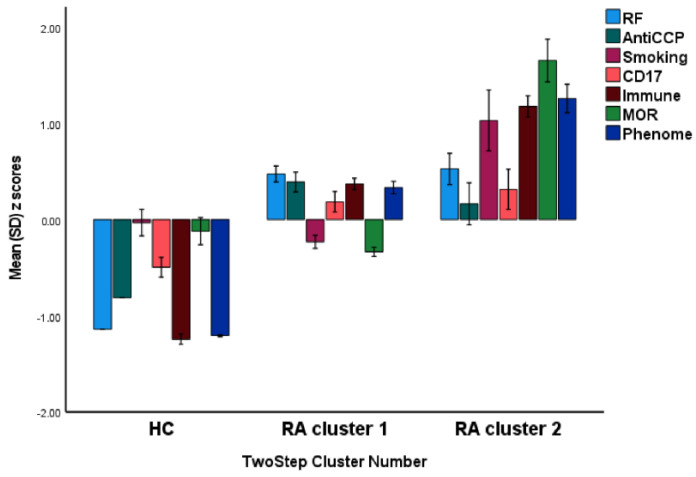
Rheumatoid arthritis (RA) is a chronic inflammatory and autoimmune disorder which affects the joints in the wrists, fingers, and knees. RA is often associated with depressive and anxiety symptoms as well as chronic fatigue syndrome (CFS)-like symptoms. This paper examines the association between depressive symptoms (measured with the Beck Depression Inventory, BDI), anxiety (Hamilton Anxiety Rating Scale, HAMA), CFS-like (Fibro-fatigue Scale) symptoms and immune-inflammatory, autoimmune, and endogenous opioid system (EOS) markers, and lactosylcer-amide (CD17) in RA. The serum biomarkers were assayed in 118 RA and 50 healthy controls. Results were analyzed using the new precision nomothetic psychiatry approach. We found significant correlations between the BDI, FF, and HAMA scores and severity of RA, as assessed with the DAS28-4, clinical and disease activity indices, the number of tender and swollen joints, and patient and evaluator global assessment scores. Partial least squares analysis showed that 69.7% of the variance in this common core underpinning psychopathology and RA symptoms was explained by immune-inflammatory pathways, rheumatoid factor, anti-citrullinated protein antibodies, CD17, and mu-opioid receptor levels. We constructed a new endophenotype class comprising patients with very high immune-inflammatory markers, CD17, RA, affective and CF-like symptoms, and tobacco use disorder. We extracted a reliable and replicable latent vector (pathway phenotype) from immune data, psychopathology, and RA-severity scales. Depression, anxiety, and CFS-like symptoms due to RA are manifestations of the phenome of RA and are mediated by the effects of the same immune-inflammatory, autoimmune, and other pathways that underpin the pathophysiology of RA.
类风湿性关节炎(RA)是一种慢性炎症性自身免疫性疾病,会影响手腕、手指和膝盖的关节。RA常与抑郁和焦虑症状以及慢性疲劳综合征(CFS)样症状相关。本文研究了抑郁症状(用贝克抑郁量表,BDI测量)、焦虑(汉密尔顿焦虑量表,HAMA)、CFS样(纤维疲劳量表)症状与免疫炎症、自身免疫和内源性阿片系统(EOS)标志物以及RA中的乳糖神经酰胺(CD17)之间的关联。对118例RA患者和50例健康对照者的血清生物标志物进行了检测。结果采用新的精确规范精神病学方法进行分析。我们发现BDI、FF和HAMA评分与用DAS28-4评估的RA严重程度、临床和疾病活动指数、压痛和肿胀关节数量以及患者和评估者整体评估评分之间存在显著相关性。偏最小二乘分析表明,免疫炎症途径、类风湿因子、抗瓜氨酸化蛋白抗体、CD17和μ-阿片受体水平解释了这种支撑精神病理学和RA症状的共同核心中69.7%的变异。我们构建了一个新的内表型类别,包括具有非常高的免疫炎症标志物、CD17、RA、情感和CF样症状以及烟草使用障碍的患者。我们从免疫数据、精神病理学和RA严重程度量表中提取了一个可靠且可重复的潜在向量(途径表型)。RA引起的抑郁、焦虑和CFS样症状是RA表型的表现,并且由支撑RA病理生理学的相同免疫炎症、自身免疫和其他途径的作用介导。