National Research Council (CNR) Institute of Clinical Physiology (IFC), 73100 Lecce, Italy.
Department of Biological and Environmental Sciences and Technologies (DISTEBA), University of Salento, 73100 Lecce, Italy.
Nutrients. 2022 Mar 11;14(6):1175. doi: 10.3390/nu14061175.
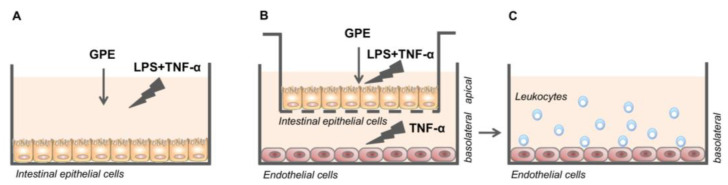
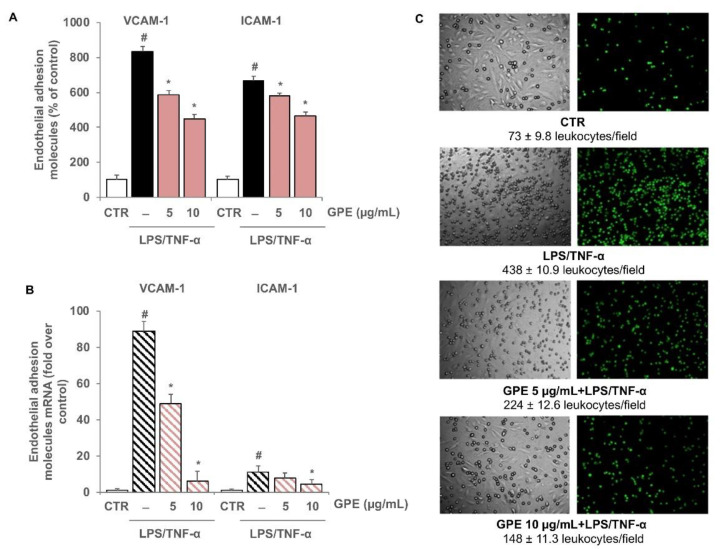
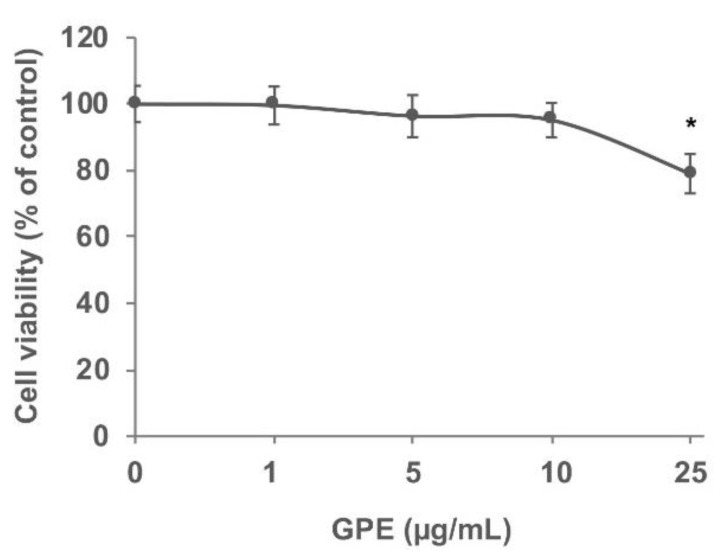
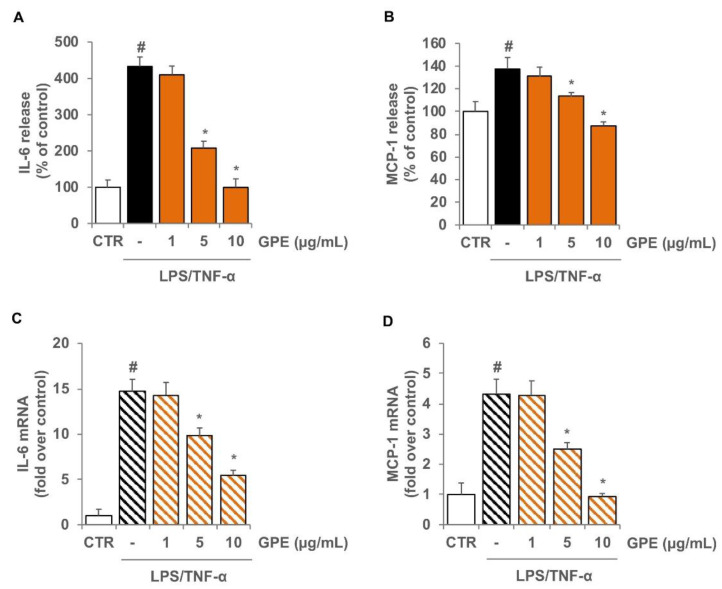
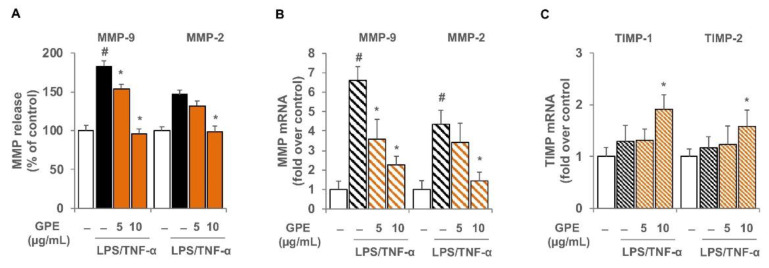
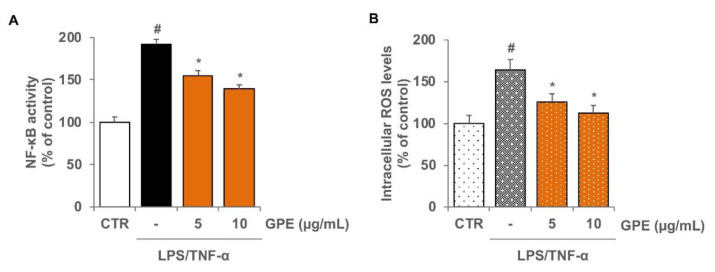
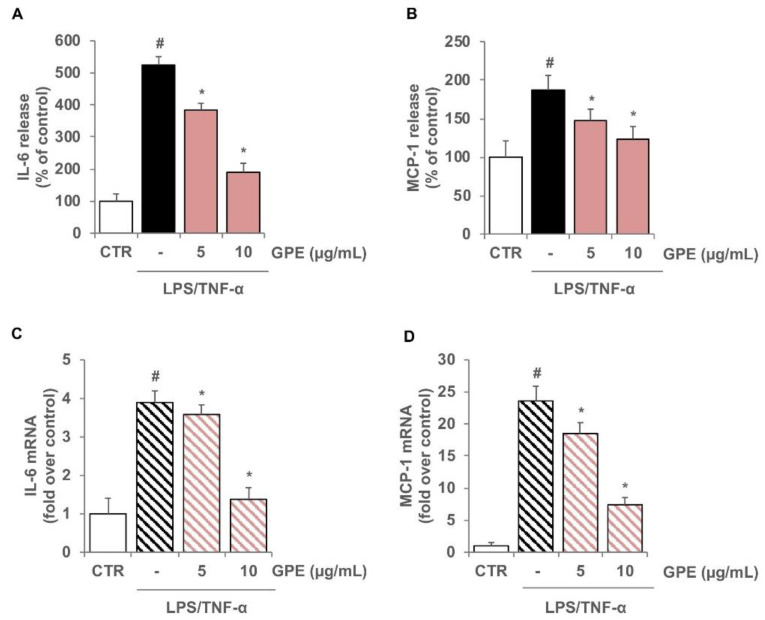
Inflammatory bowel disease (IBD) implies the chronic inflammation of the gastrointestinal tract, combined with systemic vascular manifestations. In IBD, the incidence of cardiovascular disease appears to be related to an increase of oxidative stress and endothelial dysfunction. Grape pomace contains high levels of anti-oxidant polyphenols that are able to counteract chronic inflammatory symptoms. The aim of this study was to determine whether grape pomace polyphenolic extract (GPE) was able to mitigate the overwhelming inflammatory response in enterocyte-like cells and to improve vascular function. Intestinal epithelial Caco-2 cells, grown in monolayers or in co-culture with endothelial cells (Caco-2/HMEC-1), were treated with different concentrations of GPE (1, 5, 10 µg/mL gallic acid equivalents) for 2 h and then stimulated with lipopolysaccharide (LPS) and tumor necrosis factor (TNF)-α for 16 h. Through multiple assays, the expression of intestinal and endothelial inflammatory mediators, intracellular reactive oxygen species (ROS) levels and NF-κB activation, as well as endothelial-leukocyte adhesion, were evaluated. The results showed that GPE supplementation prevented, in a concentration-dependent manner, the intestinal expression and release of interleukin (IL)-6, monocyte chemoattractant protein (MCP)-1, and matrix metalloproteinases (MMP)-9 and MMP-2. In Caco-2 cells, GPE also suppressed the gene expression of several pro-inflammatory markers, such as IL-1β, TNF-α, macrophage colony-stimulating factor (M-CSF), C-X-C motif ligand (CXCL)-10, intercellular adhesion molecule (ICAM)-1, vascular cell adhesion molecule (VCAM)-1, and cyclooxygenase (COX)-2. The GPE anti-inflammatory effect was mediated by the inhibition of NF-κB activity and reduced intracellular ROS levels. Furthermore, transepithelial GPE suppressed the endothelial expression of IL-6, MCP-1, VCAM-1, and ICAM-1 and the subsequent adhesion of leukocytes to the endothelial cells under pro-inflammatory conditions. In conclusion, our findings suggest grape pomace as a natural source of polyphenols with multiple health-promoting properties that could contribute to the mitigation of gut chronic inflammatory diseases and improve vascular endothelial function.
炎症性肠病(IBD)是指胃肠道的慢性炎症,伴有全身血管表现。在 IBD 中,心血管疾病的发病率似乎与氧化应激和内皮功能障碍的增加有关。葡萄渣含有高水平的抗氧化多酚,能够对抗慢性炎症症状。本研究旨在确定葡萄渣多酚提取物(GPE)是否能够减轻肠细胞样细胞中压倒性的炎症反应,并改善血管功能。在单层或与内皮细胞(Caco-2/HMEC-1)共培养的情况下,将肠道上皮细胞 Caco-2 用不同浓度的 GPE(1、5、10 µg/mL 没食子酸当量)处理 2 小时,然后用脂多糖(LPS)和肿瘤坏死因子(TNF)-α刺激 16 小时。通过多项测定,评估了肠道和内皮炎症介质的表达、细胞内活性氧(ROS)水平和 NF-κB 激活以及内皮-白细胞黏附。结果表明,GPE 补充以浓度依赖的方式阻止了白细胞介素(IL)-6、单核细胞趋化蛋白(MCP)-1、基质金属蛋白酶(MMP)-9 和 MMP-2 的肠道表达和释放。在 Caco-2 细胞中,GPE 还抑制了几种促炎标志物的基因表达,如 IL-1β、TNF-α、巨噬细胞集落刺激因子(M-CSF)、C-X-C 基序配体(CXCL)-10、细胞间黏附分子(ICAM)-1、血管细胞黏附分子(VCAM)-1 和环氧化酶(COX)-2。GPE 的抗炎作用是通过抑制 NF-κB 活性和降低细胞内 ROS 水平介导的。此外,在炎症条件下,跨上皮 GPE 抑制内皮细胞 IL-6、MCP-1、VCAM-1 和 ICAM-1 的表达以及随后白细胞与内皮细胞的黏附。总之,我们的研究结果表明,葡萄渣是一种具有多种健康促进特性的多酚天然来源,可有助于减轻肠道慢性炎症性疾病并改善血管内皮功能。