Swanson Nicholas A, Hou Chun-Feng D, Cingolani Gino
Department of Biochemistry and Molecular Biology, Thomas Jefferson University, 1020 Locust Street, Philadelphia, PA 19107, USA.
Department of Biology, Massachusetts Institute of Technology, 31 Ames Street, Cambridge, MA 02139, USA.
Microorganisms. 2022 Feb 24;10(3):504. doi: 10.3390/microorganisms10030504.
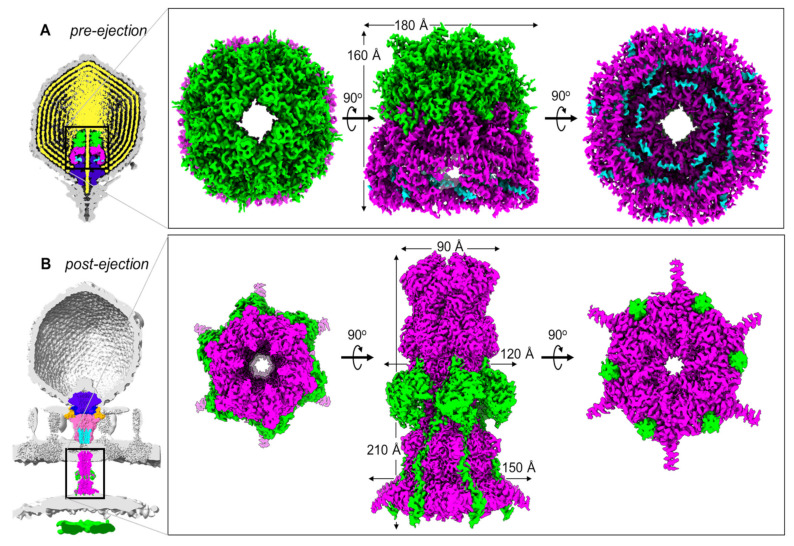
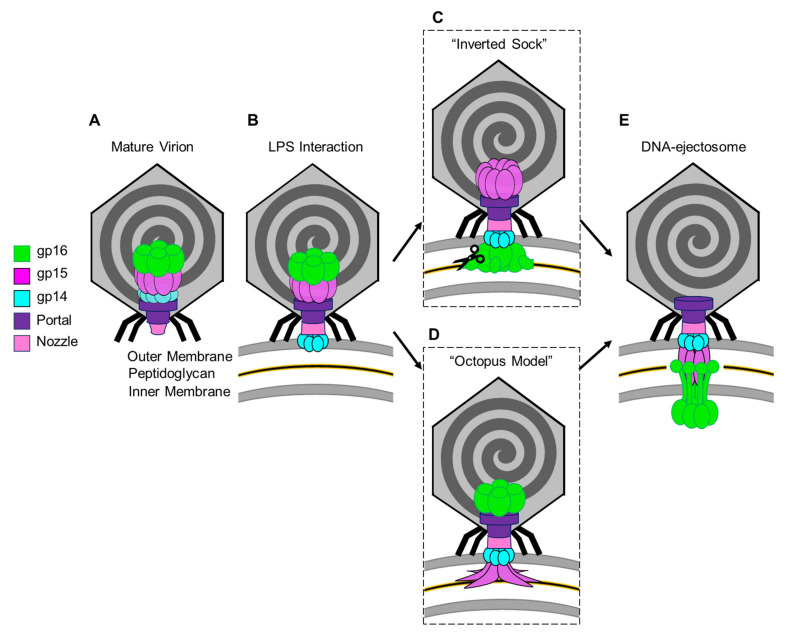
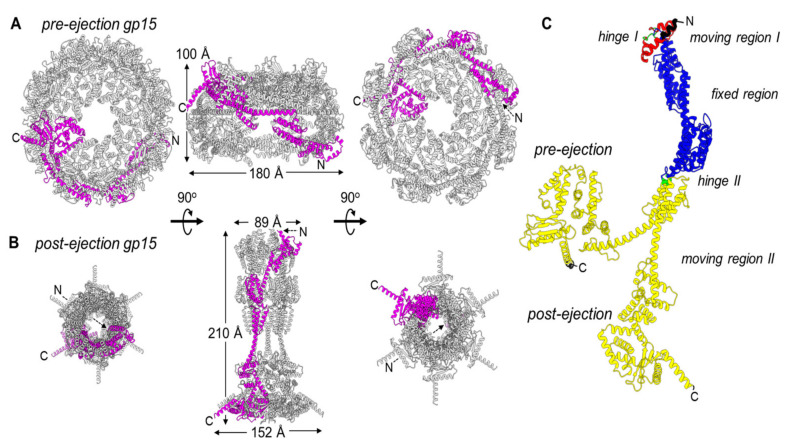
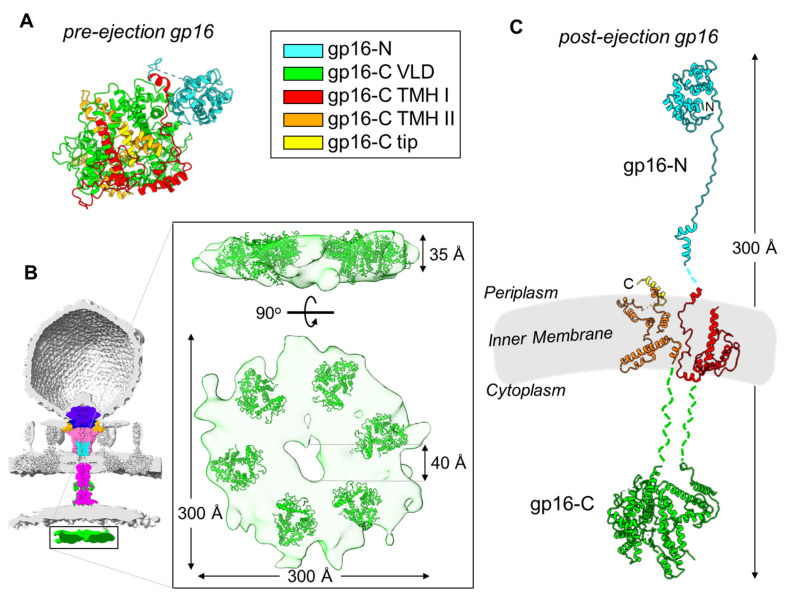
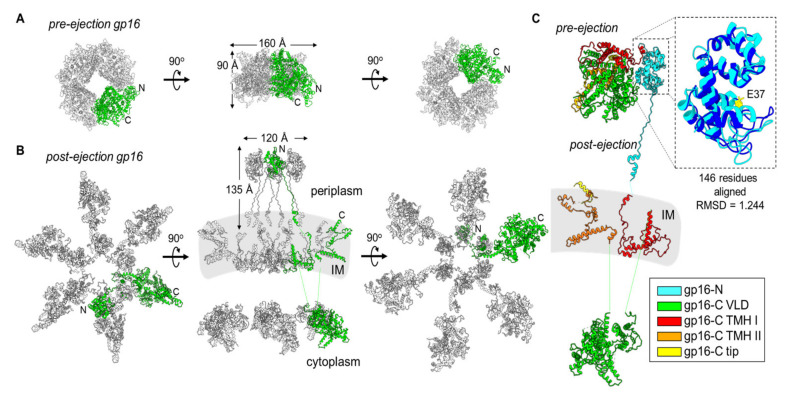
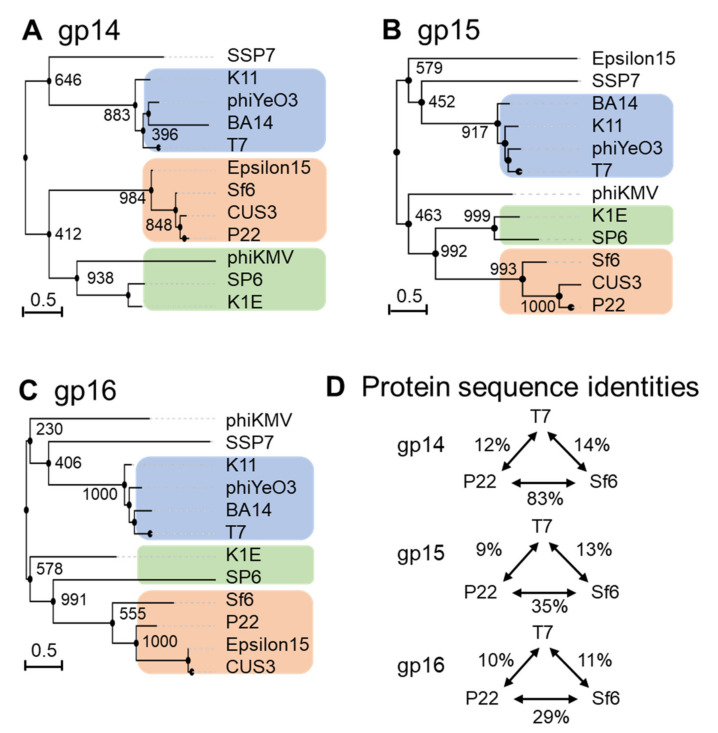
Bacterial viruses (or bacteriophages) have developed formidable ways to deliver their genetic information inside bacteria, overcoming the complexity of the bacterial-cell envelope. In short-tailed phages of the superfamily, genome ejection is mediated by a set of mysterious internal virion proteins, also called ejection or pilot proteins, which are required for infectivity. The ejection proteins are challenging to study due to their plastic structures and transient assembly and have remained less characterized than classical components such as the phage coat protein or terminase subunit. However, a spate of recent cryo-EM structures has elucidated key features underscoring these proteins' assembly and conformational gymnastics that accompany their expulsion from the virion head through the portal protein channel into the host. In this review, we will use a phage-T7-centric approach to critically review the status of the literature on ejection proteins, decipher the conformational changes of T7 ejection proteins in the pre- and post-ejection conformation, and predict the conservation of these proteins in other . The challenge is to relate the structure of the ejection proteins to the mechanisms of genome ejection, which are exceedingly complex and use the host's machinery.
细菌病毒(即噬菌体)已经进化出了强大的方式,能够将其遗传信息传递到细菌内部,克服了细菌细胞壁的复杂性。在该超家族的短尾噬菌体中,基因组的注入由一组神秘的病毒体内蛋白介导,这些蛋白也被称为注入蛋白或先导蛋白,是感染所必需的。由于其结构可塑性和瞬时组装性,注入蛋白很难研究,并且与噬菌体外壳蛋白或末端酶亚基等经典成分相比,其特征仍不太明确。然而,最近一系列的冷冻电镜结构揭示了这些蛋白组装和构象变化的关键特征,这些变化伴随着它们从病毒粒子头部通过门户蛋白通道排出到宿主中。在这篇综述中,我们将采用以噬菌体T7为中心的方法,批判性地回顾关于注入蛋白的文献现状,解读T7注入蛋白在注入前和注入后构象的变化,并预测这些蛋白在其他噬菌体中的保守性。挑战在于将注入蛋白的结构与极其复杂且利用宿主机制的基因组注入机制联系起来。