Margaryan Hasmik, Evangelopoulos Dimitrios D, Muraro Wildner Leticia, McHugh Timothy D
UCL Centre for Clinical Microbiology, Division of Infection & Immunity, UCL, Royal Free Campus, London NW3 2PF, UK.
Department of Microbial Diseases, Eastman Dental Institute, UCL, Royal Free Campus, Rowland Hill Street, London NW3 2PF, UK.
Microorganisms. 2022 Feb 26;10(3):514. doi: 10.3390/microorganisms10030514.
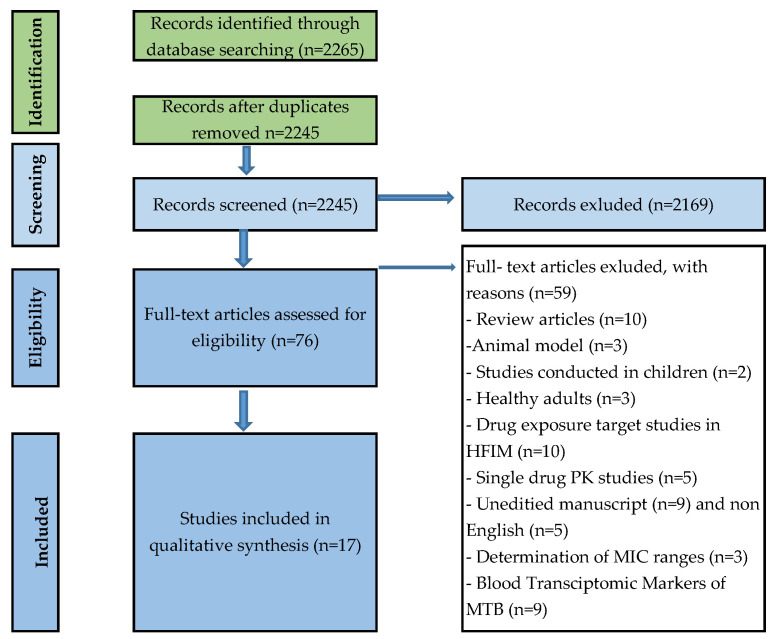
Combination therapy has, to some extent, been successful in limiting the emergence of drug-resistant tuberculosis. Drug combinations achieve this advantage by simultaneously acting on different targets and metabolic pathways. Additionally, drug combination therapies are shown to shorten the duration of therapy for tuberculosis. As new drugs are being developed, to overcome the challenge of finding new and effective drug combinations, systems biology commonly uses approaches that analyse mycobacterial cellular processes. These approaches identify the regulatory networks, metabolic pathways, and signaling programs associated with infection and survival. Different preclinical models that assess anti-tuberculosis drug activity are available, but the combination of models that is most predictive of clinical treatment efficacy remains unclear. In this structured literature review, we appraise the options to accelerate the TB drug development pipeline through the evaluation of preclinical testing assays of drug combinations.
联合治疗在一定程度上成功地限制了耐药结核病的出现。药物组合通过同时作用于不同靶点和代谢途径来实现这一优势。此外,药物联合疗法已被证明可缩短结核病的治疗疗程。随着新药的不断研发,为了应对寻找新的有效药物组合这一挑战,系统生物学通常采用分析分枝杆菌细胞过程的方法。这些方法可识别与感染和生存相关的调控网络、代谢途径及信号程序。有多种评估抗结核药物活性的临床前模型,但哪种模型组合最能预测临床治疗效果仍不明确。在这篇结构化文献综述中,我们通过评估药物组合的临床前测试分析方法来评估加速结核病药物研发流程的选项。